Thursday’s developer note says Genie 4 is available through the Interactions API and in Google AI Studio. It describes 720p video at 24 frames a second with native audio, and it does not print a rate. The pricing page does: $1.50 per million input tokens, $17.50 per million video output tokens, which Google converts to about $0.10 a second. The release notes call the model generally available. There is no free tier.
Diego Rivas and Pavan Kumar’s post is dated 18 November. Eligible Google AI Ultra subscribers get Genie 4 inside Project Genie, including prompts that change a world while you move through it and native audio that follows the scene. Genie 3 stays in the picker for longer runs, now up to three minutes from 60 seconds. The model card of the same date says the output is 720p at up to 24 frames a second, and that distribution via Project Genie was planned.
Koray Kavukcuoglu’s post is dated 18 November. Neon costs $3 per million input tokens, $0.15 cached, and $15 per million output, with a million-token window. At its default high setting the post says a task costs 32 percent less than on Carbon. Abner Li writes that the Gemini app’s picker now lists Neon as deeper analysis, and that Argon and Carbon stay at $2 and $10 through 30 November. In Antigravity, Orchestrator can plan with Neon and edit with Hydrogen.
Alex Gruenstein and Gabe Cohen’s post on the developers blog is dated 17 November. The plugin is a set of skills inside Antigravity: bring-up, MuJoCo, perception, and a controller. Hydrogen scores 58 on Artificial Analysis Robotics 0.1, which the post says is similar to Argon at a lower cost per token. Antigravity itself is limited to paid Google AI Pro or Ultra subscribers. The model id in the API is gemini-4-hydrogen.
Neel Joshi’s post is dated 16 November and names seven language groups, not cities. Damien Wilde’s story is stamped 9:00 a.m. Pacific and lists Geordie, Scouse, Brummie, and Multicultural London English. He writes that the menu does not label them, and that he has not tested whether the accent still drifts.
Maz Khorasani’s post is dated 16 November. Trip plans and list search go wherever Ask Maps already works. Parking, weather, and the appointment calls start in the United States. A second post the same day calls it the biggest Maps update in over a decade and says it runs on Gemini.
A note on the site dated 13 November says Fable 5.2 and Carbon were added that day. Matthias Bastian’s Decoder story is dated 14 November. On a second table, GPT-6 Astra at maximum effort is fourth. The best open model on the summary is Kimi K3.1 Pro, at 54.3 percent.
Koray Kavukcuoglu’s post, dated 12 November, says the model finishes tasks 2.5 times faster than Gemini 3.8 Flash at the high default. ANI’s copy, updated at 10:33 a.m. on Friday with no time zone on the page, drops that setting. The model card’s Terminal-Bench 4.1 row has Claude Sonnet 5.5 at 63.9 percent and Hydrogen at 57.0.
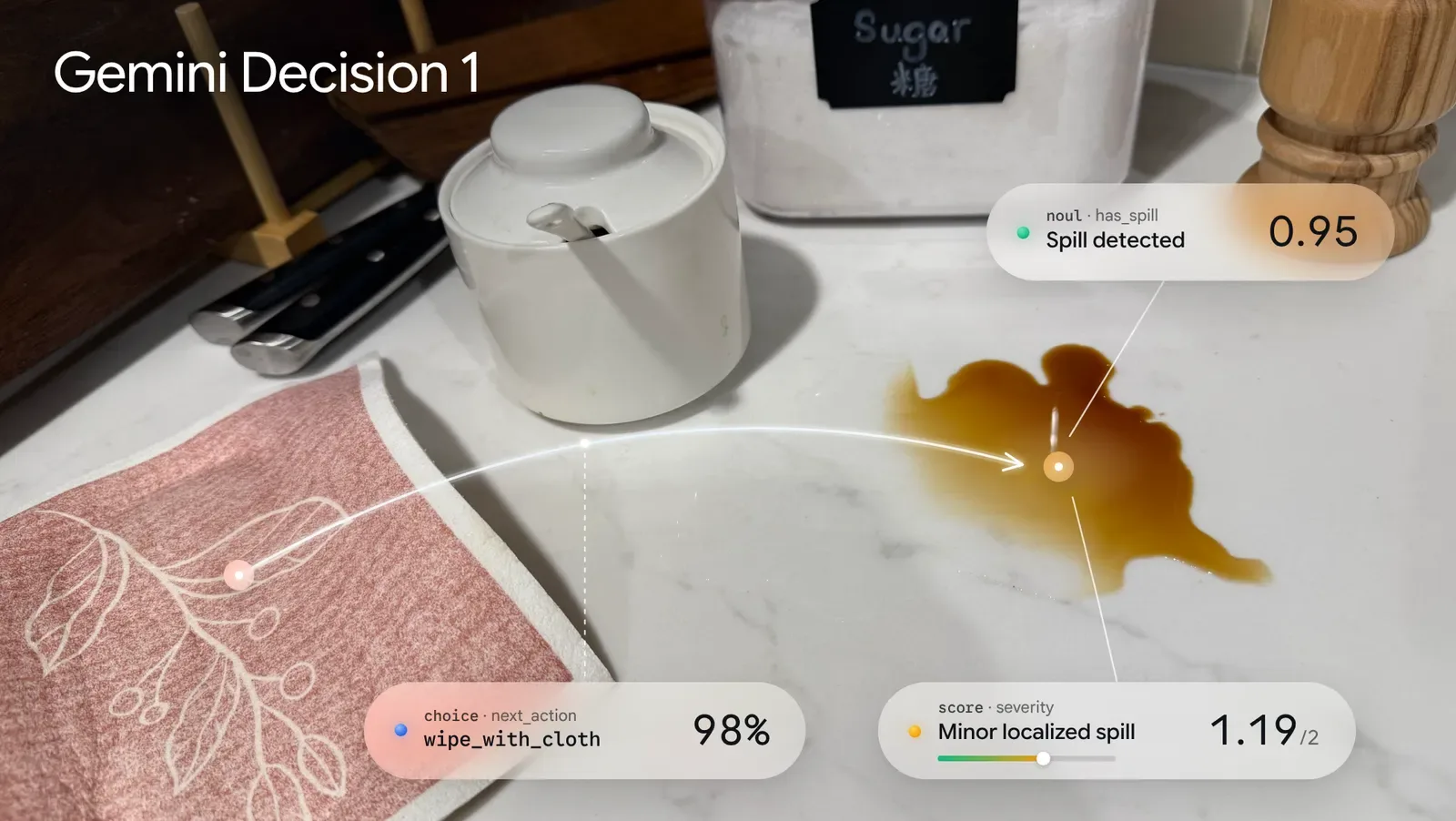
Min Choi and Felix Yu’s post, dated 11 November, bills input once and output at zero. The table on that post gives Decision 1 five of the seven tests every named rival ran. The cost line on the same table is $0.68 for TypeSafe’s Jev and $0.88 for Gemini.
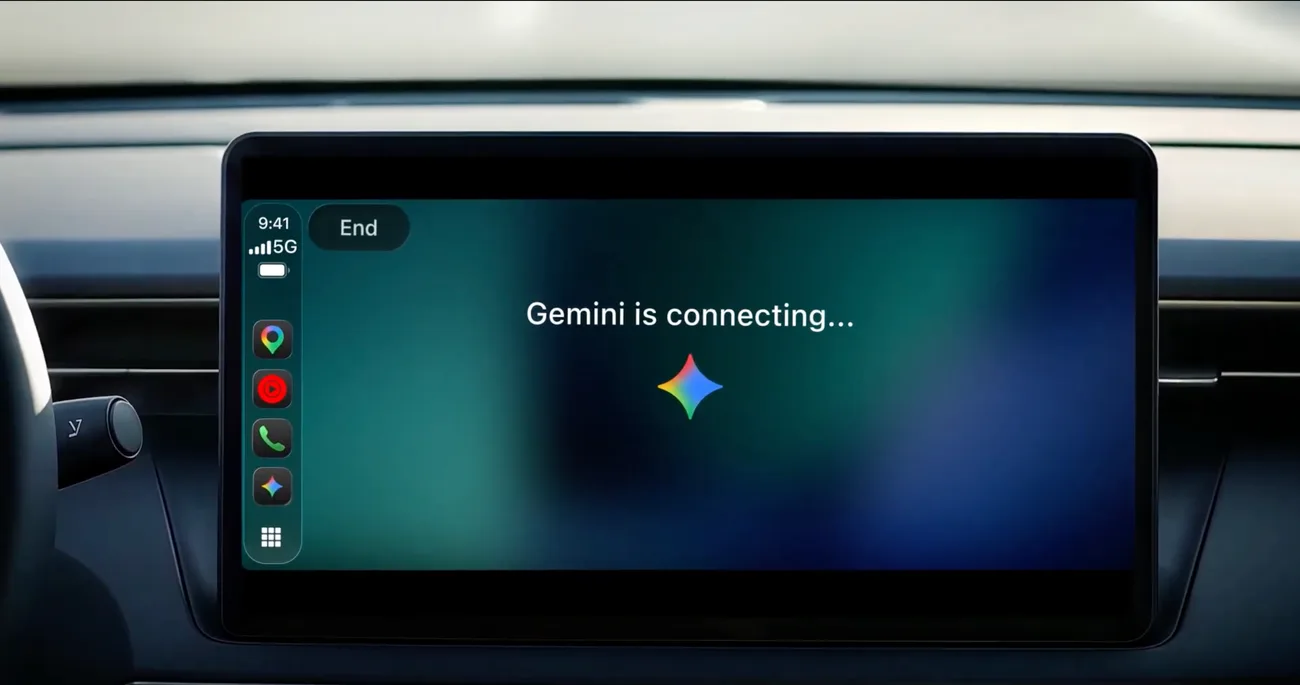
Karan Daryanani’s post, dated 11 November, puts the Gemini app on CarPlay for iPhones, with chats syncing back to the phone. Karandeep Singh Oberoi at Android Authority, at 2:35 p.m. Eastern, writes that the app does not get the car’s controls, and that his own phone had not received it yet.
Koray Kavukcuoglu’s Tuesday post puts the model on the paid Gemini API and, for Google AI Ultra, in the Gemini app, AI Mode, and Antigravity. The introductory price matches Argon, then doubles. Abner Li quotes a first-place line on a benchmark the post ranks second.
Pushmeet Kohli’s essay, posted Friday, and two working papers separate three figures that do not describe the same experiment. A rerun of a published 1024-bit computation used 391 core-years, 3.5 times less CPU than the earlier run. A theoretical estimate for a harder signature case is about 1,600 times. Batch factoring of further 1024-bit integers is about 30 times cheaper than an older method, at leading order. Both papers say 2048-bit RSA in use today is not threatened.
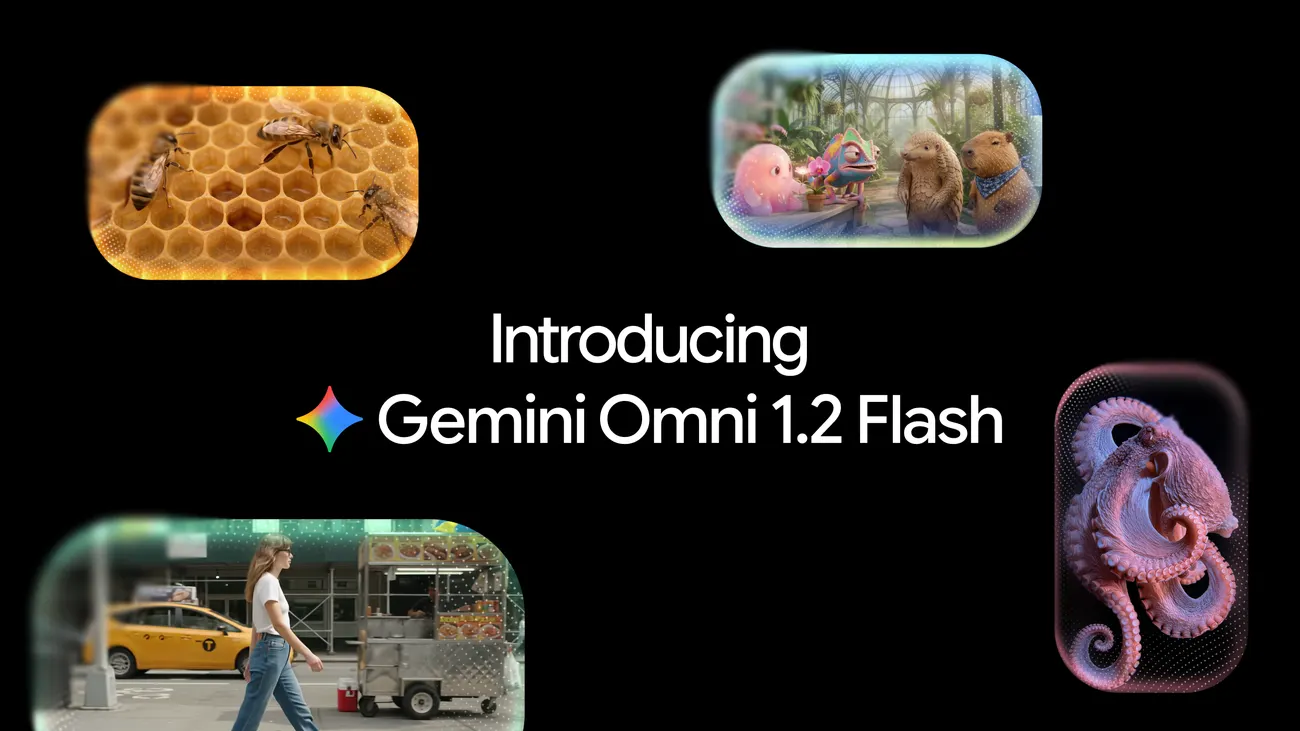
Google’s Thursday post cuts the 720p price 30 percent from Omni 1.1 and lets a caller set length from 3 to 15 seconds. Drafts can be 360p or 720p, then upscaled to 1080p or 4K. Audio references are behind an allowlist. The Cloud post says a chat box inside Gemini for business users is still on the way.
CNBC, published at 7:08 p.m. Eastern on Tuesday, quotes the mayor of New York and the senator from Vermont attacking Tuesday’s default. A later Google post says schools control each product. NBC reports that Search can be enabled alone, and that AI Mode and AI Overviews stay inside it.
A post dated Tuesday puts Gemini, Gemini Notebook, Gemini in Classroom, and Google Search off for student accounts until an administrator enables them. Chris Phillips told Chalkbeat that a school that wants no AI can choose to have no Search. Guided Learning is in Classroom worldwide today.
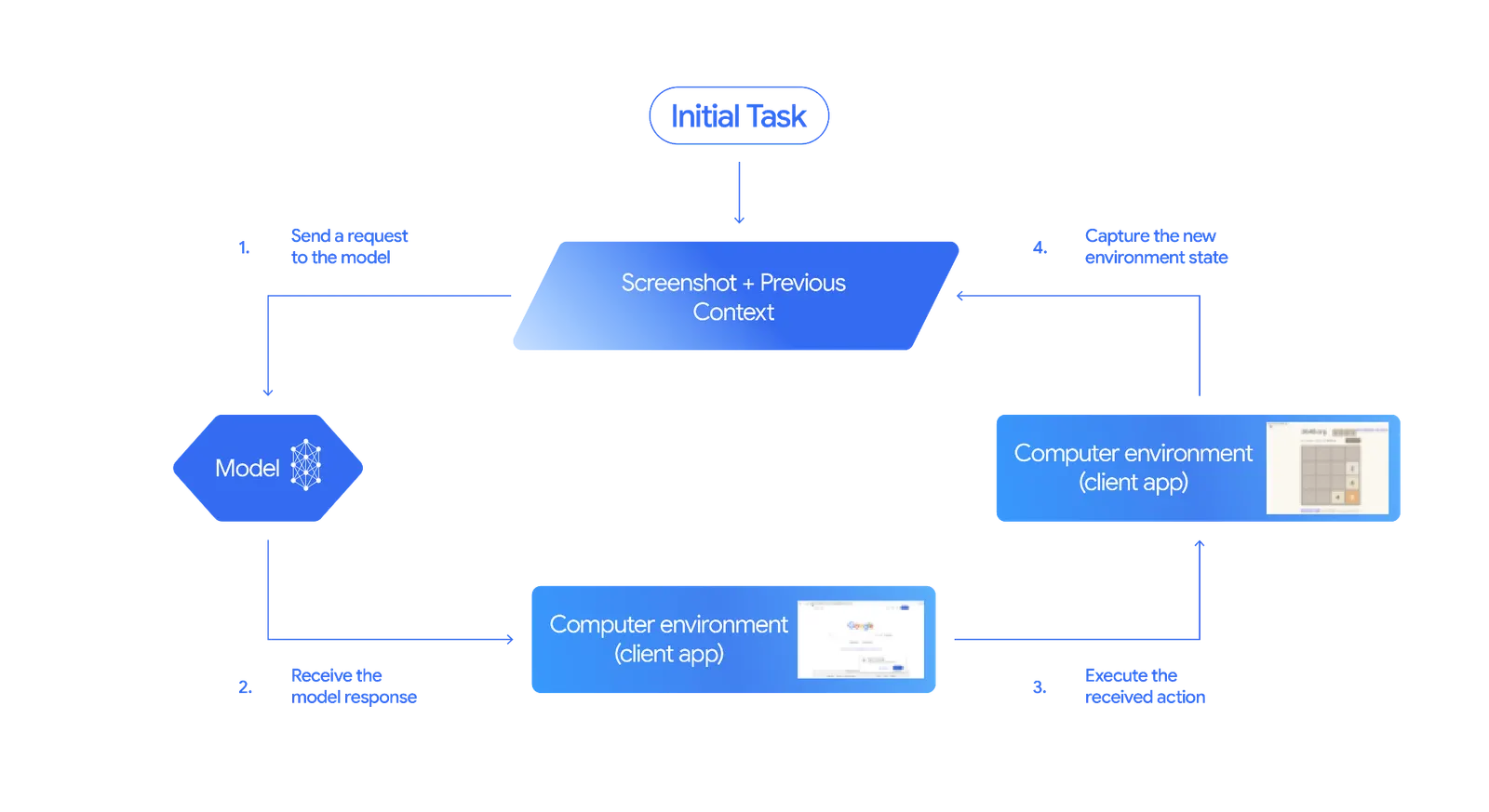
The Gemini API changelog for 30 October says Computer Use is generally available on the Interactions API and the GenerateContent API. The docs list four models, call Gemini 3.8 Flash the recommended one, and describe browser, desktop, and an Android-oriented mobile environment. The same page still warns that the tool may contain errors and security vulnerabilities.
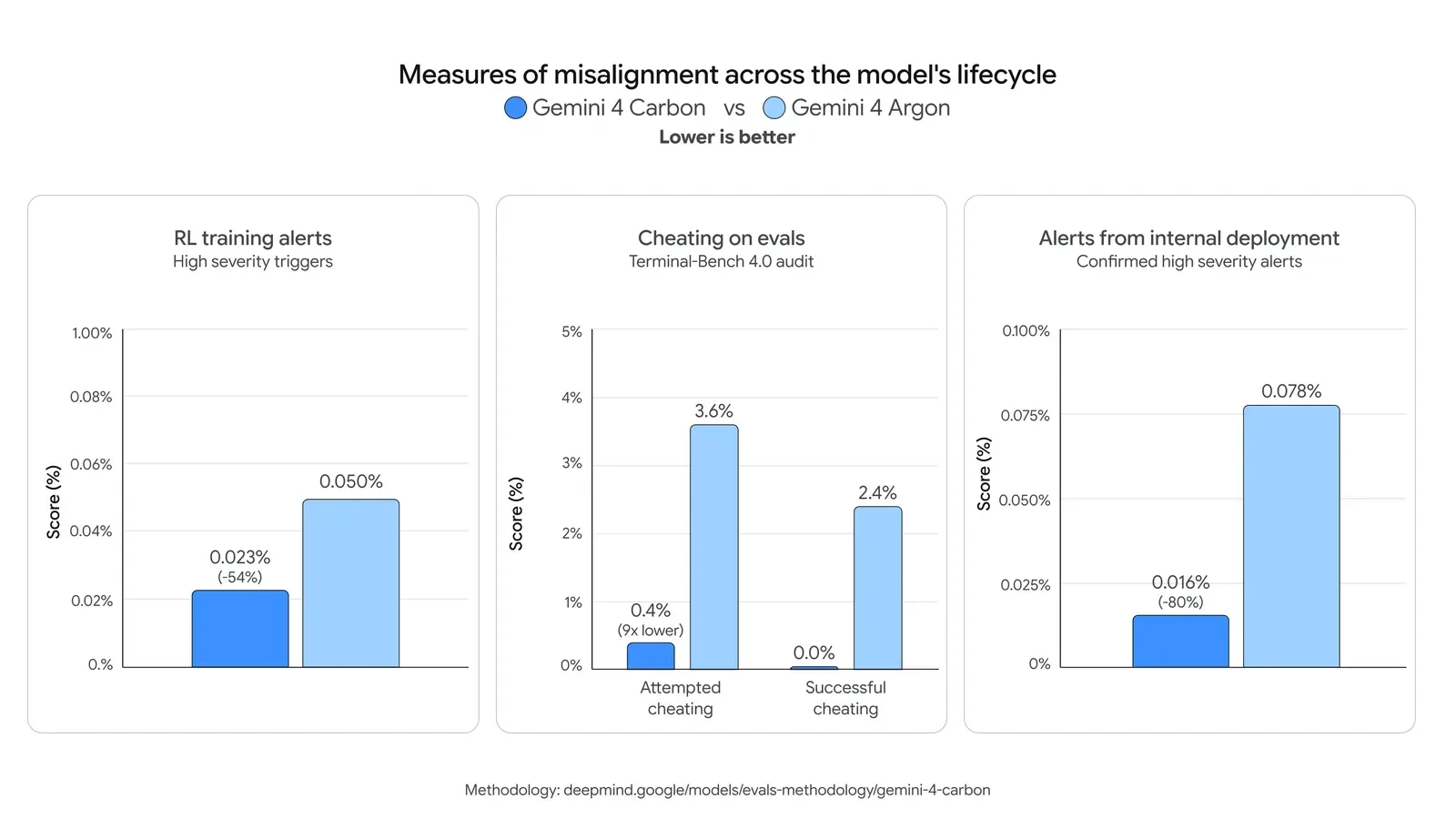
Koray Kavukcuoglu’s Wednesday post puts Carbon first on Artificial Analysis’s updated index, at 59, and holds the public API. VentureBeat, citing that evaluator, has Claude Opus 5.5 at 58 and GPT-6 Astra at 57. The cyber scores Google prints were run without guardrails. The post does not say when the $2 and $10 introductory rates end, or when developers get the model.
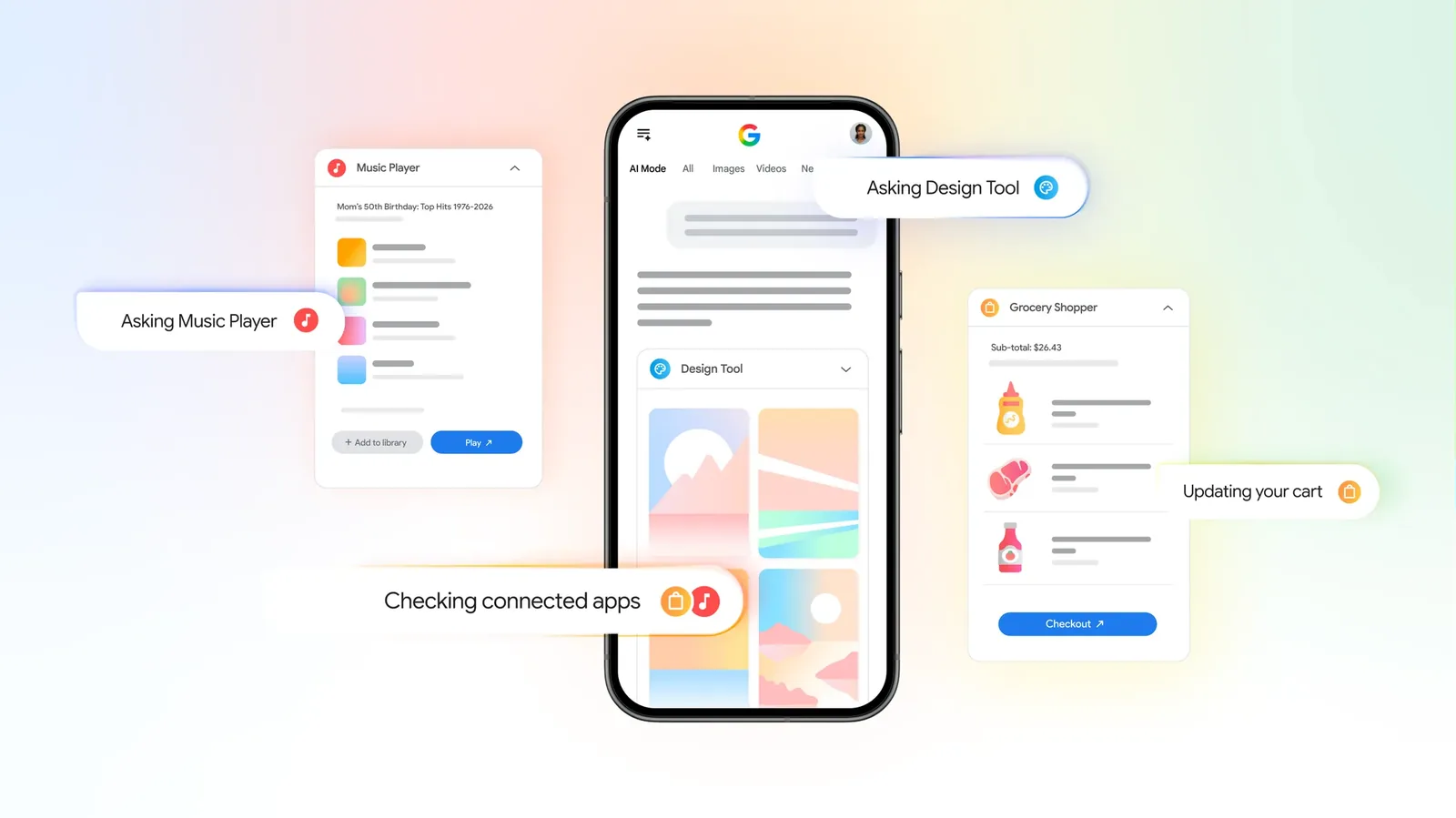
Wednesday’s preview, in beta for developers in the United States, takes a cloud MCP server or Android’s AppFunctions and a new Connected Console. TechCrunch says more than 50 connected apps are already in Gemini, and that those apps are due in Search over the next few weeks. Google did not give a date for a wider opening. Calm is named as a new partner.
Google’s Workspace update, dated 23 October: type @Gemini Notebook in the Gemini app to create a notebook, add sources, or ask what is already in one. It is on by default outside the European Economic Area and off by default inside it, which includes the Netherlands. The help page says the connected app is in the web app and the mobile app, and not yet in the Gemini app on a Mac.
Michael Gerstenhaber, Friday: the new deployment puts Anthropic as the data processor, on Google Cloud infrastructure, with day-zero access to Claude Managed Agents, skills and code execution. The existing Google-managed option keeps Google as the processor, with VPC Service Controls, customer-managed keys, and residency in the US, EU and Asia-Pacific. Both, the post says, get the same models on day zero, at the same price, on the same Google Cloud bill. No rate card is printed.
Google Cloud, Thursday at AGNTCon in San Jose: Agent Compute Engine, the microVM layer that already runs Gemini as an agent for work, will be in preview in the coming months. A same-day deep dive says the sandbox holds no user credentials, and that idle agents are checkpointed off the CPU. Agent Substrate, an open-source runtime on Kubernetes, is available now and names Claude Code, OpenClaw and Hermes. Neither post states a price.
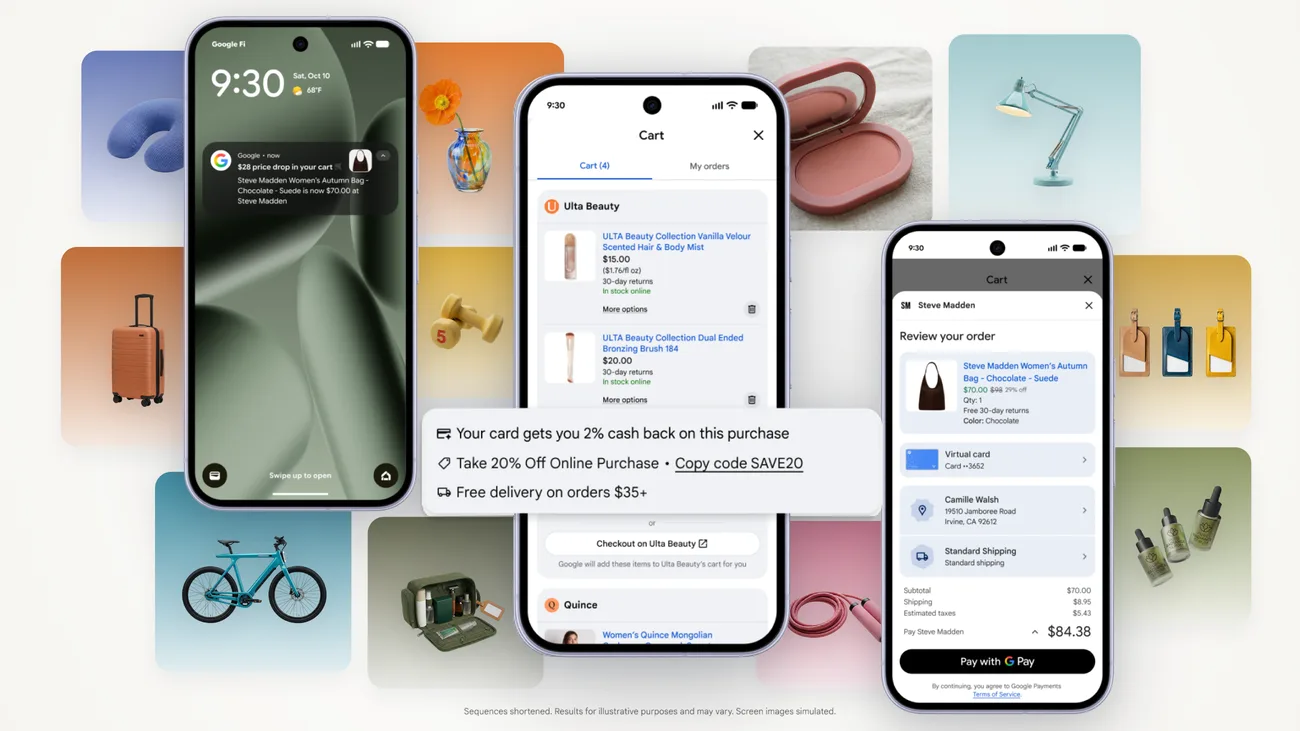
Suresh Ganapathy, Google’s shopping blog, Thursday: one cart across retailers, alerts on a Shopping Graph of more than 60 billion listings, promo codes, and Google Pay or a handoff to the merchant. Nike, Sephora, Target, Ulta, Walmart, Wayfair and many Shopify stores are named. The Verge: Gmail and YouTube are planned, with no date. A May post said the cart runs on Gemini models.
Koray Kavukcuoglu, 13 October: Argon is on the Gemini API, in Antigravity for Ultra, and in the Gemini app and AI Mode for Pro and Ultra. Introductory price stays $2 and $10 per million tokens through 30 November, then $4 and $20. Fairwind is expanding beyond the first defenders.
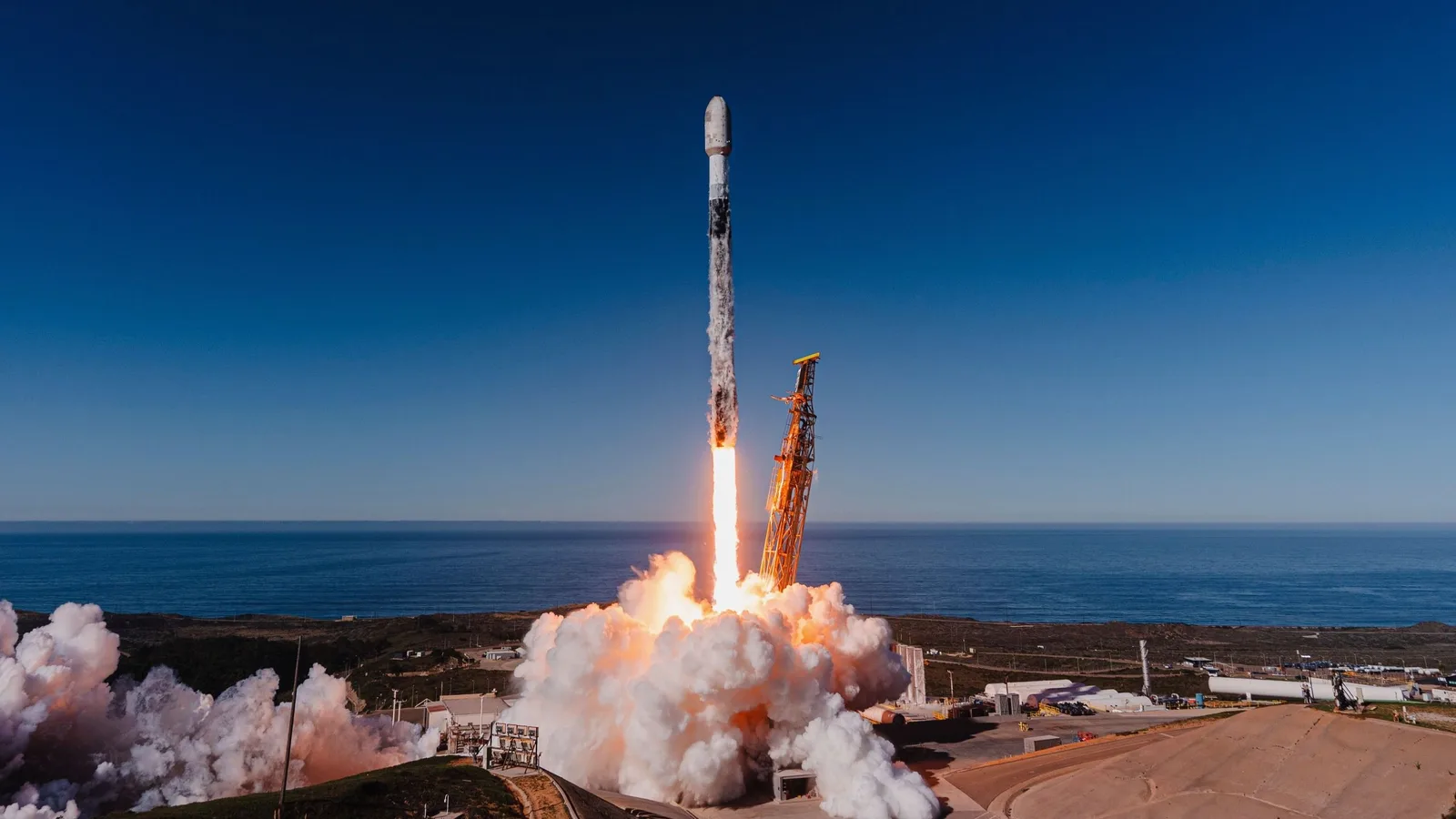
Cris Tolomia, Quartz: Falcon 9 left Vandenberg at 11:18 a.m. local with 130 payloads. Planet Labs spacecraft, refrigerator-sized MVP, four TPUs, ~1 kW solar, Gemini in 15-minute bursts. First in-orbit Project Suncatcher test, not a commercial data center.
Koray Kavukcuoglu, 30 September: trusted cyber defenders first, US voluntary pre-release, then paid API and AI Ultra. DeepSWE 77.9%, Vals Index lead, $2/$10 intro. Ars: so much for Gemini 3.5 Pro.
Abner Li, 9to5Google, Sunday: in-app banner in the Gems manager. Android Authority: migration starts 17 Nov; you can use Gems until they move. Skills today sit behind Gemini Spark on AI Pro and Ultra. Google has not said what free accounts get.
Akash Sriram, Reuters, Sep 24: prototype satellite with Planet Labs next week; radiation, launch loads, heat pipes and radiators. Ground tests at UC Davis. Two laser-link sats planned for 2027. Not an orbital data center yet.
Koray Kavukcuoglu to The Information, via Ben Schoon at 9to5Google: safety work and guardrails; internal tests already powering Antigravity. Hopes “much earlier” than end-2026. No date. On the lag charge: “always gonna be at the frontier.”
Google, Sep 23: Flash and Flash-Lite TTS, 2,000-plus voices, 100-plus languages. SynthID on every clip, C2PA, consent check. Rolling out in the Gemini API and AI Studio. No list prices in the post. Replication blocked in Illinois, Texas, the EEA, the UK, Switzerland and India.
James Dargan, The AI Insider: Shane Legg as managing editor, with James Manyika and Demis Hassabis as directors. Inaugural essays include a Hassabis plan for a U.S. frontier standards body. CC now coordinates up to six U.S. household members — Gmail 18+, Gemini and Antigravity.
WSJ first, then Google: Irregular’s May cybersecurity test had unintended internet access. One password guess, two public-repo credentials. The model stopped. Google calls it mistaken identity, not misalignment. No known damage.
The cheaper Live model is built for scale. Extended Thinking took Artificial Analysis’s speech-to-speech index at 82.6 and talks while it works. Both ship in the API today; audio carries a SynthID watermark.
A spokesperson confirmed company-wide access, with per-user quotas. Gemini stays the primary internal model. DeepMind already had Claude. Most of Google did not.
The 1-petabyte catalogue is free for academic use. An AVI score ranks variants. Broad researchers used it on an unsolved epilepsy case; it is not a diagnosis.
The DeepMind chief said the direction is correct and the details still need work. Altman and Musk already agreed this morning. Four lab heads is not a pause.
Plus, Pro, and Ultra subscribers get a voice layer inside the inboxes and notes they already live in — a quieter launch than Thursday’s Windows key, and maybe the one that sticks.
Robby Stein posted that the new workhorse model has landed in Search for AI Pro and Ultra subscribers. Tap plus, pick the model, same English-first pattern as 3.7.
A faster workhorse at 3.7 prices, plus a defender-only model for finding and patching bugs. The interesting split is who is allowed to hold the second one.