Google will turn off Search and Gemini for K-12 students until a school switches them on
A post dated Tuesday puts Gemini, Gemini Notebook, Gemini in Classroom, and Google Search off for student accounts until an administrator enables them. Chris Phillips told Chalkbeat that a school that wants no AI can choose to have no Search. Guided Learning is in Classroom worldwide today.
Feature4 minIn-depth
Priya Shah4 min read
- Gemini
- Education
- Search
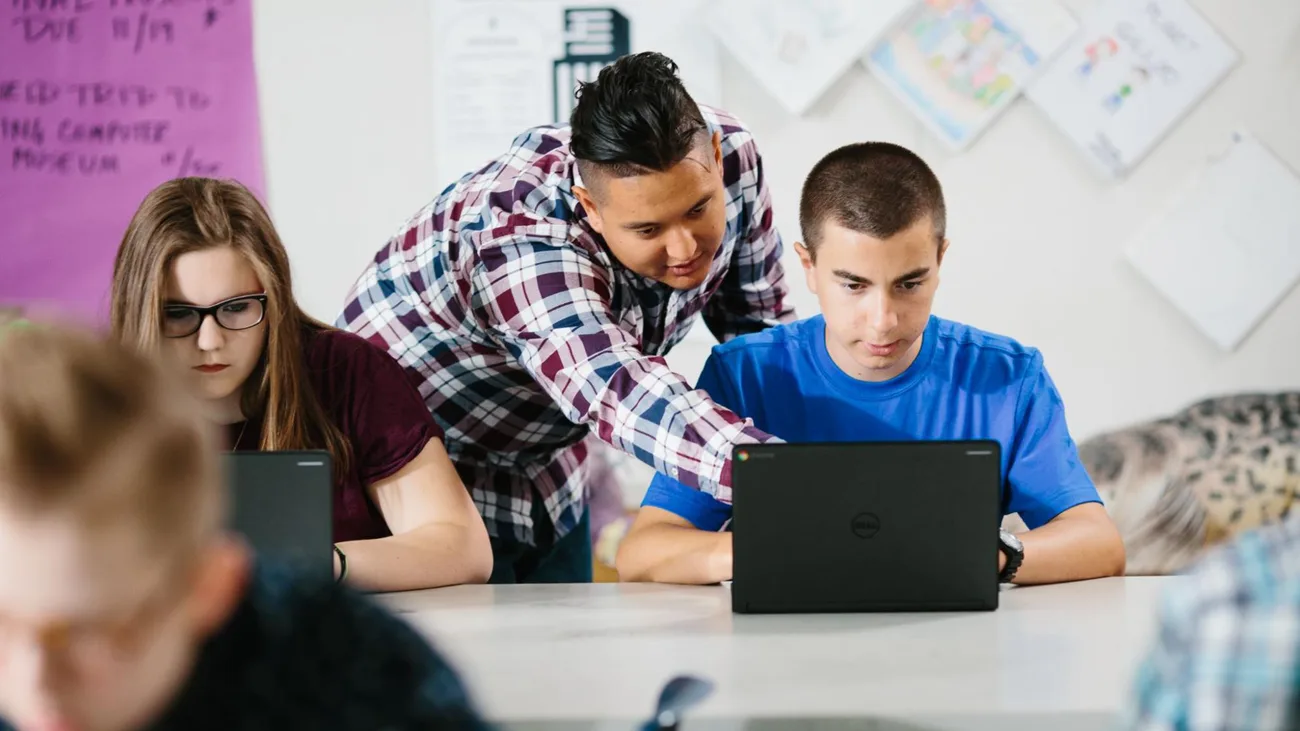
Photo: GoogleSource page
Google said on Tuesday that access to Gemini, Gemini Notebook, Gemini in Classroom, and Google Search will be entirely off for K-12 student accounts until a school administrator turns them on. The change is in a post by Chris Phillips, vice president and general manager of education, dated 3 November. Phillips writes that the company is updating those controls after listening to schools, teachers, researchers, and policymakers, and that it will share more specifics in the coming months, before the changes roll out, so schools have time to prepare. The post does not say that Search can be switched on while the AI features stay off.
That last point is what Phillips told reporters. Erica Meltzer at Chalkbeat, in a story timestamped 2:54 p.m. UTC, 15:54 in Amsterdam, quotes him: “If a school is not comfortable with that and simply wants AI off, then they have the choice to not have Search on at all.” He told her that AI is deeply integrated into Google Search and cannot just be turned off. Aisha Malik at TechCrunch, in a story timestamped 8:30 a.m. Pacific, reports a further line he gave The New York Times. “Search and AI are deeply integrated,” she quotes him telling the Times, so students at a school that restricts AI altogether “will not have access to search, and they’ll see a message from their school that indicates it’s not available.” That sentence is Malik’s account of the Times interview.
Our goal is simple: provide school leaders the control and confidence to use AI products in classrooms as they see fit.
— Chris Phillips, Google, in the company’s post of 3 November 2026
Chalkbeat’s caption on a photograph of Chromebooks says Google says Classroom is used by 150 million students and teachers worldwide. Meltzer writes that districts that do not want any AI on school devices will have to forgo Google Search, and that large districts including New York and Los Angeles are already severely restricting how students use AI. She also writes that the Trump administration is considering requiring schools to adopt limits, or to allow parents to opt out, as a condition of receiving internet subsidies. That sentence is Chalkbeat’s account of the administration. It is not in Google’s post. She adds that earlier this year Google turned Gemini on for all students as the default, a move Education Week reported, and that Microsoft and OpenAI aim their education products more at teachers.
A tutor that is not supposed to finish the assignment
The same post puts Guided Learning into two products, on different clocks. In Search, for student accounts, Google says that when its systems decide a query is a certain kind of homework help, Search will walk the student through the problem instead of going straight to the answer. The examples Phillips gives are a pasted physics problem and a request for help writing a book report. He says a pilot in select U.S. schools starts later this month, with educator feedback before a wider expansion. In Classroom, he says Guided Learning is available globally starting Tuesday. A teacher assigns the activity. The tool stays on the class material, and the teacher gets a live view of where the class needs help. He says the company tested it with schools before the launch, and that the company’s research shows measurable learning gains. The post does not print the size of those gains.
Kevin McKee, a research scientist at Google DeepMind on the company’s AI for Education team, told Chalkbeat why the default chatbot is a poor fit for a classroom. “By default, we train AI models to be helpful assistants that can do the work for the user,” he said. “But in education, in contrast, students need to do the work themselves in order to learn. Good pedagogy requires guiding students through that productive struggle.” Phillips told Meltzer the company is “excited” that the changes “will promote that productive struggle and help students really learn what they’re seeking to learn.” Meltzer writes that Guided Learning will also replace AI Overviews when a student uses Search on a school account, and that when Gemini is on inside Classroom it will run in Guided Learning mode. She writes that students will not be able to switch back to regular Gemini inside Classroom, and that teachers can read the chats.
Eisha Bush, head of teaching and learning at Common Sense Media, told Chalkbeat that schools are unlikely to walk away from Search. “The likelihood of schools and students avoiding Google Search is really slim to none,” she said. Meltzer writes that the group’s Youth AI Safety Institute calls AI Overviews and AI Mode in Search an “unacceptable risk” to students, that Google has not previously let schools disable AI Overviews, and that turning off AI Mode has taken difficult workarounds. She writes that the group rates Gemini for K-12 a “high risk” product: it protects student data better than the consumer version and does not pretend to be a friend, but it often fails to give age-appropriate answers and can be pushed into finishing assignments. Common Sense has not published a standalone review of Guided Learning, Meltzer writes. Reviewers, looking at last year’s version as part of the wider Gemini review, said it showed promise and also wrote: “It will complete homework assignments and essays, and the boundary between ‘helping’ and ‘doing the work’ is often unclear.” Company officials told her the Classroom version is stricter and was built with teachers. Meltzer writes that the company will test the changes with a small group of U.S. schools this month and roll them out more broadly early next year. The blog’s line on the Search pilot is “later this month,” and its line on the new controls is that specifics come in the coming months, ahead of the rollout.