Gemini Omni 1.2 Flash is generally available, with 15-second clips at $0.07 a second
Google’s Thursday post cuts the 720p price 30 percent from Omni 1.1 and lets a caller set length from 3 to 15 seconds. Drafts can be 360p or 720p, then upscaled to 1080p or 4K. Audio references are behind an allowlist. The Cloud post says a chat box inside Gemini for business users is still on the way.
Feature3 minIn-depth
James Okonkwo3 min read
- Gemini
- Video
- API
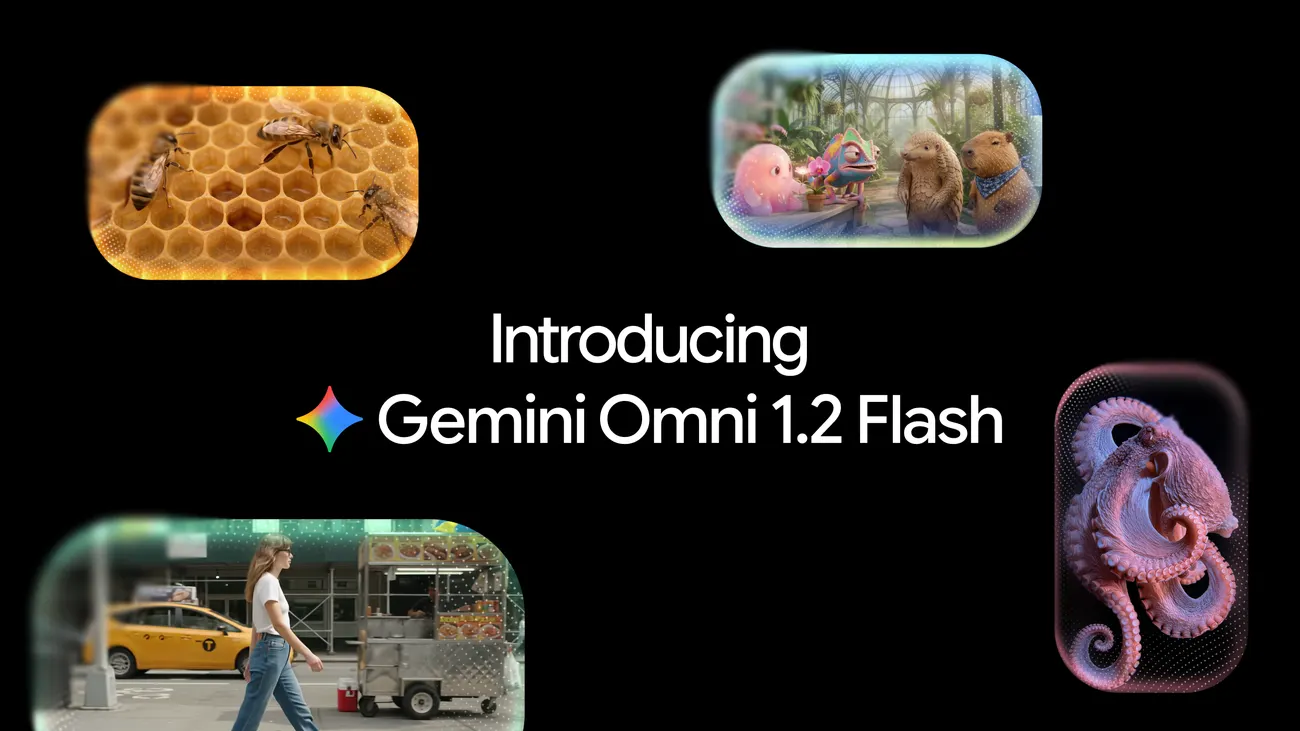
Photo: GoogleSource page
Google on Thursday made Gemini Omni 1.2 Flash generally available and priced 720p video at $0.07 a second, which the DeepMind post says is 30 percent less than Gemini Omni 1.1. The post, by Anish Nangia and dated 5 November, says the model generates and edits video natively up to 15 seconds, up from 10 seconds, and that a caller can set the length in one-second steps from 3 to 15. It says the same model is generally available on the Gemini API and in Gemini for business. A Google Cloud post the same day, by John Nack, says the savings are similar at other resolutions, and that outputs carry an imperceptible SynthID watermark. Provisioned Throughput is available.
The price cut is paired with a workflow both posts describe the same way. A user can draft at 360p or 720p, change a detail in a follow-up turn instead of regenerating the clip, and upscale a keeper to 1080p or 4K. Nangia’s post says a multi-turn edit can swap a product or a background, change the lighting or the weather, or switch the aspect ratio, across a full 15-second clip. References can include character, product, or style images, motion clips of up to three seconds, and audio cues. Nack’s post adds a limit the DeepMind post does not: audio references are behind an allowlist.
The two posts do not describe every surface the same way. Nangia says people can direct scenes in Flow, generate 15-second clips in Google Vids at no additional cost with a Google account or a Workspace subscription, and that 15-second video in the Gemini app is rolling out to Google AI Ultra subscribers. He also lists Google Ads. Nack says business users can create with the model in Gemini for business and Google Vids, and that developers can call the API. He then writes that a path inside Gemini itself, a short video from a prompt or a product photo in the chat, is coming soon for business users. The generally available claim and the “coming soon” line are both in Thursday’s Cloud post. They are not the same surface.
What customers are quoted as using it for
Nack’s post quotes customers on the 15-second length and on general availability, not on a benchmark table. Matt Rouif, chief executive of Photoroom, says the company uses Omni Flash for a Video Ad Maker and a Product Animator, that 15-second video was a top request, and that general availability and service agreements are what let Photoroom rely on 1.2 in production. Shivam Rastogi, vice president of engineering at invideo, says 15 seconds is a full scene in one generation. Narek Hayrapetyan of Picsart says a draft mode is used to try ideas and that a later render is 4K, and he puts Picsart’s creator count at more than 100 million. Those sentences are the companies’ claims, as Google printed them.
Nangia’s post also says what the model is still weak at. Development is continuing, he writes, on fast sports action, rapid script changes, and complex physics. The post presents 1.2 Flash as the model for businesses, developers, and creators making video in volume, not as a fix for those cases. The Cloud post’s customer list, which also includes Artlist, FLORA, Krea, Runway, and QuickFrame, is the same kind of evidence: named users, quoted by Google, on a day the model became a production API.