Gemini 3.8 Live and Extended Thinking: Google’s speech models now reason out loud
The cheaper Live model is built for scale. Extended Thinking took Artificial Analysis’s speech-to-speech index at 82.6 and talks while it works. Both ship in the API today; audio carries a SynthID watermark.
Deep dive3 minIn-depth
Maya Chen3 min read
- Gemini
- Gemini 3.8 Live
- Speech
- Workspace
- Search
Photo: GoogleSource page
Google on Tuesday released two speech models, Gemini 3.8 Live and Gemini 3.8 Live Extended Thinking, and put them in the Gemini API and Google AI Studio the same day. Tom Ouyang, a principal engineer, and Malini Jaganathan, writing for the Gemini Audio team, described them as the company’s most advanced live dialogue models. The cheaper of the two is built for volume. The other is built to keep talking while it works through a harder job.
Gemini 3.8 Live is the scale-and-cost SKU: conversational intelligence, fluid turn-taking, and visual grounding. Google said it placed second in the Speech Agent Arena and remains highly cost-effective next to other frontier speech systems. Gemini 3.8 Live Extended Thinking is the high-complexity SKU. It reasons and speaks at the same time. Google said it took the top spot on Artificial Analysis’s Speech-to-Speech Quality Index at 82.6, led agentic completion at 68.6 percent on τ-Voice and 35.1 percent on Sierra’s τ-Voice-banking benchmark, and scored 97.7 percent on Big Bench Audio. AI Weekly, which first flagged the launch to the trade, repeated those numbers from the blog.
See the board, switch language, keep talking
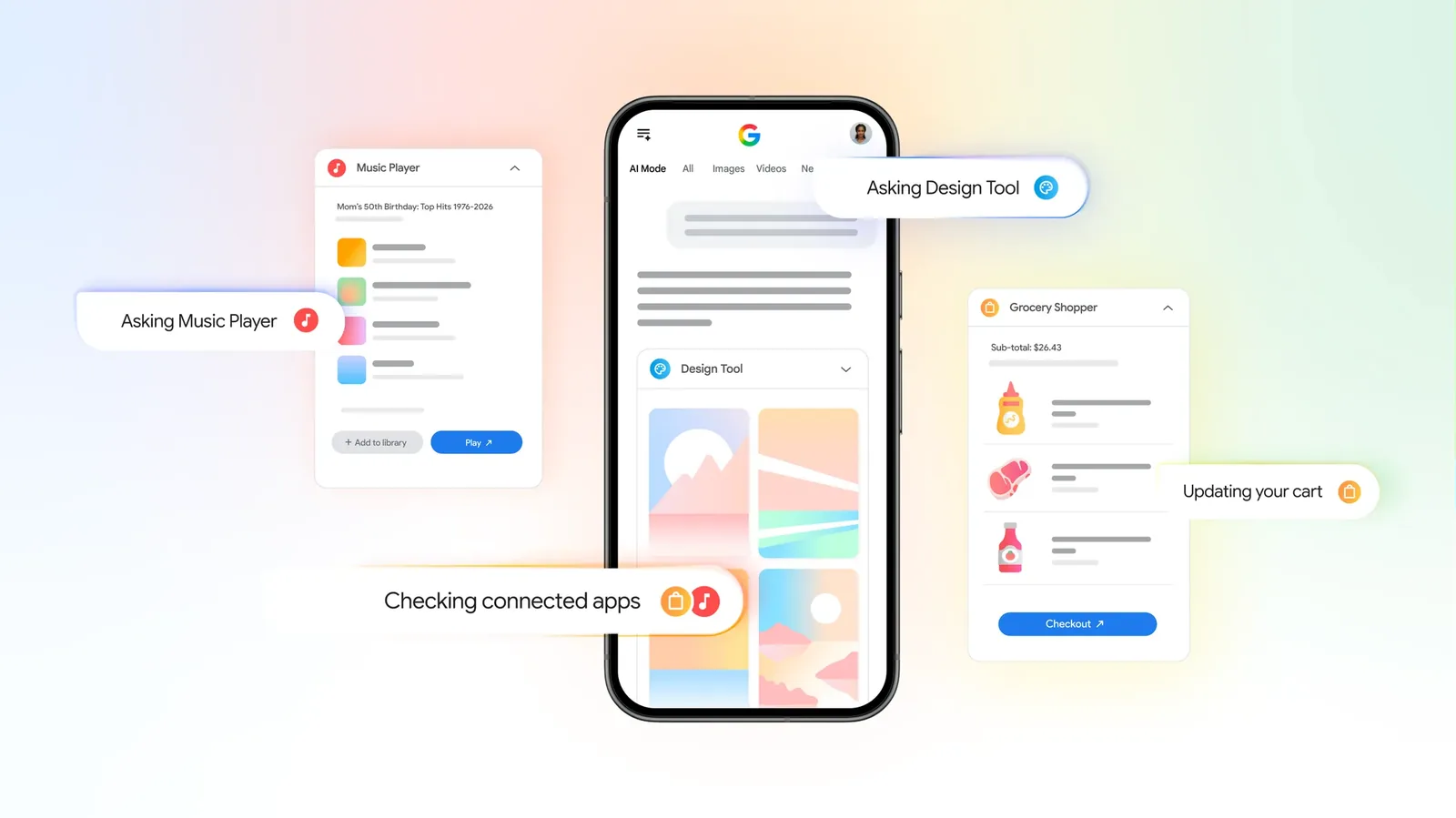
3.8 Live processes visual input in near real time. Google’s demos have it guiding an onboarding walkthrough from a camera feed and playing chess from a live board. It detects and switches among 97 languages in the middle of a conversation. Tool and API calls run in the background: the model can acknowledge a request, keep chatting, and finish the work off-mic. On ServiceNow’s EVA-Bench, which scores voice agents on accuracy against conversational quality, Google said the pair sits on the Pareto frontier for complex workflows. That run used the Live API on the Gemini Enterprise Agent Platform.
Extended Thinking is the model that narrates its own queue. Google said it uses early verbal cues — “Let me check that…” — then talks through multi-step background tasks as they progress. The posted clips show it turning sketches and live voice notes into React components, coordinating bookings with asynchronous function calls, and building a business plan from speech. The point of the product, as Google wrote it, is that the conversation does not stall while the agent thinks.
Where it actually ships
Both models are in the Gemini API and AI Studio from Tuesday. Enterprises get a private preview in Gemini Enterprise, with Gemini Enterprise for Customer Experience listed as coming soon. 3.8 Live is also in Search Live. Extended Thinking is in the Gemini Live consumer surface. In Workspace, Google AI Pro and Ultra subscribers get it in Docs; all Google AI subscribers get it in Gmail and Keep. Workspace business customers are still a later slot, listed alongside the Customer Experience preview.
That is a tighter split than last week’s Gemini Live-in-Workspace launch, which put a voice layer into Gmail, Docs, and Keep for Plus, Pro, and Ultra seats. Tuesday’s post is a model upgrade on those surfaces, not a second inbox product. Developers who want the same stack outside Google’s apps are pointed at the Live API. Google named Agora, Fishjam, LangChain, LiveKit, Pipecat, Vercel, and Vision Agents as platforms already wrapping the real-time media path. Salesforce, Genspark, and Lumeris are the enterprise names it chose to quote on latency, fluency, and tool calling.
For tasks that require deeper reasoning, 3.8 Live Extended Thinking reasons and speaks simultaneously.
— Tom Ouyang and Malini Jaganathan, Google, Sep 15, 2026
A watermark on every clip
All audio from the models is watermarked with SynthID, Google’s imperceptible audio mark. The company said the watermark is woven into the output so generated speech stays detectable. Safety detail sits in the model card, which the post links but does not summarize.
3.8 Flash, which Google shipped earlier this month as a text-and-code workhorse, is a different product. Flash is the cheap reasoning loop in Antigravity, Search AI Mode, and the API. Live is the speech stack. The interesting comparison for a developer is not Flash versus Live. It is which Live SKU they can afford to leave on for a voice agent that has to see a screen, switch language, and finish a booking without going silent.