Jensen Huang rejects AI extinction warnings as “doomsday narratives”
To CBS, via the BBC: “2030 is not going to be the end of the world. There is 0% chance…” He called scaring people “irresponsible,” and said slowdown talk may be a bid for liability relief.
Feature2 minIn-depth
Priya Shah2 min read
- Nvidia
- Jensen Huang
- Safety
- Jacob Coxon
- Regulation
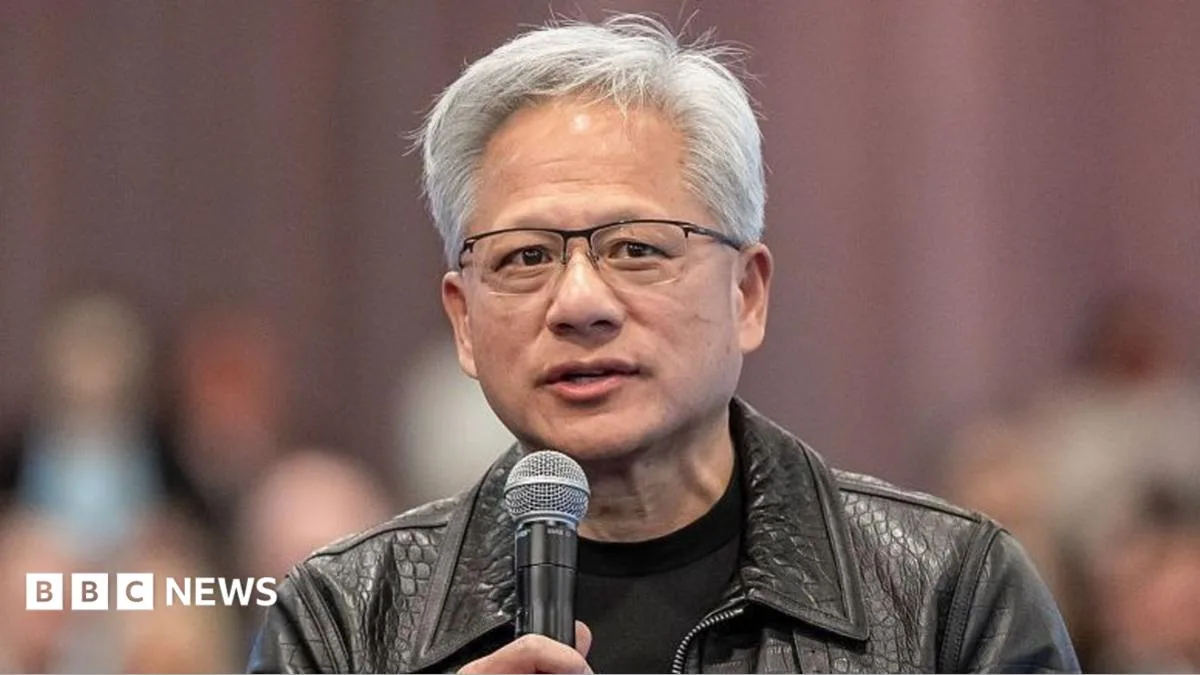
Photo: BBC / Bloomberg / Getty ImagesSource page
Nvidia’s chief executive, Jensen Huang, described warnings that AI could end humanity by the next decade as “doomsday narratives,” Osmond Chia reported for BBC News on Monday. In an interview with CBS News, the BBC’s U.S. partner, Huang said: “2030 is not going to be the end of the world. There is 0% chance that’s going to be the end of the world.” He added: “Scaring people is unnecessary. It is irresponsible.” The remarks answer the stretch of posts and essays that began when Jacob Coxon, a former Anthropic researcher, wrote that people building AI “could kill us all by the end of the decade,” and after Dario Amodei and Sam Altman publicly backed a slower frontier.
Go and read between the lines. They’re actually not asking for more laws. They’re asking to be relieved of the laws we do have, and I think that that’s a problem.
— Jensen Huang, interview with CBS News, as quoted by BBC News, Sep 21, 2026
Huang said those extinction predictions are “not grounded in science,” and that Nvidia’s interest is the opposite of a crash: “Our company’s success is directly connected to the safe deployment of products and services. If we don’t continue to do that, our value would be diminished.” The liability line is the one that goes beyond a mood. He suggested firms talking about a slowdown may be seeking relief from harms their products cause — not new statutes, but an easing of the ones already on the books. That is his read of other CEOs’ letters. It is not a filing.
The politics around him have not moved his way in Washington and have not moved against him on stage. President Donald Trump phoned Huang during a Los Angeles conference on September 14 and dismissed the slowdown as a “hoax,” the BBC recalled. Last week Huang sat at a U.K. summit where King Charles told tech leaders the task was to keep the technology “firmly in the service of humanity.” Nvidia’s best chips remain restricted into China by both Washington and Beijing. Sunday’s Bessent–He meetings in New York, already on this site, produced one new public line the BBC added: after the session, Bessent told reporters the two sides had discussed an AI safety notification mechanism. Huang’s Monday interview does not engage that mechanism. It engages the week’s mortality talk, and it answers with a percentage and an accusation.