UK public bodies say chatbot-written complaints are burying caseworkers
Joanna Partridge’s Guardian report, published Sunday, quotes a Labour MP’s caseworker who says half her office’s email is some form of AI. Lawyers in Local Government say the typical complaint has gone from about two pages to ten times that. Transport for London logged a record 4,769 freedom-of-information requests in 2025–26. The information commissioner says an AI-drafted request still has to be answered.
Feature4 minIn-depth
James Okonkwo4 min read
- Chatbots
- United Kingdom
- Public sector
- Complaints
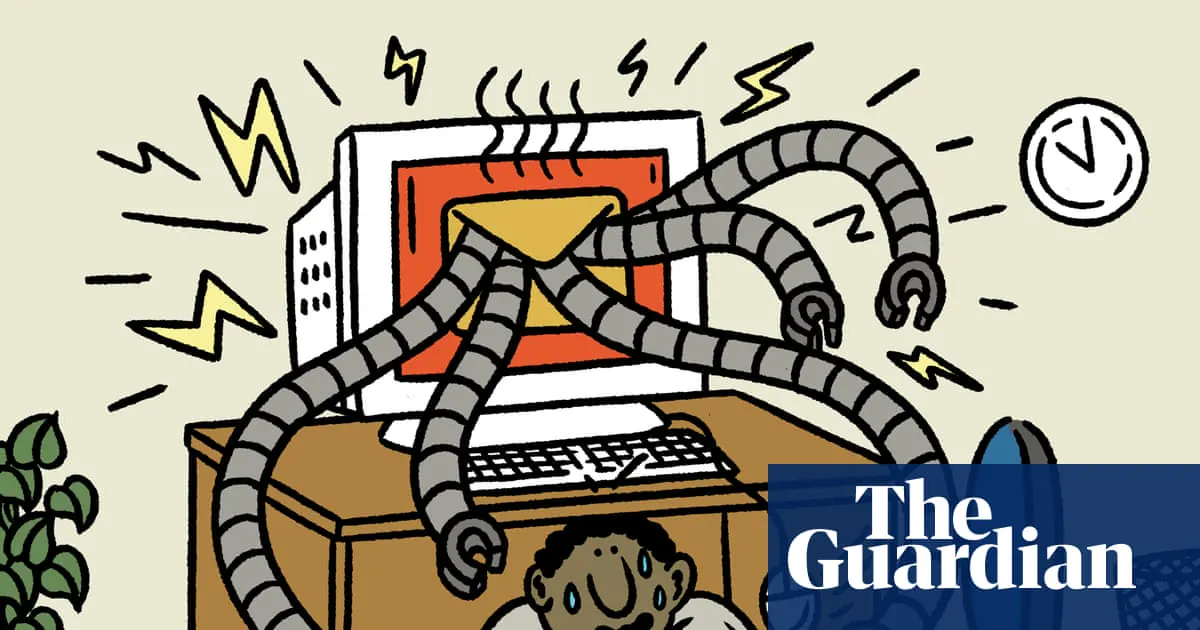
Photo: Sophie Winder / The GuardianSource page
Offices that have to answer the public are spending their time on letters a chatbot can produce in a moment. Joanna Partridge’s report in The Guardian, published at 3:00 a.m. Eastern on Sunday and updated at 5:51 p.m. Eastern, describes MPs’ offices, councils, courts, schools and other public bodies receiving complaints, requests and legal challenges that staff say are longer and harder to parse than the ones they used to get. Commenters, the paper says, have called it “AI clog.” Researchers at the centre for digital governance at the Hertie School in Berlin, the Cooperative AI Foundation and GovAI have labelled the practice of bombarding public bodies with AI-generated requests “agentic flooding.”
Half the emails we receive are some form of AI.
— Hollie Wickens, a senior caseworker in a Labour MP’s office, to The Guardian
Wickens told Partridge it “started as a trickle in 2024 and now it’s an onslaught,” and that a decade in the job has not made the new letters easier. “It is definitely more taxing.” Deborah Evans, chief executive of Lawyers in Local Government, which represents 5,600 lawyers in local authorities, told the paper that “every sector is experiencing very similar issues.” Before chatbots were widespread, she said, the average complaint to a council ran about two pages. The majority are now about ten times that. The longest she knows of is about 200 pages. Councils, she said, have one pot of money and do not get more of it because more complaints arrive. A pound spent reading them “is a pound that’s not being spent on something else.” She said the tools often write as if the complaint were a legal claim, citing statutes and case law that may come from another jurisdiction — “some great case law from Canada” — and that they sometimes invent authorities. The paper says councils treat length, stock phrases and bullet points as signs a letter was generated. Those are the readers’ heuristics, not a test the government has published.
The requests still have to be answered
The Information Commissioner’s Office, the paper reports, found that many public authorities received more requests in 2025. It says AI-generated requests can be “very long, repetitive and contain unrelated comments or misdirected demands,” can ask for more, and can be written so that it is harder to see what information is actually being sought. The ICO’s position, as Partridge reports it, is that a request which looks machine-written, and which contains mistakes, still has to be answered by a person. That is the constraint. An office can ask for clarification, and ombudsman services are starting to set word limits or to force complaints into a template, Evans said. It cannot throw the letter out because a chatbot drafted it.
Transport for London’s figures are the one public count in the piece. The agency received a record 4,769 freedom-of-information requests in 2025–26, 5 percent above the previous peak, in 2023–24. Minutes of its audit and assurance committee, the Guardian reports, noted an increase in appeals that appeared to be generated by AI and that “often contain highly technical and often inaccurate assertions and assumptions.” The paper does not say what share of the 4,769 were written with a chatbot. The “noted increase” is the committee’s description of the appeals, not a percentage.
Constituency offices, and a court statistic that is not an AI statistic
Vonnie Sandlan, head of office for Graeme Downie, the Labour MP for Dunfermline and Dollar, told the Guardian her staff are “exhausted,” “stretched to the limits and working more hours than they are paid.” The office has stopped answering automated “click to email your MP” campaigns so it can spend time on constituents. She said an agent can also help someone who would otherwise struggle to write. Lisa Gillmore, president of the GMB branch for MPs’ and peers’ staff, said: “AI is not lightening the load in MPs’ offices.” Where offices keep their own figures, “that casework has doubled or more and staff are carrying it with no let-up.” Those are the offices’ counts, not a national series.
The Guardian puts a separate official series next to this. Employment-tribunal claims opened between April and June rose 28 percent from a year earlier, 14,000 cases from single claimants, and the number of cases concluded fell, leaving 70,000 open single claims at the end of June. The paper cites those as the latest government figures. It does not say the 28 percent was caused by chatbots. What it does attribute to AI, through Jim Moore, an employee-relations adviser at Hamilton Nash, is the shape of the letters his clients are receiving: “unnecessarily verbose,” with “embellished or exaggerated claims that portray relatively minor incidents as major offences,” and often without the line that matters, which is what the person wants done. One founder, not named, told the paper a former employee’s tribunal claim reads as generated and that the founder expects to have spent £30,000 on lawyers by the hearing. That is one company’s expectation.
A few councils are looking at using the same tools to read the mail the tools are helping people send. The Guardian says Wiltshire is exploring software that would summarize long emails and draft a first reply, and that a committee at Stroud has discussed using Microsoft’s Copilot for reports. Evans’s worry about that path is “losing the human touch,” and the cost. Jamie Bartlett, a technology journalist who has been collecting accounts of the backlog, told the paper that public bodies will probably have to filter with AI themselves, or set stricter rules for what they will accept. “Otherwise I worry they’re going to get completely overwhelmed.” The piece is a set of named offices and one agency’s request log. It is not a census of how much of British correspondence is now machine-written.