Google’s orbital TPU sent back a first answer: a haiku, downlinked over Svalbard
Travis Beals says the Project Suncatcher prototype, launched on 1 October, ran an onboard Gemma 4 model and returned a three-line poem during a ground-station pass. TechCrunch says the satellite carries four TPUs, can power one of them for about 20 minutes, and generates up to 1 kilowatt. Thermal and radiation tests are next. A pair of linked satellites is the milestone Google names for 2027.
Feature2 minIn-depth
Eli Navarro2 min read
- TPU
- Gemma
- Space
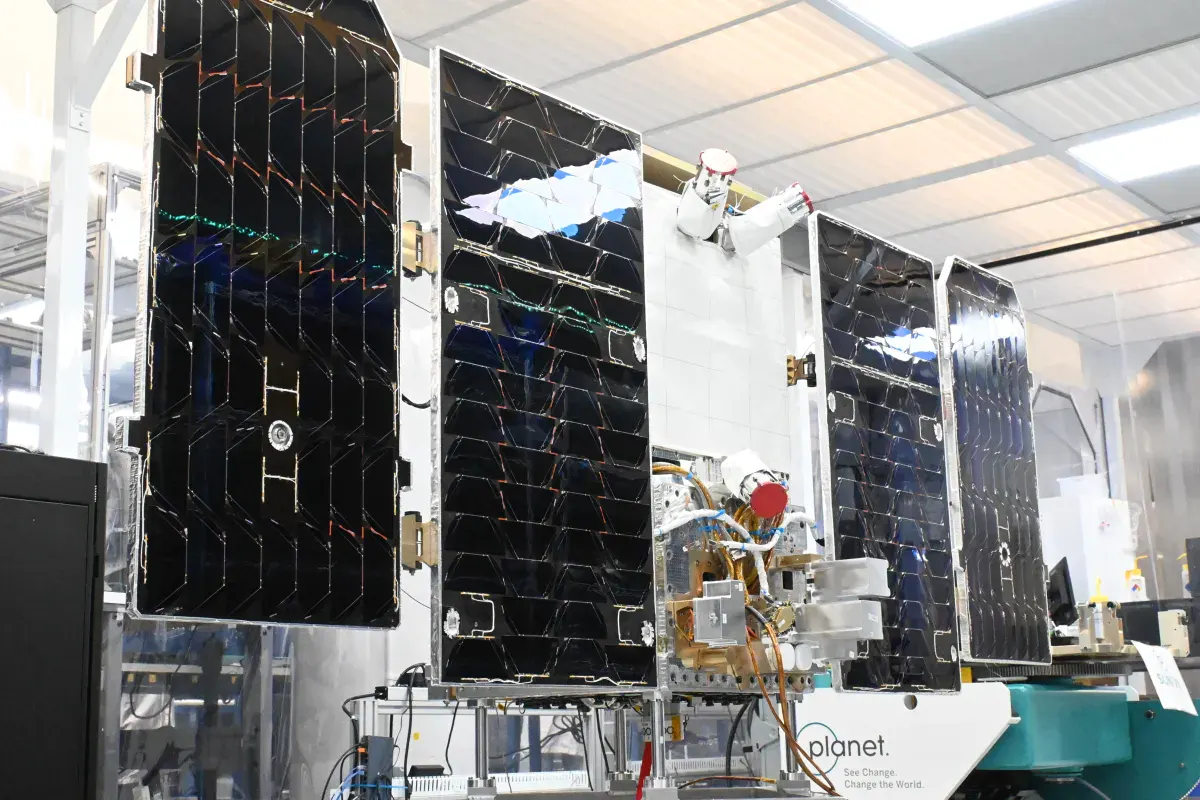
Photo: Planet Labs PBC, via TechCrunchSource page
Google says the Project Suncatcher prototype has returned its first complete answer from orbit. Travis Beals, senior director of Paradigms of Intelligence, wrote on Friday that the satellite launched on 1 October, that the weeks since were a commissioning checklist, including powering the host and the TPU trays and running early machine-learning tests, and that a ground-station pass this week produced what he calls the first AI response from a data-center-class TPU in orbit. Engineers uplinked a prompt to an onboard Gemma 4 model asking for a haiku about being in space. The reply came down as the satellite passed Svalbard, Norway.
The three lines, as Beals prints them, are “Blue marble below / Data streams in silent grace / Starlight feeds my core.” The blog post includes a sparkle emoji after the last line. Google then tried space-themed limericks and prompts that asked the payload to report its own technical status. Emma Roth’s Verge story, at 6:21 p.m. UTC on Friday, quotes the same poem and the same next step: tests of how the TPUs handle thermal stress and radiation in orbit. Beals writes that confirming the chips can run workloads in space is what leads to the following milestone he names, twin interconnected satellites in 2027.
Tim Fernholz at TechCrunch, in a story timestamped 10:00 a.m. Pacific on Friday, adds the power constraint. The satellite carries four of Google’s tensor processing units and generates up to 1 kilowatt. The draw of a TPU means the spacecraft can turn only one of them on, for about 20 minutes at a time, which tightens an already short window for talking to the ground. A correction on the story says the four chips are onboard and that only one operates at a time. A spokesperson told TechCrunch the satellite was operating nominally. The Tribune, in a story updated at 9:17 a.m. IST on Saturday and credited to ANI, quotes Sundar Pichai on X calling the exchange a “hello world” milestone: a command sent up, the TPU booted, the prompt run, and a first complete response received on Earth, a haiku.
Radiation is the test that has not happened yet
Fernholz writes that Google has already irradiated TPUs in particle accelerators on the ground, and that the orbital campaign is where the company looks at what radiation does to the hardware in space. He describes bit flips, a stored value in memory changing underneath the software, which can corrupt data without tripping the monitors that would catch a crash. Ground testing, he writes, suggested the effect would be small for inference and a larger problem for training. The haiku is an inference workload. The campaign Beals describes is what has to show whether that ground result holds.
The 2027 pair, in Fernholz’s account, is meant to generate more power and to demonstrate optical links between satellites. He writes that Suncatcher’s plan for high-speed links among close-flying satellites is unusual among proposals for orbital compute, and that the prototype flew on a SpaceX Falcon 9 with more than 100 other spacecraft. The poem over Svalbard shows that a prompt went up, a model on one TPU answered, and the text came back during a single pass. Beals’ post puts the heat and radiation work after that, not before it.