Alphabet’s revenue rises 25 percent to $127.6 billion, and free cash flow turns more negative
Wednesday’s release: Google Cloud revenue doubled to $30.7 billion, and the company says TPU system sales were a meaningful part of that growth. Net income fell to $26.2 billion. The filing records an $8.7 billion loss on equity securities. Free cash flow was negative $9.065 billion. CNBC and Reuters, citing LSEG, say revenue and profit missed, and that the shares fell more than 10 percent.
Feature5 minIn-depth
Maya Chen5 min read
- Alphabet
- Cloud
- TPU
- Earnings
Photo: Getty Images, via CNBCSource page
Alphabet said on Wednesday that third-quarter revenue rose 25 percent, to $127.6 billion, and that the quarter was its thirteenth in a row of double-digit growth. The table in the earnings exhibit lists $127,577 million, against $102,346 million a year earlier. Operating income rose 30 percent, to $40,576 million, and the release puts the operating margin at 31.8 percent. Net income available to common stockholders went the other way: $26,170 million, or $2.12 a diluted share, against $34,979 million, or $2.87, a year earlier. CNBC’s Samantha Subin, in a story updated at 6:07 p.m. Eastern, said it was the company’s first miss on both the top and bottom lines in nearly four years. Against analysts polled by LSEG, CNBC listed adjusted earnings of $2.67 a share versus $3.02 expected, and revenue of $127.58 billion versus $128.22 billion. Reuters, also citing LSEG, put the revenue estimate at $128.2 billion and the adjusted earnings target at $3.02. Both outlets said the shares fell more than 10 percent, Reuters specifying extended trading.
The drop in profit is not the operating line. The exhibit records other income and expense as an $8,221 million loss, against a $12,759 million gain a year earlier. Inside that, the net loss on equity securities is $8,664 million. A footnote says the $8.7 billion equity-securities loss reduced net income by $6.7 billion and diluted earnings by $0.55 a share, and reduced the tax provision by $1.9 billion. CNBC tied that category to stakes including SpaceX and Anthropic, and said the same category had produced a $99.03 billion gain in the second quarter. Those names and that second-quarter figure are CNBC’s. They are not in the third-quarter exhibit’s equity-securities line.
Cloud doubled, and the filing names TPU system sales
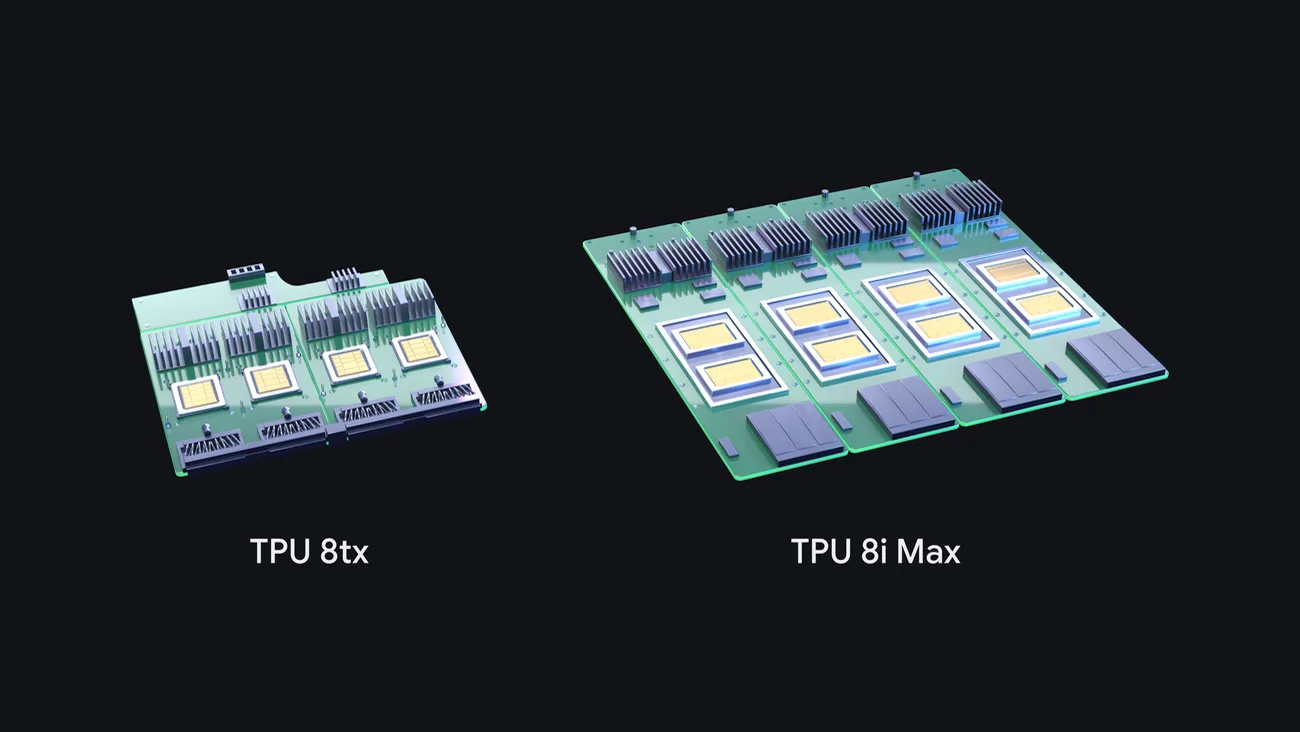
Google Cloud revenue was $30,709 million, up from $15,157 million, which is the 103 percent increase in the release. The release says growth was led by Google Cloud Platform, across enterprise AI infrastructure, enterprise AI solutions, and core services, and that sales of TPU systems were also a meaningful contributor. It does not name the buyers. The segment note says Cloud’s product revenue comes primarily from the sale of TPU systems, as distinct from consumption fees and subscriptions. CNBC said cloud revenue beat an analyst estimate of $28.7 billion. Reuters said cloud was not enough to offset advertising. Google advertising was $82,012 million. Reuters put that at $82.01 billion, about $1.41 billion short of expectations. Search and other was $63,350 million. CNBC said that was 12 percent growth, to $63.35 billion, against a $64.96 billion estimate. Operating income of $40.58 billion, CNBC said, missed a FactSet forecast of $43.19 billion.
We are seeing extraordinary demand and strong growth from both AI labs, capital markets, financial service institutions, and enterprises.
— Thomas Kurian, chief executive of Google Cloud, on the earnings call, as quoted by CNBC
Reuters said Wednesday’s call was Kurian’s first. Jefferies analyst Brent Thill, on CNBC’s Closing Bell: Overtime, said cloud was the only business that beat, at 103 percent growth, that the Street had wanted 100 percent, and that “it didn’t beat by much, and it missed some of the high-end targets. Everything else missed.” Pichai, in the edited transcript of his remarks, said Cloud customers see Google as the leading provider of AI infrastructure and solutions, that the company is bringing more capacity online, and that demand for TPU systems is strong across a wide range of customers and is expected to continue as Google scales. He did not put a dollar figure on those system sales beyond the release’s “meaningful contributor.”
Cash, the 2027 spending line, and the usage counts
Free cash flow, which the exhibit defines as cash from operations minus purchases of property and equipment, was negative $9,065 million. Operations provided $42,290 million. Purchases of property and equipment were $51,355 million. A year of four quarters in the same table still shows positive trailing free cash flow of $19,747 million, because the two earlier quarters were positive by more than the last two lost. The prior quarter in that table was already negative, at $5,855 million. Reuters rounded the new quarter to $9.07 billion and the prior one to $5.9 billion, and said the prior quarter was the first negative free cash flow in Alphabet’s 22 years as a public company. CNBC also uses $9.07 billion, and said the result fell much further than the $2.70 billion analysts expected. It reported capital expenditure of $51.36 billion against a $55.09 billion estimate. It said Alphabet left this year’s capital-expenditure forecast unchanged, after raising it in the second quarter to a range of $195 billion to $205 billion, from $190 billion.
We continue to expect our capex to increase significantly in 2027, and will provide further details on our Q4 call.
— Anat Ashkenazi, Alphabet chief financial officer, on the earnings call, as quoted by CNBC
Reuters reported the same expectation of a significant increase in 2027, and said Ashkenazi also expects near-term margin pressure from the use of third-party cloud capacity. It said an operating loss of $7.66 billion in “Alphabet-level activities” primarily reflected AI research and development. CNBC reported long-term debt of $125.1 billion, up from $21.6 billion a year earlier. That debt figure is CNBC’s, not a line in the exhibit above.
On usage, the release and Pichai’s remarks agree on two counts and the remarks add a third. First-party model APIs are processing nearly 32 billion tokens a minute, more than four times a year earlier. Pichai added that this is 40 percent more than last quarter. The Gemini app, both say, has reached one billion users, which the company calls the fastest-growing product in its history. Pichai said Argon, launched two weeks ago, saw developer-platform usage in its first week ramp three and a half times faster than Gemini 3, despite capacity constraints, and that teams in Chrome, Ads, and Search shipped 35 percent more code with 30 percent fewer errors. He said Carbon, announced the same day, is the strongest frontier model, first on the Artificial Analysis index at 59, and ahead of Argon across almost every domain. He also said that the day before, Google had announced Genie 4, which he called the company’s most advanced world model, simulating interactive worlds with native audio in real time, and that he expects more models in the coming months, including more efficient ones. He did not name or date those later models. YouTube Music and Premium, he said, passed 150 million subscribers globally, including trials. Search query growth, he said, is the fastest year-over-year rate in five years, which the release also says, and he included commercial queries in that.