Meta ships Muse Wonder and Muse Wonder Full, and keeps the weights closed
Ina Fried, Axios, 12 October: Alexandr Wang calls them frontier models, “particularly state of the art on personal and professional agentic work.” Code name Watermelon. Wonder is on the Meta Model API and Muse Code at $4 and $20 per million tokens. Wonder Full is subscription-only in Muse Code. Meta has not said the family will be open-weight.
Feature2 minIn-depth
Priya Shah2 min read
- Meta
- Muse
- Wang
- Agents
Photo: MetaSource page
Meta put two models out on Monday and did not open the weights. Muse Wonder and Muse Wonder Full, previously code-named Watermelon, are the company’s claim to a frontier release rather than another small, fast model. Ina Fried at Axios quoted Alexandr Wang, head of Meta Superintelligence Labs: “These are true frontier models, competitive with the best models in the world, and are particularly state of the art on personal and professional agentic work.” Meta’s charts, Axios wrote, show the pair topping or matching the latest models from OpenAI and Anthropic. Those charts are Meta’s. A model card was due the same day, with a fuller report later. Axios’s correction: the open-weight model Meta pointed to is Muse Glimmer, not Glitter.
Who can call them is split. Josh Walters, on Meta’s developer blog, priced Muse Wonder at $4 per million input tokens and $20 per million output, on Muse Code and the Meta Model API. Muse Wonder Full is not on that API. It is on Muse Code’s Power Usage plan and a new Maximum Usage plan, which Walters said is 80 times the Everyday Usage limit, with the same five-hour and weekly resets. Meta’s research post says Wonder Full is for Muse Code subscribers, and that both were trained at the gigawatt-scale Prometheus data centre. Wonder is also due to power later Muse assistant features, at first for paid subscribers. TechCrunch, at 10:56 a.m. Pacific, said Meta’s model card puts Wonder and Wonder Full in the same band as Fable 5.1 and GPT-6 Astra. Walters said independent runs had Wonder Full first on DeepSWE and SWE-Marathon among the models those runs scored. That is Meta citing third-party runs, not a table printed here.
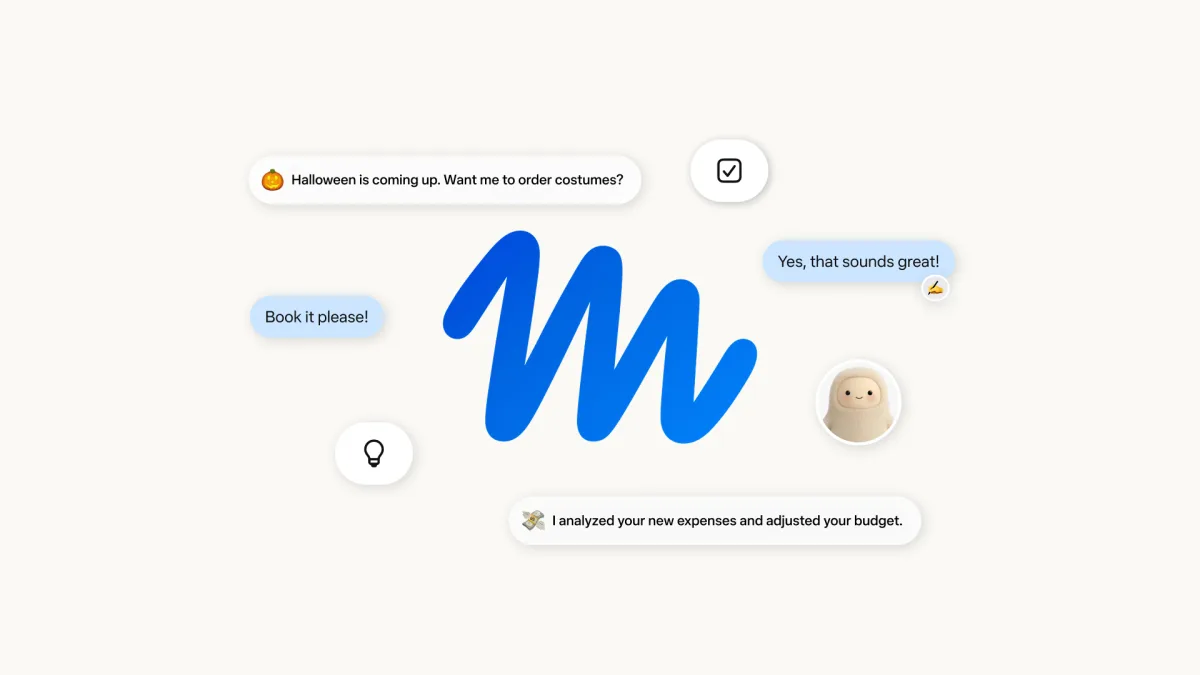
The product names Meta wants remembered are Active Memory and Active Focus. Memory is meant to keep what matters about a person across days, weeks and months. Wang told Axios: “nobody is re-explaining themselves every time.” Focus is meant to keep an agent on a goal when the first approach fails. Meta says the models do better than its own scaling trend would predict on tasks they were not trained on, because the base models are stronger. It has not said whether any Wonder model will be released as open weights. Wang said the company is “still committed to open source,” and pointed at Glimmer’s weights and the tooling for putting a Muse agent on hardware. Axios noted the other side of a model that remembers a person and acts for them: privacy and security. Meta says it has tightened safeguards against cyber and biological misuse and against leaking personal information.