NBC projects Hinojosa has beaten Abbott in Texas, where she argued for a data-center halt
Axios, citing SemiAnalysis, says Texas is 41 percent of new U.S. data-center capacity in 2028, and that Hinojosa campaigned to keep a moratorium through a session ending in mid-2027. A Ballotpedia count and a Redbud tally, both reported Wednesday, do not match.
Feature4 minIn-depth
Maya Chen4 min read
- Data centers
- Texas
- Elections
- SpaceX
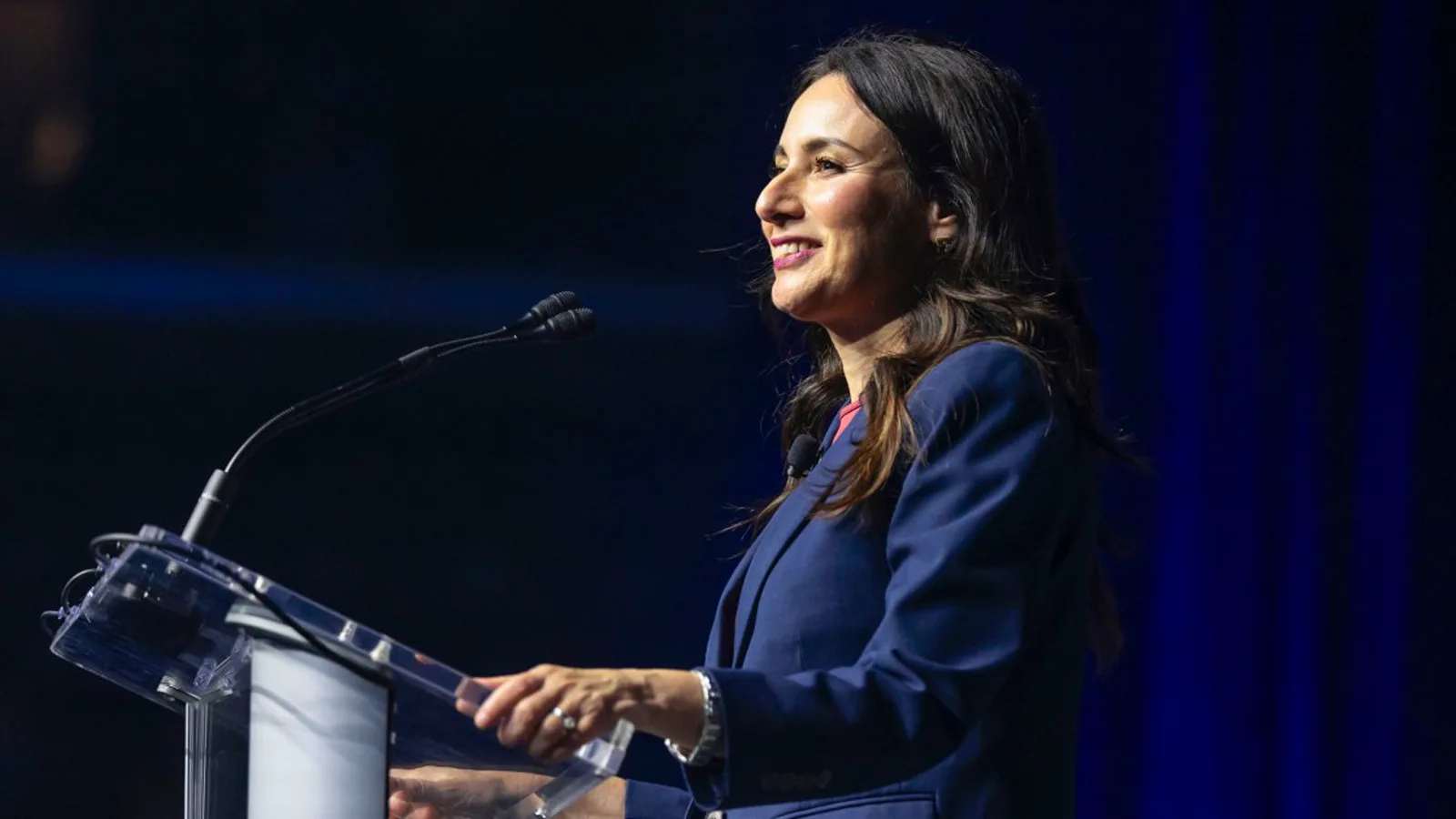
Photo: San Antonio Express-News via Getty Images, via NBC NewsSource page
NBC News projects that state Rep. Gina Hinojosa has defeated Gov. Greg Abbott in Texas. Kyla Guilfoil’s story, timestamped 11:07 p.m. Eastern on Tuesday, 05:07 on Wednesday in Amsterdam, says that projection would make her the state’s first Democratic governor since 1995 and its first Hispanic governor. Guilfoil writes that Texas is home to more than 500 data centers, the second-most of any state, and that the buildings were a campaign issue in rural counties where Abbott has usually run well. In September, she writes, he ordered the state to stop approving data-center permits while it audited their effect on the electrical grid. Hinojosa’s ads, in that account, said he was “doing the bidding of his billionaire donors” and “selling out Texas” by supporting the construction.
Axios, writing on Wednesday, says she campaigned on keeping a moratorium in place until Texas passes legislation on water, electricity, air, and property rights, in the legislative session that ends in mid-2027. The same story says most U.S. data centers expected in 2027 are already under construction, and that a hold of more than six months would stretch delays in Texas. It cites the research firm SemiAnalysis for the share that makes the state matter: 41 percent of new U.S. capacity in 2028. Axios writes that Democrats also won the three states that follow Texas on that list, Ohio, Georgia, and Arizona, and that the winners in Ohio and Georgia favor tighter rules, though it is not yet clear what those rules will say. The outlet’s own sum is that nearly two-thirds of 2028 capacity could face delays, and that most political analysts do not expect Democrats to block construction for good. Axios calls the Texas result one that “fundamentally scrambles the math for the AI buildout.”
What we just witnessed was an AI earthquake. Voters just sent a clear message that they want rules for AI and data centers.
— Brad Carson, co-founder of Americans for Responsible Innovation, to Axios
Two counts of the local ballots
The local measures are where the two Wednesday accounts stop agreeing on a number. Axios, citing Ballotpedia, writes that 41 data-center measures were on ballots in 10 states, and that about two dozen proposals written to restrict or block development appeared to have passed on the first returns. Ohio had the largest share of those fights. Some votes were still out, the story says, including in Arkansas and North Dakota.
Lauren Feiner at The Verge, in a story timestamped 4:05 p.m. UTC, 17:05 in Amsterdam, uses a different tally. A site compiled by Redbud Consulting, as of Wednesday morning, had voters facing 45 local measures, and the results of 33 of them would restrict development. She names three. The Town of Wells, Maine, favored a 180-day moratorium on large data centers, backdated to mid-June 2026. Several cities in Ohio voted to ban data centers over 25 megawatts. The City of El Dorado, Kansas, voted to ban data centers with a peak electrical load over 10 megawatts, for 10 years. Feiner also writes that, of voters NBC News polled on Election Day, 76 percent said they opposed data centers in their communities. She writes that a straight line from that opposition to any one candidate is hard to draw. Republican Rep. Byron Donalds, who opposed an outright ban, won Florida’s governor’s race. As of Wednesday morning, she writes, NBC had him at exactly 50 percent and Democrat David Jolly at 48.7 percent, with 99 percent of the expected vote counted.
A post from Musk, and the gigawatts already drawn
Reuters, in a story NBC News published at 10:40 a.m. Eastern on Wednesday, writes that Democrats took both chambers of Congress, and that Elon Musk posted on X: “Data centers in space looking pretty appealing right now.” The story says SpaceX shares were down 3.8 percent in premarket trading and Tesla was down 3.6 percent. It locates the company’s AI business at Colossus and Colossus II, near Memphis, and says SpaceX aims to nearly double capacity from 1.7 gigawatts at the end of September to as much as 3 gigawatts by the end of the year, then to scale to 13 gigawatts next year. SemiAnalysis, in that account, has identified more than 9 gigawatts of planned or developing capacity, including new buildings at Starbase in Boca Chica, Texas. Reuters writes that Hinojosa has opposed a possible sale of a beachfront state park there, after Texas Monthly reported that officials had discussed it, and quotes her from last month: “Let me be clear: Texas is not for sale.” The same story says she sued for emails between Musk and Abbott, called Abbott’s steps on data centers political theater, and wants an immediate halt on new projects until lawmakers strengthen local protections, and an end to the tax breaks.
Guilfoil’s account is a projection. The 41 percent is SemiAnalysis’s figure, as Axios uses it. The “nearly two-thirds” is Axios’s own arithmetic, paired with that outlet’s caveat that a permanent stop is not what most analysts expect, and that the centers due in 2027 are largely already being built. Feiner’s 33 and Axios’s two dozen come from different trackers, both read while some returns were still open.