Nvidia’s DSX MaxLPS lets Lambda run 19 Blackwell nodes in a 16-node power budget
Token throughput rose from about 4 million a second to 5 million, +24%, and +23% performance per watt. Santa Clara cut 4 MW to 3 MW on utility signals. Huang: a one-gigawatt factory will not become a two-gigawatt factory.
Feature2 minEasy
Priya Shah2 min read
- Nvidia
- DSX
- Lambda
- Blackwell
- Data centers

Photo: Data Centre News / NvidiaSource page
Nvidia used Friday to argue that the limit on AI factories is the megawatt, not the next GPU SKU. DSX is the company’s facility software, simulation tools and reference designs. MaxLPS, one piece of that stack, watches GPU and rack power and shifts stranded headroom so more nodes can run inside a fixed site budget. Flex, with Emerald AI’s Conductor as an early example, answers utility demand-response. Sean Mitchell at Data Centre News carried both the Santa Clara grid test and Lambda’s first MaxLPS numbers.
In Santa Clara, Silicon Valley Power told an AI site to drop load. Conductor cut the draw from 4 megawatts to 3 while keeping higher-priority inference running. Nvidia said the utility has sent more than 200 such signals, each answered automatically, under the Flexible Load Interconnect Program. Responses landed in under a minute. Varun Sivaram, Emerald AI’s chief executive, called it the first large-scale test. Mansi Shah, the company’s head of product, compared the moment to a rocket launch. Ian Buck, Nvidia’s vice president of hyperscale and HPC, told the AI Infra Summit that the metric is shifting from peak chip performance to tokens per megawatt.
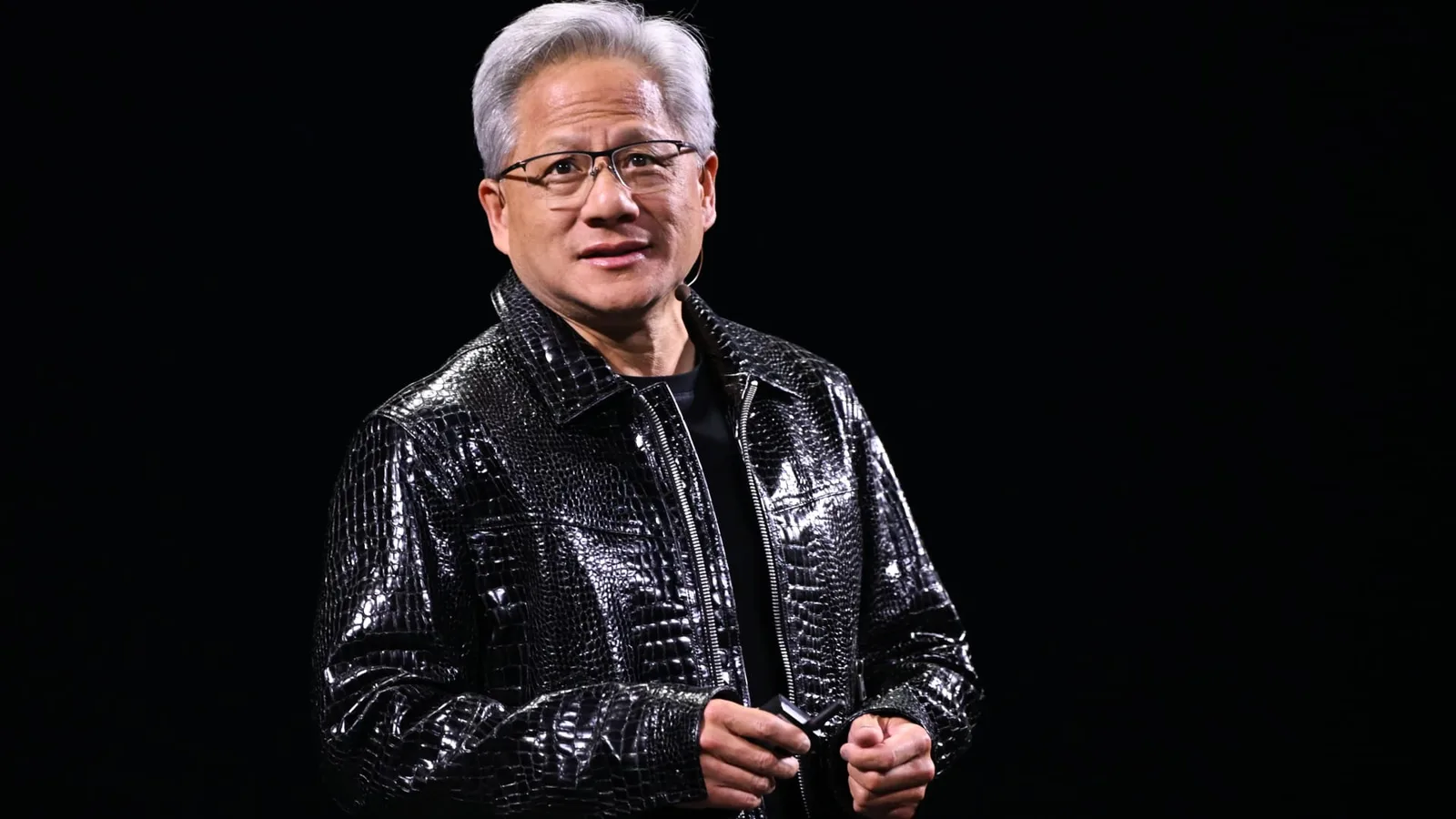
A one-gigawatt factory will never become a two-gigawatt factory.
— Jensen Huang, as quoted by Data Centre News, Sep 18, 2026
Lambda ran MaxLPS on an HGX B200 five-rack, 19-node cluster and kept 19 nodes inside the facility budget of 16 nodes at full power. Cluster-wide token throughput rose from about 4 million a second to 5 million, 24 percent, with a 23 percent gain in performance per watt. Dave Ward, Lambda’s president of cloud services, said the proof of concept had moved past the idea of a fixed power ceiling. Nvidia’s own projection, for suitable sites, is up to about 40 percent more GPU capacity for Vera Rubin NVL72 inside the same megawatt budget, and up to 35 percent more token throughput without new power lines. DSX reference designs now include 800-volt DC distribution, with claimed end-to-end efficiency gains of 3 to 5 percent versus lower-voltage layouts. Those last figures are Nvidia’s, on a platform it is selling.