DeepSeek and MiniMax have completed registration under China’s new AI export rules, state media says
The South China Morning Post, Friday afternoon in Hong Kong: CCTV’s Yuyuan Tantian says the two companies finished the registrations required after last week’s draft, and that most AI technologies would still be freely exportable. Reuters says neither company replied. The Post does not publish a licence or a list of weights.
Deep dive4 minIn-depth
Maya Chen4 min read
- DeepSeek
- MiniMax
- Export controls
- MOFCOM
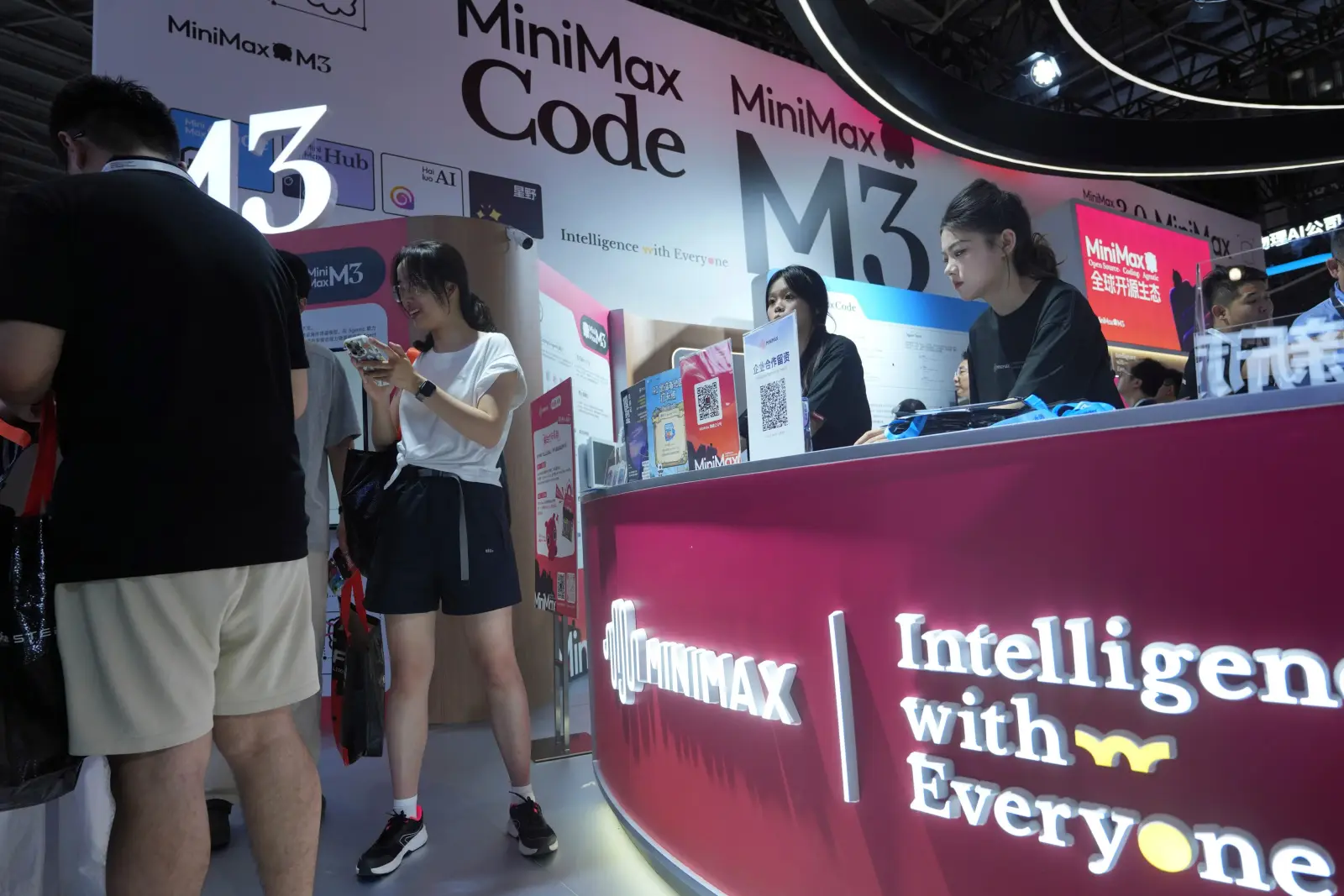
Photo: South China Morning PostSource page
DeepSeek and MiniMax have completed the export registrations in China’s new draft and have gone on with open-source releases and overseas licensing, Minxiao Chang reported for the South China Morning Post on Friday, citing Chinese state media. The story, filed from Shenzhen, was published at 2:00 p.m. Hong Kong time and updated at 2:55 p.m. The account is Yuyuan Tantian’s, a social-media account affiliated with state broadcaster CCTV. The Post says that account reported on Thursday evening that the two companies had finished the required registrations, after Beijing proposed adding export-control restrictions and prohibitions to 23 AI-related technologies, covering large language models, AI agents and computing clusters. The draft, from the Ministry of Commerce and the Ministry of Science and Technology, included provisions that took effect immediately and require official registration for the covered technologies.
Reuters, in a story datelined Beijing on Friday, used fewer words for the same Thursday post. Major Chinese AI developers DeepSeek and MiniMax have won state approval for global use of their models, Reuters wrote, according to that CCTV-affiliated account. In a separate post on Friday, Yuyuan Tantian said overseas internet users had also urged other Chinese open-source large language models to follow suit. DeepSeek and MiniMax did not immediately reply to requests for comment. The Post does not quote either company. It also does not mention this week’s reports of a fundraising round, and it does not tie the registration to any investment.
A filing before the transfer, and a line around what is still encouraged
The registration, as the Post renders Yuyuan Tantian, covers transfers of technology ownership, overseas licensing arrangements, and changes in ownership or control that involve foreign entities. Companies have to register the relevant transactions with the Ministry of Commerce before proceeding. The same post said the proposed measures were meant to set clearer regulatory boundaries, not to close off exports of Chinese AI technology. “Simply put, AI companies can continue with their commercialisation efforts as usual. Once the relevant measures are officially implemented, the vast majority of artificial intelligence technologies will still be freely exportable,” Yuyuan Tantian said.
The Post’s account draws a distinction the wire story compresses into one sentence. Yuyuan Tantian said Beijing wants to separate a transfer of underlying AI technology abroad, which it would restrict for national security reasons, from commercial AI services delivered overseas, which it would keep encouraging. Chang writes that this matches remarks a Ministry of Commerce spokesperson made last week: access to Chinese models through application programming interfaces, official websites and mobile applications would not be covered by the proposed controls. For open-sourcing, the spokesperson said expedited “automatic licensing” would apply, as quickly as “immediate reporting and export.” Reuters’ Friday story puts the ministry’s position as: most AI technologies would remain exportable, with simplified licensing for open-source exports and for Chinese companies that operate their own computing centres overseas. The proposed controls, Reuters wrote, cover overseas deployment of models that contain restricted technology. The Post says authorities started work on the draft in the first half of the year, after consulting research institutions, industry associations and leading companies.
What the post treats as already released
Yuyuan Tantian, in the Post’s telling, held up the DeepSeek and MiniMax approvals as evidence of a continued policy of “encouraging openness,” and told businesses to “remain calm in the face of the new regulations.” The post also noted speculation abroad that Beijing was changing its line on open-source models, which the account describes as a stance China has set against closed models from the US industry. Next to the paperwork, the Post says both companies have open-sourced major updates in recent days: Hangzhou-based DeepSeek upgraded its V4.1 Flash model and open-sourced its in-house inference framework, and Shanghai-based MiniMax open-sourced its M3.1 model on Friday. Those sentences are the newspaper’s. Friday’s story does not include a registration number, a schedule of which weights the filing covers, or the text of a licence.
Chang also places the registrations beside a US order. The Department of Homeland Security on Tuesday told federal civilian agencies to remove DeepSeek and third-party tools built on it, the Post wrote, a move it says Beijing criticised as discriminatory. In the same post, Yuyuan Tantian separated China’s revision from American export controls. China “is not taking the path” the United States has set, of using such measures to isolate competitors and keep a technological lead, the account said. “Our revision is a routine process carried out in accordance with laws and regulations,” it said, and added that the revision would also help China gain influence in technological competition. That is an argument from a state-media account. It is not a document showing that a named DeepSeek or MiniMax checkpoint is licensed to a named foreign customer, and neither company has confirmed the registration to Reuters.