DeepSeek’s free Search and Fetch calls in coding harnesses were scheduled to end at 16:00 UTC
The pricing page and the Search and Fetch guide say server-side calls through DeepSeek Harness, Claude Code, and Codex are still free, and that per-request billing starts at midnight Beijing time on 1 November, which is 16:00 UTC on 31 October. A 17 October post names that UTC hour. A read of the English docs on Saturday evening still contained the words “currently free.” Each successful call is $0.75 per thousand.
Feature2 minIn-depth
Priya Shah2 min read
- DeepSeek
- Agents
- Claude Code
- Codex
Photo: Hugovanmeijeren / Wikimedia CommonsCC BY-SA 3.0
DeepSeek set Saturday evening as the end of free server-side web search for agents running on its API. The company’s pricing page says Search and Fetch calls made through DeepSeek Harness, Claude Code, or Codex already hit those APIs, are currently free of charge, and start billing per request at 00:00 Beijing time on 1 November 2026. That clock is 16:00 UTC on 31 October. The 17 October post that opened the two APIs states the same start as “Oct 31, 2026, at 16:00 UTC.” A read of the English pricing page and the English Search and Fetch guide on Saturday evening, after that hour, still included the sentence that the harness calls are currently free.
The price, on both pages, is $0.75 per 1,000 successful requests for Search and the same for Fetch. The guide bills a request only when it returns HTTP 200 and produces a result. Search has to come back with a non-empty results array. Fetch has to come back with page content. Failed requests, empty searches, and timeouts are not billed. The count parameter changes how many results come back. It does not change the price of the call. The guide prints one rate for each endpoint. It does not list a peak and an off-peak price, which the token table on the pricing page does. The Chinese guide lists the same rule at 5 yuan per 1,000 successful requests for each endpoint, and the same Beijing midnight start for harness calls.
What the free note covers
The waiver, as written, is for server-side tool calls when a developer uses the DeepSeek API through those three harnesses. Search and Fetch are also standalone APIs, at POST /v1/tools/search and POST /v1/tools/fetch on api.deepseek.com, and the price table applies to them as their own products. The “currently free” sentence is attached to the harness path. Search finds pages and returns structured results from what DeepSeek calls its in-house search engine. Fetch retrieves one page and returns the content as Markdown. The guide says both are read-only. On HTTP 402, it tells the caller to top up the account before retrying. Fees, the pricing page says, come off a topped-up balance or a granted balance, with the granted balance used first when both exist.
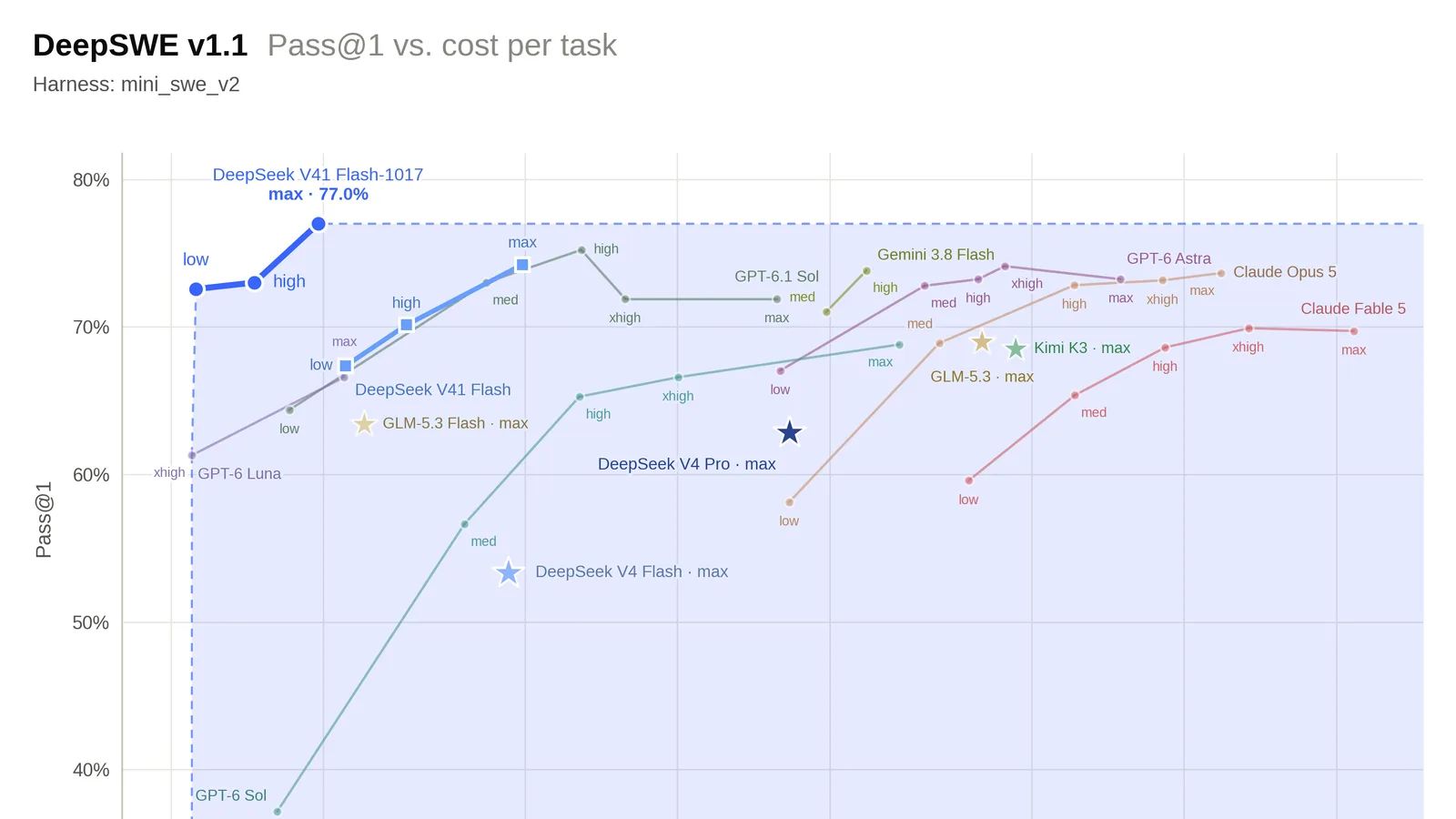
Limits sit beside the price. For each account, Search is capped at 100 requests a second and Fetch at 25, counted separately, whichever API key is used, and separate from the model concurrency limits. Traffic over the cap gets HTTP 429. Fetch has a further per-domain cap, also answered with 429. The guide does not print the per-domain number. The 17 October post’s other news, a new Flash checkpoint and a DeepSWE cost chart, is older than the billing clock. What the docs still have in force on Saturday evening is the $0.75 rate, the definition of a successful call, and a free-until line whose timestamp has passed while the words “currently free” remain on the page.