Preston’s week with the Xiaomi 18 Pro: the rear screen is for selfies, at an iPhone 18 Pro price
The Verge review, 1:00 p.m. UTC on 21 November, prices the Pro at £1,199, about $1,570, and the Pro Max at £1,399, about $1,830, and says that in the UK and Europe they compete directly with the iPhone 18 Pro and Pro Max. Dominic Preston writes that the rear display’s one clear use is the main camera as a selfie camera. A Gemini 4 Argon tool on that screen can build a small app that cannot reach the network. He finds the privacy display more flexible than the Galaxy S26 Ultra’s, and less effective.
Feature4 minEasy
Eli Navarro4 min read
- Xiaomi
- Android
- iPhone
- Gemini
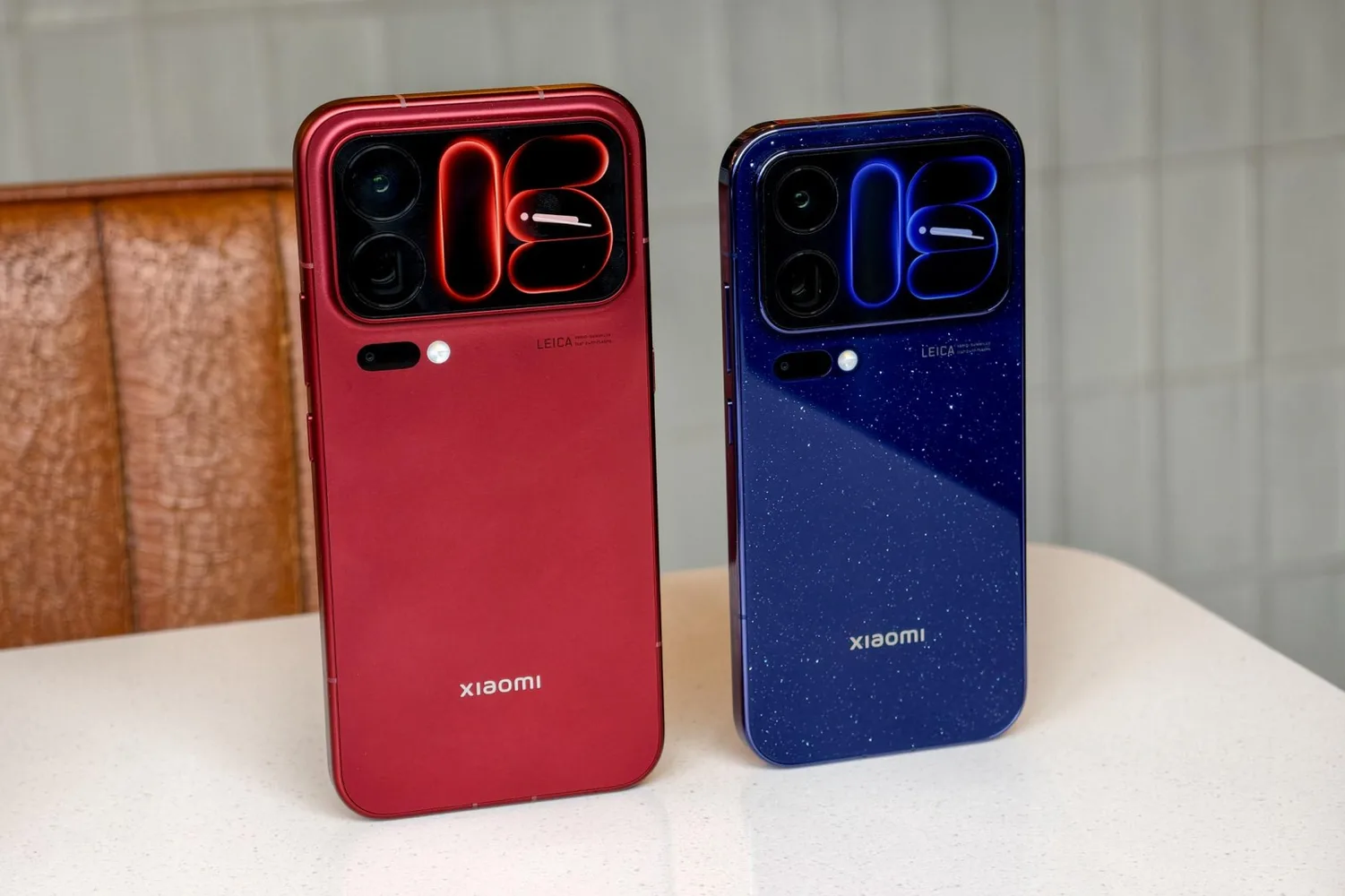
Photo: Dominic Preston / The VergeSource page
Dominic Preston’s review in The Verge, published at 1:00 p.m. UTC on 21 November, says a week or two with both Xiaomi 18 Pro phones left him unconvinced by the screen on the back. It has one obvious use, he writes: selfies with the main camera, some of the best he has taken. Otherwise he does not find it very useful. The rest of the phones, in that review, are in better shape. The cameras are good, the batteries are large, and the privacy display is a more flexible version of the one on the Samsung Galaxy S26 Ultra. The prices he prints are higher than ever, which he puts down to the RAM shortage. The Pro is £1,199, about $1,570. The Pro Max is £1,399, about $1,830. In the UK and Europe, he writes, those prices sit directly against the iPhone 18 Pro and the iPhone 18 Pro Max.
The sizes he gives are close to those iPhones as well: 6.4 inches on the Pro and 6.9 inches on the Pro Max. The Pro Max battery is 7,050 mAh, against 6,000 mAh in the Pro, and he says larger cells are sold outside Europe. Wired charging on the Pro Max is 100 watts, 10 watts faster than on the Pro. Both lasted a day in his use and stretched toward two days only with lighter use. He has seen better battery life from recent Oppo and Vivo flagships. Both phones use Qualcomm’s Snapdragon 8 Elite Gen 6. Only the Pro Max has the Extreme version. The camera hardware is nearly the same on the two phones. The Pro Max has a LOFIC main sensor, which he says gives an expanded 16-stop dynamic range and better highlights in difficult light. Most of the time, he writes, the difference is not large.
A small screen, and apps that cannot reach the network
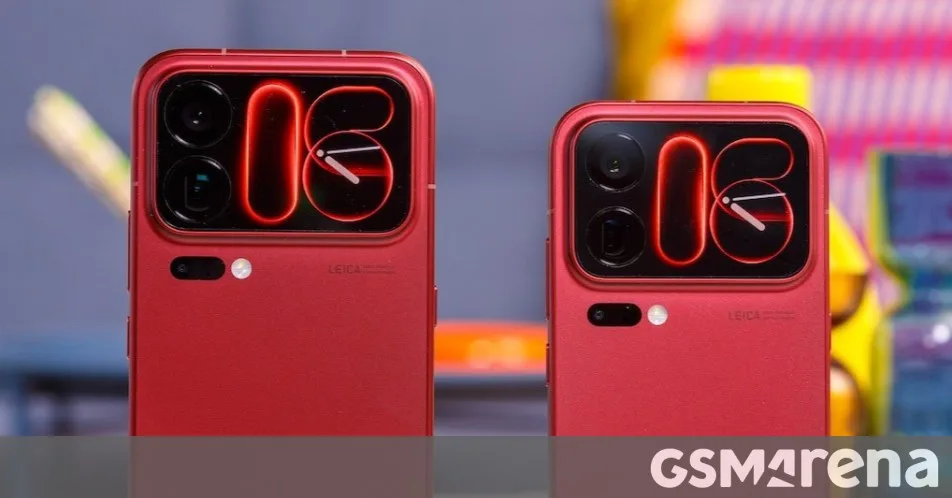
The rear screens are 2.7 or 2.9 inches. Preston gives both sizes and does not say which phone has which. They wrap the two main rear cameras and look, he writes, like the cover screens on phones such as the Galaxy Z Flip 8, only smaller and much more limited. Wallpapers can be set, and some of them move. Music and podcast controls appear when something is playing. Notifications can be turned on, which matters if the phone is face down. His objection is the implementation. The app icons are so large that little of the notification text fits. There is no quick reply, no way to mark a mail as read, and no list of notifications, only each one for a few seconds as it arrives. He calls that barely more useful than a notification light.
The small screen does not open the phone’s settings, and it does not run ordinary apps. What it does run is a tool that builds apps from ordinary language, powered by Google’s Gemini 4 Argon. Preston made a pomodoro timer and a partial Pac-Man. The creations cannot connect to the internet or to other apps. The use that changed his mind is the camera viewfinder. The controls are fiddly at that size. Photos, video and a photo-booth set can be made with the rear main camera. He writes that he has taken the best selfies of his life on this phone, and that for some buyers that may be enough.
Two strong cameras, a weak ultrawide, and a privacy mode
The main camera and the telephoto are both 200-megapixel sensors, and he calls both excellent, including in poor light. The telephoto focuses down to 12 centimetres, so it also works as a macro camera. Leica is on the software again. The default choices are Leica Vibrant and Leica Authentic, plus a new Xiaomi Original mode between them. Essential Moments, the other Leica addition he describes, uses AI to imitate three older Leica looks, at 35mm or at 75mm. The ultrawide is the weak one. It sits low enough that his finger blocks it. At 17mm, against a 23mm main camera, it is not much wider. The smaller sensor is noticeably worse, especially when the light drops. The front camera is decent, he writes, and mostly for video calls, because the rear screen makes the main camera the better selfie camera.
The privacy display is the other feature he spends time on, and the comparison there is Samsung, not Apple. It switches between sets of pixels with different viewing angles, the approach Samsung used on the Galaxy S26 Ultra. Like that phone, it can be on for the whole device or for chosen apps. Unlike that phone, an app-specific setting also covers chosen notifications, and it works in split screen or in a floating window without dimming the other apps on screen. He finds it more flexible than Samsung’s, and, to his eye, less effective. The review’s closing judgment is about the rear screen’s cost in the rest of the phone: a limited ultrawide, batteries that do not last as long as some rivals, and prices he describes as eye-watering, for a second display whose uses he could mostly do without.