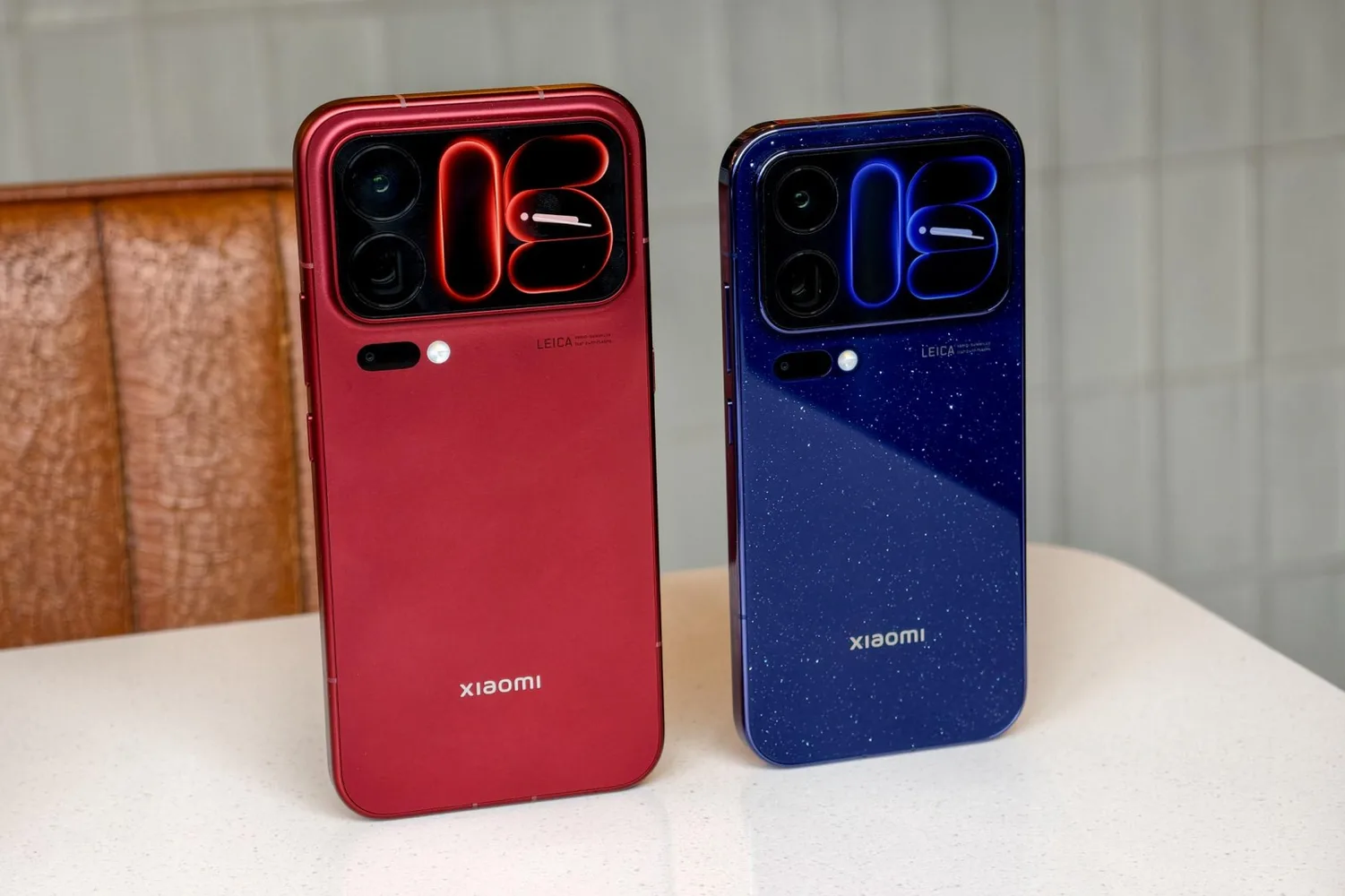
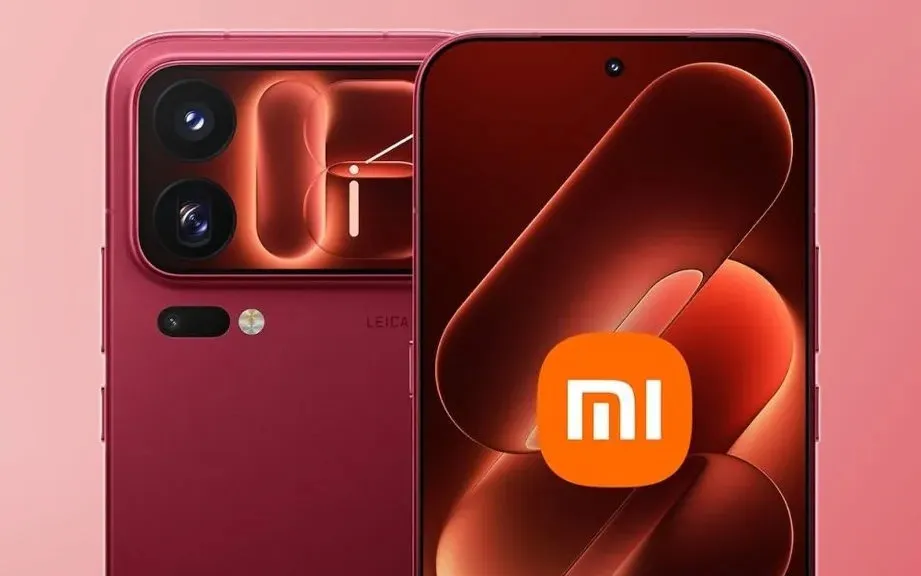
Xiaomi’s global 18 Pro starts at €1,399 with a 6,000 mAh battery, and the UK price meets the iPhone 18 Pro at £1,199
Sagar at GSMArena puts the China cells at 7,000 and 8,500 mAh, and the global ones at 6,000 and 7,050. Chris Martin’s UK card has the 256GB Pro at £1,199, the same figure Apple’s UK store lists for an iPhone 18 Pro. GSMArena says sale dates are not set. Gadgets360 says the phones are on sale.
Feature5 minEasy
Eli Navarro5 min read
- Xiaomi
- Android
- iPhone
- Paris
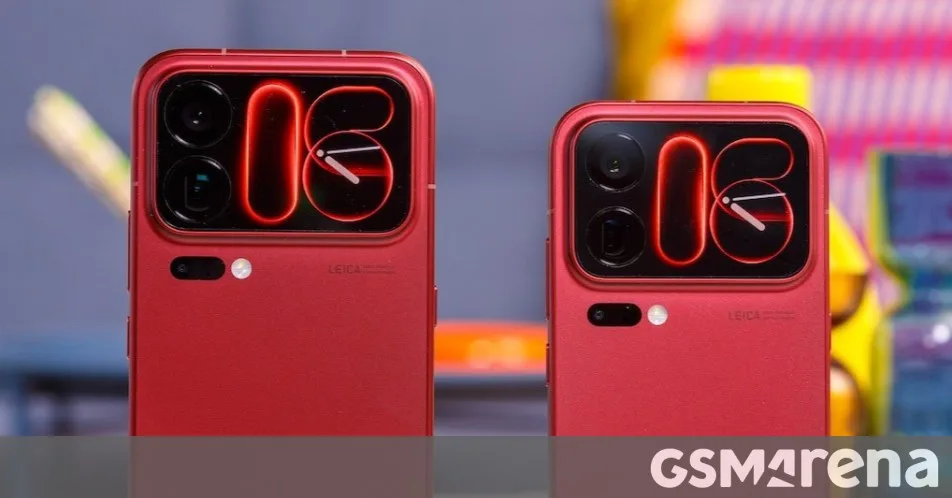
Photo: GSMArenaSource page
Xiaomi held the global launch of the 18 Pro and 18 Pro Max in Paris on Tuesday, and the battery is the spec that changed from the China phones. Sagar’s GSMArena story, dated 17 November, says the global hardware otherwise matches. The global Pro has a 6,000 mAh cell. The Pro Max has 7,050 mAh. In China, he writes, those figures are 7,000 mAh and 8,500 mAh. The Pro Max still charges at 100 watts wired and 50 watts wireless, which he says is the China rate. The global Pro keeps 50-watt wireless charging and drops wired charging from 100 watts to 90. Hadlee Simons at Android Authority, stamped 9:30 a.m. Eastern, has the same global cells and the same drop against the Chinese packs. Dhruv Raghav at Gadgets360, in a story updated at 19:48 IST, also prints 6,000 mAh and 7,050 mAh in the body. The specification module under that story still lists 7,000 mAh and 8,500 mAh, and one sentence in the body says the lineup supports 100-watt wired charging. That 100-watt line matches Sagar’s figure for the Pro Max, not for the global Pro.
The chip split is in three of the write-ups and missing from a fourth. Sagar, Simons, and Raghav say the Pro uses a Snapdragon 8 Elite Gen 6 and the Pro Max uses a Snapdragon 8 Elite Extreme Gen 6. Raghav adds that the Extreme part is on a 2-nanometre process, with a peak clock of 5.01 GHz. Simons writes that Xiaomi is not using the Extreme chip’s extra video modes, which he lists as 8K at 60 frames a second and 4K at 240. Nicholas Sutrich at 9to5Google, stamped 7:35 a.m. Pacific, describes one Snapdragon 8 Elite Gen 6 “inside the phone,” and his table of differences between the two models is the screen, the battery, and the charging speed. Xiaomi’s launch page says “Snapdragon Dual 8 Elites” and does not print the Extreme name. The three outlets that separate the chips are describing a pair. Sutrich’s sentence does not.
€1,399, £1,199, and an iPhone at the same sterling figure
Sagar’s euro prices start at €1,399 for the Pro and €1,599 for the Pro Max. Both come in Black, White, Velvet Red, and Cosmic Blue. The Pro Max has 12GB with 256GB, 12GB with 512GB, and 16GB with 1TB. The Pro stops at the first two of those. Sutrich prints the steps Sagar’s opening line does not: the Pro at €1,599 for 12GB and 512GB, the Pro Max at €1,799 for 12GB and 512GB, and a 16GB and 1TB Pro Max “soon” at €2,099. Raghav has the same euro ladder and says both phones are on sale in select markets through Xiaomi’s online store. Sagar’s last line is that sale dates have yet to be announced. Sutrich says the phones are available starting Tuesday. The three sentences are not the same claim.
Chris Martin at Tech Advisor prints the British card. The Pro is £1,199 with 256GB and £1,399 with 512GB. The Pro Max is £1,399 with 256GB and £1,599 with 512GB. Every one of those, he writes, has 12GB of RAM, so £1,399 is either the smaller phone with twice the storage or the larger phone with 256GB. Dominic Preston at The Verge, stamped 2:30 p.m. UTC, has the two opening sterling prices and converts them as about $1,580 and $1,845. Simons converts the euro starts as about $1,538 and $1,758. The dollar signs belong to the writers. Preston also writes that he has had both phones for a few days, and that a review is still to come.
Apple’s UK store lists the iPhone 18 Pro from £1,199, and it shows a 256GB model at £1,199. That is the same sterling figure as Martin’s 256GB Xiaomi 18 Pro. It is not the same phone: Apple’s page is a 256GB iPhone, and Martin’s is a 12GB, 256GB Xiaomi. On Apple’s German store the iPhone 18 Pro starts at €1,449, and a 256GB model is listed at €1,449. Sagar’s global euro start for the Xiaomi is €1,399. Those are shelf prices on two companies’ sites. Neither site puts the other phone next to its own.
A privacy mode, and a screen on the back
The privacy feature is the other comparison the write-ups actually draw, and it is with Samsung, not with Apple. Preston calls it Xiaomi’s take on the privacy display Samsung introduced this year. Simons quotes the company: “Built directly into the display hardware, the technology allows standard screen pixels to be switched off, while dedicated privacy pixels with a narrower viewing angle stay lit, limiting visibility from the sides.” He writes that it can apply to selected apps, notifications, floating windows, and split screen, and that a side button turns it on. Sutrich writes that Xiaomi, at the launch, said a subpixel layout it calls HyperRGB 2.0 is sharper and brighter than the Galaxy S26 Ultra’s privacy display. That comparison is his account of the presentation.
The rear screen is on both phones. Simons gives it a 120Hz panel, 4,000 nits, Gorilla Glass Victus 2, and the same M11 material as the front display, with Google Maps, Spotify, YouTube Music, and Gemini Live among the uses, plus a tool that generates small apps from a written prompt. Raghav sizes the rear panels at 2.7 inches on the Pro, at 596 by 912, and 2.9 inches on the Pro Max, at 596 by 976. On the cameras, Simons lists a 200-megapixel main sensor at 1/1.28 inch, a 200-megapixel 3.2x periscope at 1/1.56 inch, a 50-megapixel ultrawide, and a 50-megapixel selfie camera. The Pro Max main sensor, he writes, is a LOFIC part rated at 16.2 stops, and the Pro’s is not. Sutrich’s account of the launch bundle is three months of Google AI Pro and 5TB of cloud storage, on HyperOS 4, which Sagar identifies as Android 17. The page that still does not match the others is the one about when a buyer can have the phone.