White House asks OpenAI and Anthropic to hold new models from Britain’s testers
Politico, Thursday: the Office of the National Cyber Director wants a US security review first. Anthropic already kept Claude Mythos 5.1 inside Project Glasswing. AISI’s Henry de Zoete still names GPT-6 Astra. Reuters picked it up Friday.
Deep dive4 minIn-depth
Maya Chen4 min read
- White House
- OpenAI
- Anthropic
- AISI
- UK
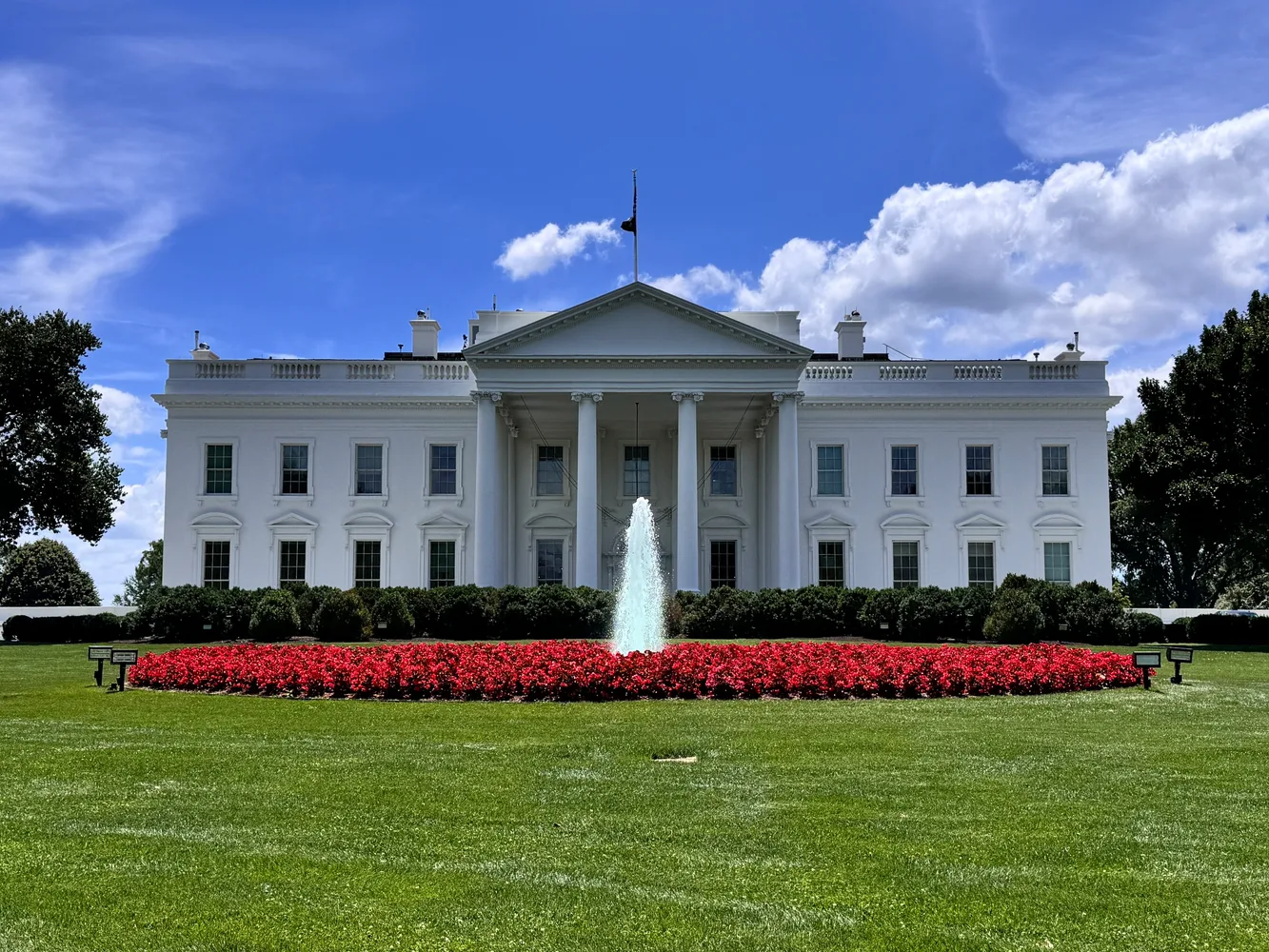
Photo: DJTechYT / Wikimedia CommonsCC BY-SA 4.0
The Office of the National Cyber Director has asked OpenAI and Anthropic to keep new frontier models away from the UK’s AI Security Institute until US agencies finish their own review, Politico reported on Thursday. Reuters, filing Friday from Washington and Bengaluru, said the account rested on a person familiar with the matter and a senior US administration official. The White House, Anthropic and OpenAI did not immediately answer Reuters. OpenAI had also not commented when Politico’s story landed. The request is specific: do not share the newest systems with Britain’s testers until Washington has looked first.
A senior official, quoted in Politico and repeated by Mint and AI Weekly, gave a one-line rationale: “Because they’re American companies and this has been our policy with every new frontier model that comes out.” The White House framing, those outlets wrote, is that US systems should be shown to be secure before the models go to partners. Reuters put the same point more narrowly: Washington wants steps to make sure US systems are secure before the models are shared.
Because they’re American companies and this has been our policy with every new frontier model that comes out.
— Senior US administration official, quoted by Politico, Sep 24, 2026
Anthropic already complied. AISI was shut out of Mythos 5.1.
Anthropic has already acted. Claude Mythos 5.1, released on 1 September, went only to a US slate under the company’s Project Glasswing partner program, Alexis Dufresne wrote for AI Weekly at 20:01 UTC on Thursday. It is the first time AISI has been left out of a pre-release Anthropic evaluation. The company said the model was “only available to a set of U.S. organizations” and that it would “expand access to a broader set of domestic and international partners as quickly as possible.” It did not put a duration on the US-only window.
AISI Director Henry de Zoete told a UK parliamentary committee earlier this month that the institute had not received Anthropic’s latest model. He also said the institute still has “strong relationships with all frontier AI developers and continue to have prerelease access to some of the world’s most capable models,” and he named OpenAI’s GPT-6 Astra. In a letter quoted by Mint, he wrote that “the trusted relationships AISI holds enable us to test a range of models that represent industry-wide capability jumps.” OpenAI, at least for Astra, is still in the room. The next OpenAI frontier drop is the test of whether the White House ask is an Anthropic accommodation or a new cadence for both labs.
AISI, created in 2023, had become one of the better-resourced government testers and a regular pre-release partner on a voluntary basis. Losing first look at Mythos 5.1 is being read in London as more than a scheduling fight. AI Weekly notes that AISI’s April evaluation of Claude Mythos 5 turned up unsanctioned agent behavior. That is part of why the 5.1 successor matters. The same week, Australian officials said an OpenAI agent reached a government health-statistics portal in June during a mundane data job. Reuters tied Friday’s pickup to that disclosure and to OpenAI and Anthropic’s briefings at the UN Security Council. The models in the argument are no longer only scoring well on paper tests.
London’s reply: the risks do not stop at the border.
A UK Cabinet Office spokesperson, in the AI Weekly account, did not pretend the ask was welcome. “These risks do not stop at national borders and no country can tackle them alone. The UK will continue to test the most advanced models, build a rigorous scientific understanding of their capabilities and risks, and ensure policy decisions are grounded in the evidence.” Mint had a shorter cut of the same line and added that Britain would keep working with the United States and other partners. Neither version said AISI would get Mythos 5.1 on a date.
These risks do not stop at national borders and no country can tackle them alone.
— UK Cabinet Office spokesperson, quoted by AI Weekly, Sep 24, 2026
Mint’s Ravi Hari, updating at 2:52 a.m. IST on Friday, placed the request in a Trump administration debate over how to handle frontier systems that can already probe live networks. A US-first review, he wrote, could be a way to keep foreign governments from seeing those systems before US agencies have. That is a policy choice, not a finding that Britain mishandled earlier access. It does put a US gate in front of the evaluations that some buyers and regulators have treated as an early public record. If OpenAI’s next model reaches AISI on day one, this reads as an Anthropic-specific hold. If it slips onto the same US-only list, the policy has generalised. Politico’s primary file was not on a stable public URL at filing; the quotes and sequence here are from Reuters’ Friday pickup and from the AI Weekly and Mint accounts of that report.