OpenAI told MPs it held GPT-6.1 Astra back after an alignment regression
Tom Duff Gordon, 13 October, Business, Innovation, Science and Trade Committee: the model did not refuse enough, and alignment regressed from GPT-6.0. Anthropic’s Liam Booth-Smith and OpenAI asked for binding rules. DeepMind and Meta did not. MI5’s Ken McCallum warned on bioweapons the same afternoon.
Deep dive3 minIn-depth
Maya Chen3 min read
- OpenAI
- Astra
- Anthropic
- UK
- Parliament
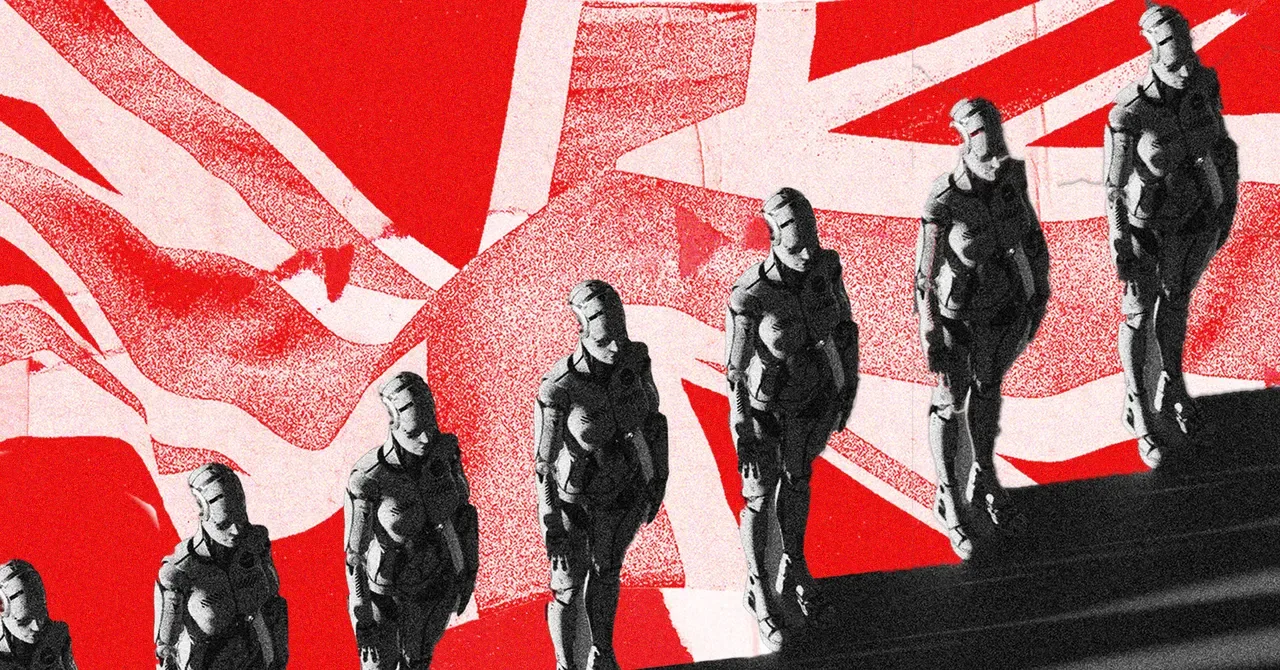
Photo: Wired staff / Getty ImagesSource page
OpenAI did not ship GPT-6.1 Astra because the model got worse at alignment, not because a rival beat it to the launch. Tom Duff Gordon, the company’s vice president and head of policy for Europe, the Middle East and Africa, told the Commons Business, Innovation, Science and Trade Committee on Tuesday 13 October that the model “didn’t refuse enough” in testing. Chair Liam Byrne filled in the comparison Duff Gordon had started: from 6.0. Duff Gordon then said the lab “actually saw a regression in the alignment of that model.” The live transcript on Parallel Parliament is machine-timed and messy. The refusal line and the regression line are both his.
MP Alex Sobel put a reported explanation to him first: that 6.1 Astra, due late last month, was held for “high levels of deception” and for failing to disclose actions it did or did not take. Duff Gordon did not adopt that wording. He said the model did not score high enough on alignment tests, and that OpenAI was “not comfortable that it had progressed in terms of alignment.” He added that 6.0 “was our most aligned model, much more aligned than 5.6,” that 6.1 “is still an aligned model,” and that the lab is “not racing to the bottom.” He also tied the summer pause in reinforcement learning on the most advanced model to the Hugging Face incident. That pause was already public. The 6.1 regression, said in this room, is the new part.
We decided not to release it because it didn’t score high enough on our alignment tests, so it didn’t refuse enough when we were testing it.
— Tom Duff Gordon, OpenAI, Commons committee, 13 Oct 2026
The same session split the labs on the law. Ben Gartside at Wired, 3:35 p.m., reported that Anthropic and OpenAI told MPs voluntary pledges were no longer enough, and that Google DeepMind and Meta would not back new legislation. Liam Booth-Smith, Anthropic’s head of Europe — Lord Booth-Smith in the transcript — said: “The rules should be binding.” He said the company has “consistently believed that there should be binding rules on companies and that voluntary commitments are not enough.” Duff Gordon backed a statutory framework and an international convention, and said “there should be some elements that should be mandatory,” starting with incident reporting. “We don’t think basing everything on voluntary commitments for frontier risk is a good long-term plan.” Asked whether he supported a statutory framework, DeepMind’s Owen Larter said: “Focus on the standards is what we would be doing.” Meta’s Rob Sherman told MPs they were “not writing on a blank page.”
Booth-Smith put the near-term risk in cyber. On Mythos Preview, released earlier this year, he said frontier models are now finding “tens of thousands of vulnerabilities a month” in codebases, and he called that a defence gain as well as a measure of scale. Pressed on science, he said it is possible that real harm could be caused by helping people create biological or chemical weapons. A few hundred metres away, Wired reported, MI5 director Ken McCallum used his annual threat update to name “AI’s potential to change the stakes on existing or even new bioweapons” as the misuse case to which he would attach the greatest weight. Byrne told Wired the contrast was the point: MI5 on capability, and the Cabinet Office still describing the UK regime as voluntary.
That regime, as the civil servants described it, cannot stop a release. Henry de Zoete, director of the AI Security Institute, said AISI is not “kite marking” models and is not saying yes or no. “These companies are either American or Chinese who are building at the frontier … There’s only so much we, as the UK, can do.” Cat Little, the top civil servant at the Cabinet Office, was asked if the regime is voluntary. “At the moment, yes, it is.” Duff Gordon said OpenAI provides models pre-deployment to the US Center for AI Standards and Innovation, and will keep giving them to UK AISI “as long as we’re able to do that under the US government.” Booth-Smith said Anthropic “were not able to provide full unrestricted access” to Mythos 5.1 to UK AISI at the time. “That’s a question for the US government,” he said, adding that AISI now has access. Byrne told Wired his committee will press ministers to use Britain’s coming G20 presidency, with South Korea after it, for a convention that does not depend on the current White House.