SpaceX’s Super Intelligence segment books $7.56 billion, more than Starlink, in the third quarter
The Sept. 30 quarter, in Tuesday’s earnings release: revenue $14.575 billion, of which Super Intelligence is $7.560 billion and Connectivity, the Starlink segment, is $5.248 billion. SI’s operating income is $431 million, against $2.367 billion for Connectivity. Adjusted EBITDA for SI is $4.953 billion after adding back depreciation and Cursor’s stock grants. Nine-month net income is still a loss of $413 million.
Feature4 minIn-depth
Eli Navarro4 min read
- SpaceX
- Grok
- Starlink
- Cursor
- Earnings
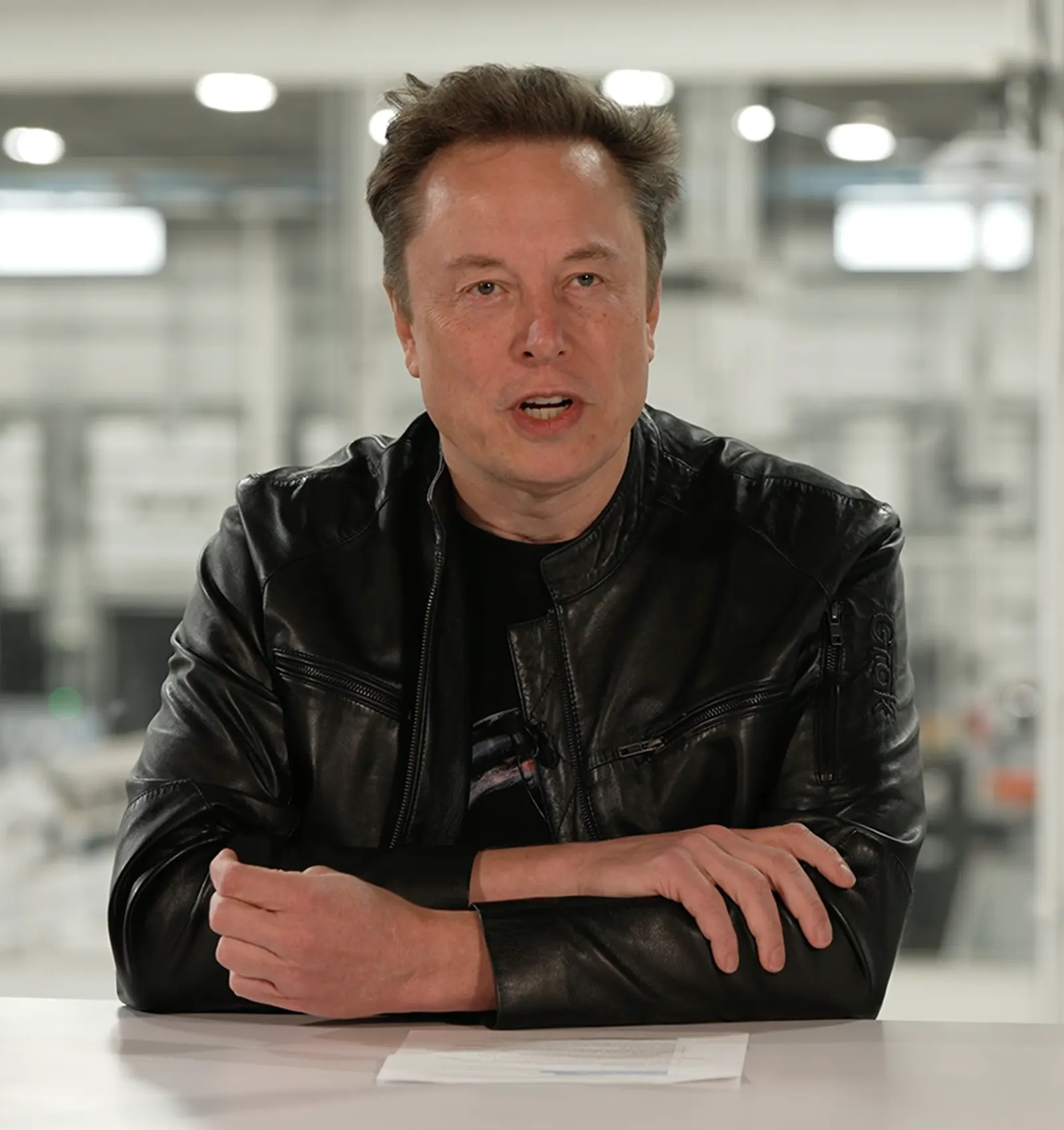
Photo: SpaceX, via TechCrunchSource page
SpaceX reported third-quarter revenue of $14.575 billion on Tuesday, and for the first time the segment it has renamed Super Intelligence was larger than Starlink. SI, which the release says was previously reported as Artificial Intelligence, booked $7.560 billion. Connectivity booked $5.248 billion. The launch business booked $1.767 billion. The three lines add up to the total. Revenue was up 161 percent from $5.576 billion in the year-ago quarter. Net income was $4.404 billion, against a loss of $1.054 billion a year earlier.
Operating income tells a different order. Connectivity earned $2.367 billion from operations. SI earned $431 million. The space segment lost $7 million. Company operating income was $2.791 billion. SI can lead the revenue table and still earn less from operations than the satellite internet business, because the quarter’s AI costs are large: cost of revenue $2.675 billion, research and development $3.183 billion, and selling, general and administrative $1.268 billion, on the segment page.
Cloud contracts, Cursor, and Grok
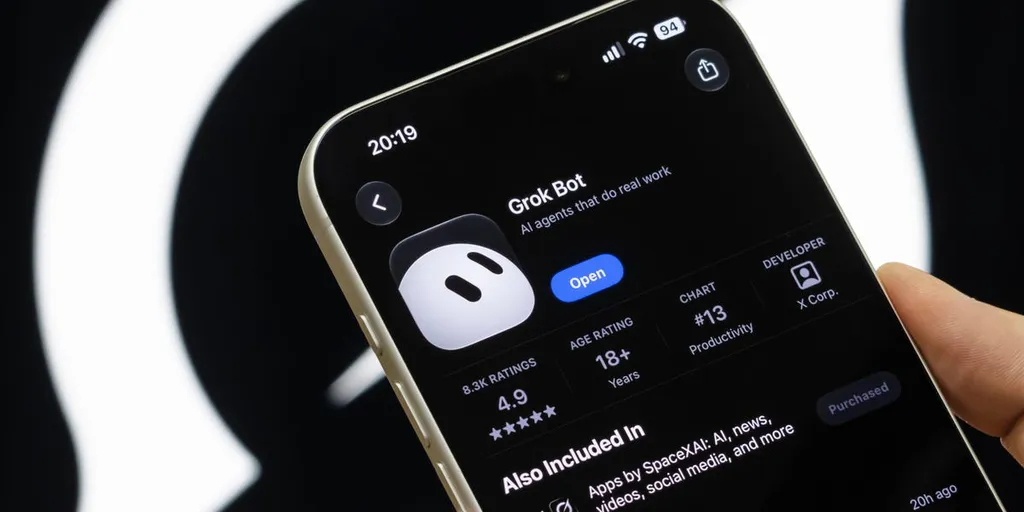
Of the $7.560 billion, the release puts $7.022 billion in “solutions and infrastructure” and $538 million in advertising. It says the revenue was driven primarily by new cloud-services agreements, the acquisition of Cursor, and higher Grok use among businesses and consumers. Cursor is not most of that sum. The release says the acquisition closed on Aug. 14 at an implied equity value of $60 billion, that the GAAP purchase consideration was $42.5 billion, and that equity awards tied to work after the deal are valued at $23.4 billion, subject to forfeiture. From the closing through Sept. 30, Cursor contributed $608 million of revenue. SI also introduced Grok Bot, which the release calls an always-on agent, and expanded nameplate compute to 1.7 gigawatts as of Sept. 30, from 1.4 gigawatts on June 30 and 0.6 gigawatts a year earlier, as it kept building Colossus II.
Adjusted EBITDA of $4.953 billion starts from that $431 million and adds back depreciation and amortization of $2.473 billion, share-based pay of $821 million, a further $1.217 billion of share-based pay from the Cursor acquisition, $8 million of deal costs and $3 million of restructuring. Adjusted EBITDA is the company’s non-GAAP figure. It says other companies may calculate the same label differently. For the first nine months, SI’s operating result is still a loss of $3.295 billion, and its adjusted EBITDA is a profit of $5.490 billion. Capital spending on SI in the quarter was $16.444 billion, out of $19.593 billion for the company.
Starlink, Starship, and a forecast that is not in the tables
Connectivity revenue rose 69 percent from a year earlier. Consumer subscribers, the metric the company used to call Starlink subscribers, were 13.6 million at Sept. 30, up from 12.0 million in June and 7.2 million a year earlier. The definition covers personal plans and some business plans, and leaves out managed enterprise and government contracts. The release says there are hundreds of thousands of those enterprise subscribers in addition, and that more than 3,800 aircraft had Starlink. Consumer monthly revenue per user was $69, up from $66 in the prior quarter and down from $83 a year earlier. After the quarter, the company agreed to buy FCC licenses for 800 MHz spectrum for what it calls Starlink Mobile. It expects the deal to close in the first half of 2027, if regulators allow it. Starship Flight 14, which the release calls the first orbital flight and the first revenue-generating Starship mission, put 26 Starlink V3 satellites up. The company says that is about ten times the downlink a Falcon 9 Starlink launch adds.
Below operating income, other income was $1.025 billion, of which $561 million was from a related party, interest income was $873 million, interest expense was $675 million, and income taxes were a $390 million benefit. That is how net income of $4.404 billion sits above operating income of $2.791 billion. For the nine months, net income is still a loss of $413 million. Basic earnings for the quarter were 37 cents a share, on a weighted average of 11.942 billion shares, against 2.941 billion shares in the year-ago quarter. The release does not explain the change in the share count in the lines above that table.
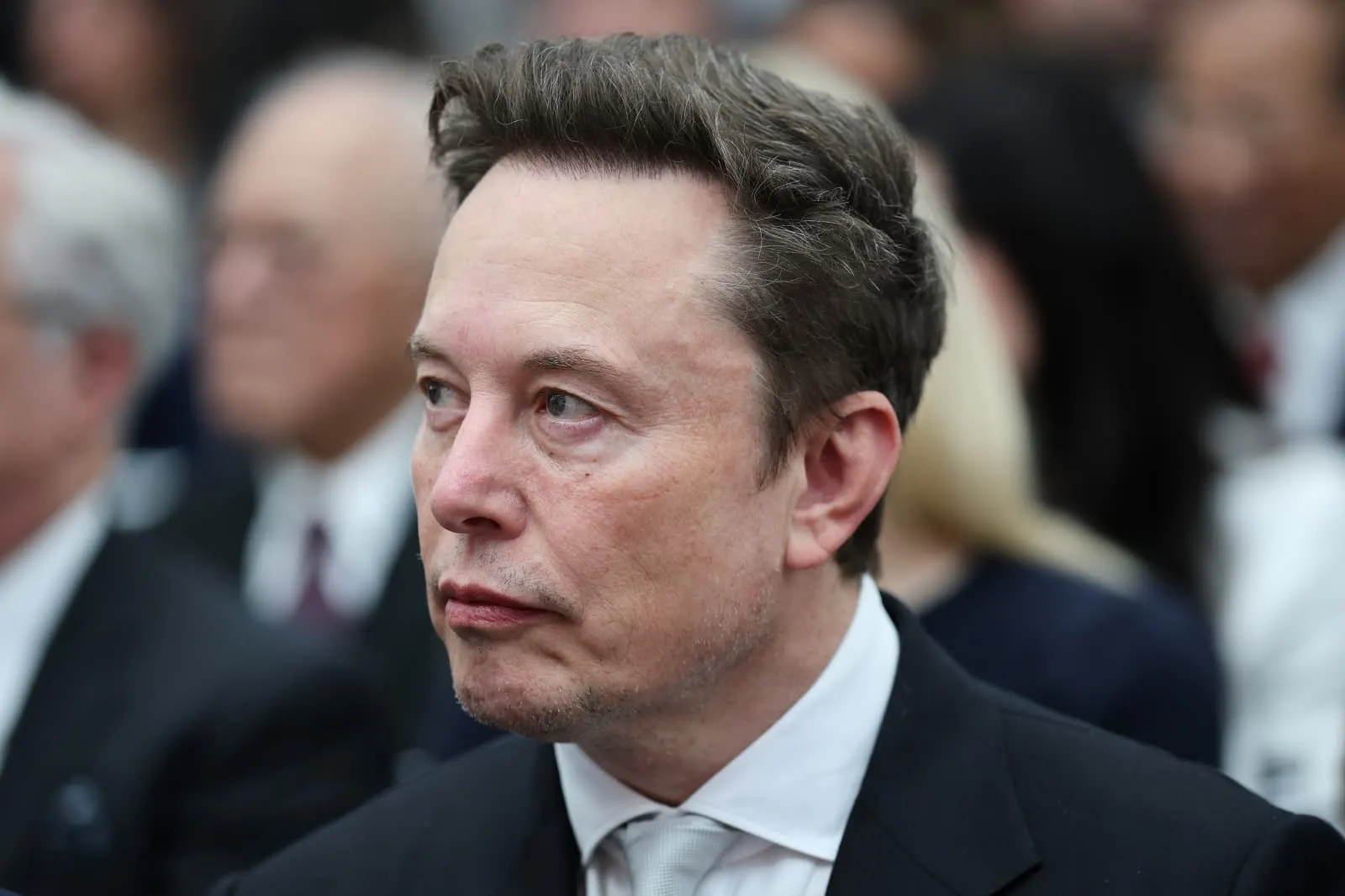
Tim Fernholz and Kirsten Korosec at TechCrunch reported a livestream with investors that is not transcribed in the filing. They wrote that chief financial officer Bret Johnsen said fourth-quarter capital spending would be $35 billion to $40 billion, and that he forecast first-quarter 2027 revenue of $33 billion to $37 billion. They quoted Elon Musk predicting annual recurring revenue for the Super Intelligence business, by the end of 2027, “somewhere between $500 billion and $1 trillion.” Those are forecasts TechCrunch attributes to the call. They are not figures in the earnings release. Musk also said, as TechCrunch rendered it, that he is spending four days a week in Memphis on Colossus II, and that the constraint on deploying what the company calls super intelligence “is more in power and cooling and infrastructure than it is in chips.” He said SpaceX is using its own metal-casting work to get turbine parts that manufacturers are waiting 12 to 18 months for. The quarter’s filed number is the simpler one: $7.56 billion of AI revenue, $431 million of AI operating income, and a satellite business that still earns more from operations.