Nvidia’s 8-K says the board took Huang’s resignation on Wednesday, and Kress signs it as interim chief executive
The filing, signed Thursday, uses the name Jen-Hsun Huang and says Colette M. Kress, 59, keeps the finance job. The press release, dated the same day, says Jensen Huang and does not print her age. Reuters’ early-trading figure was a drop of 8.2 percent. TechCrunch’s, at 6:10 a.m. Pacific, was nearly 12.
Deep dive6 minIn-depth
Maya Chen6 min read
- Nvidia
- Chips
- Jensen Huang
- Colette Kress
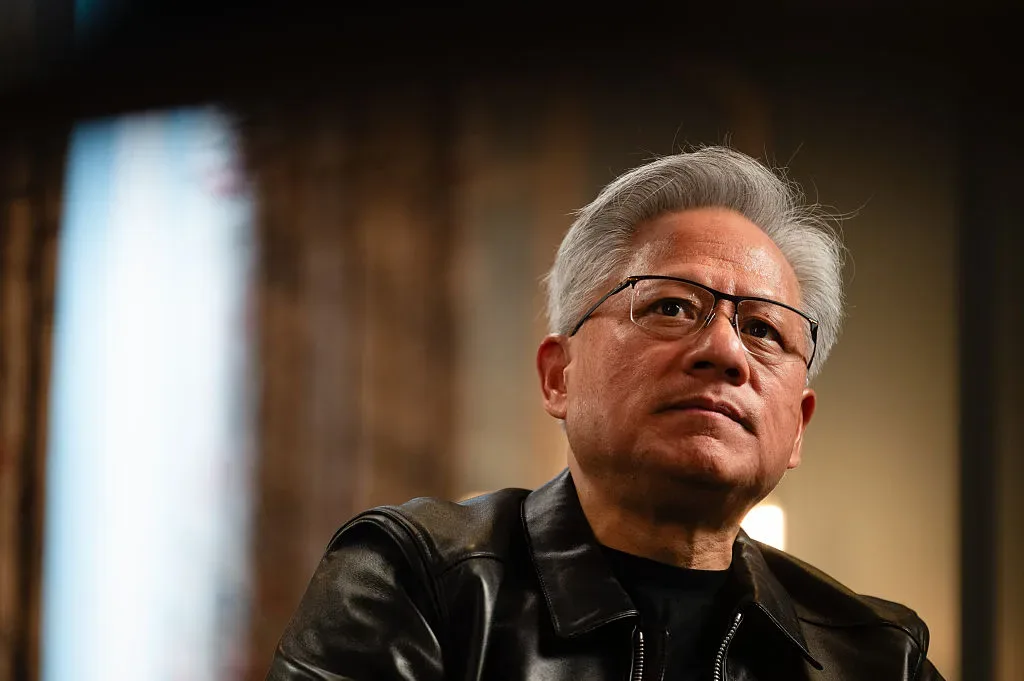
Photo: Jose Sarmento Matos / Bloomberg / Getty Images, via TechCrunchSource page
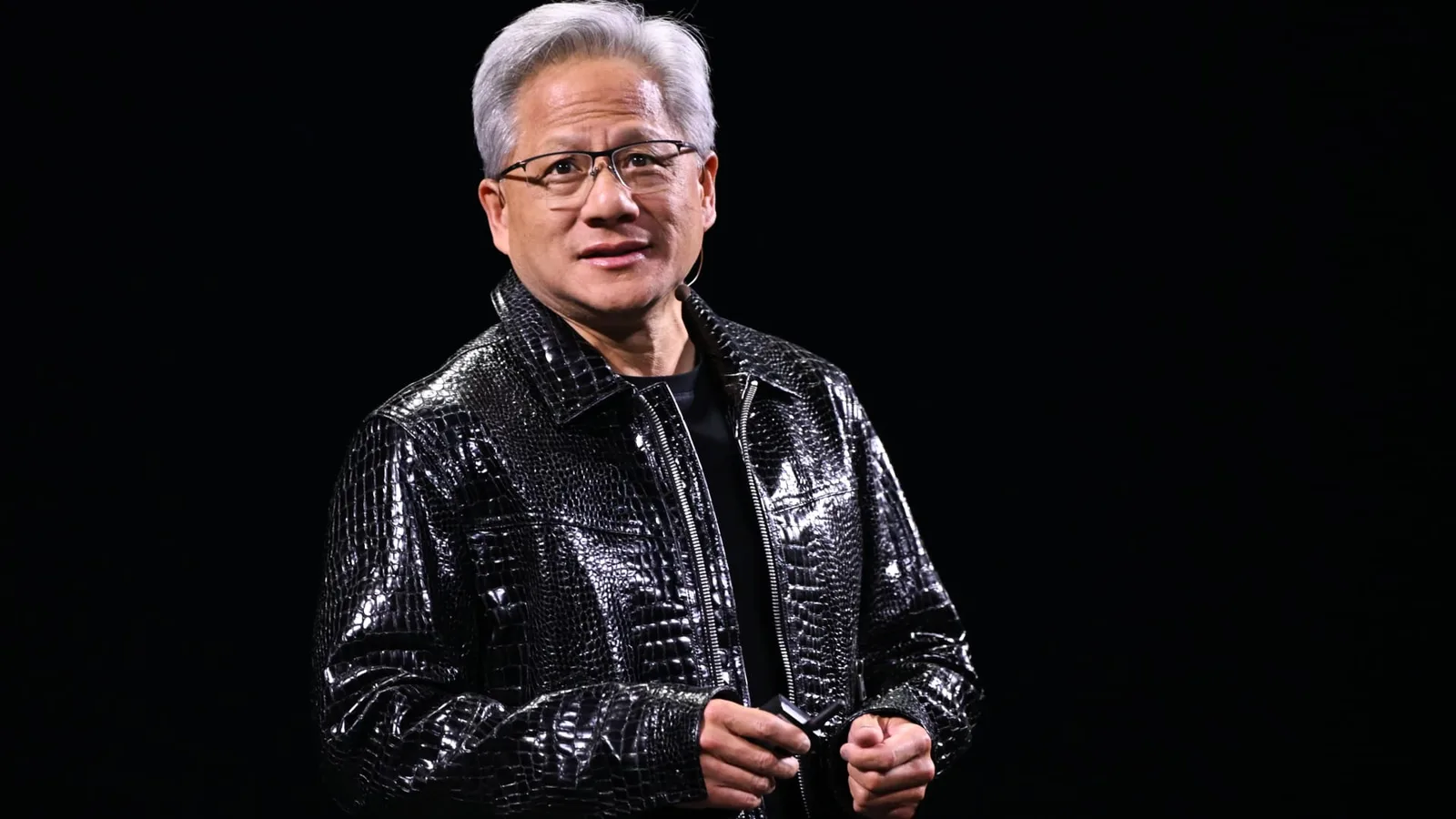
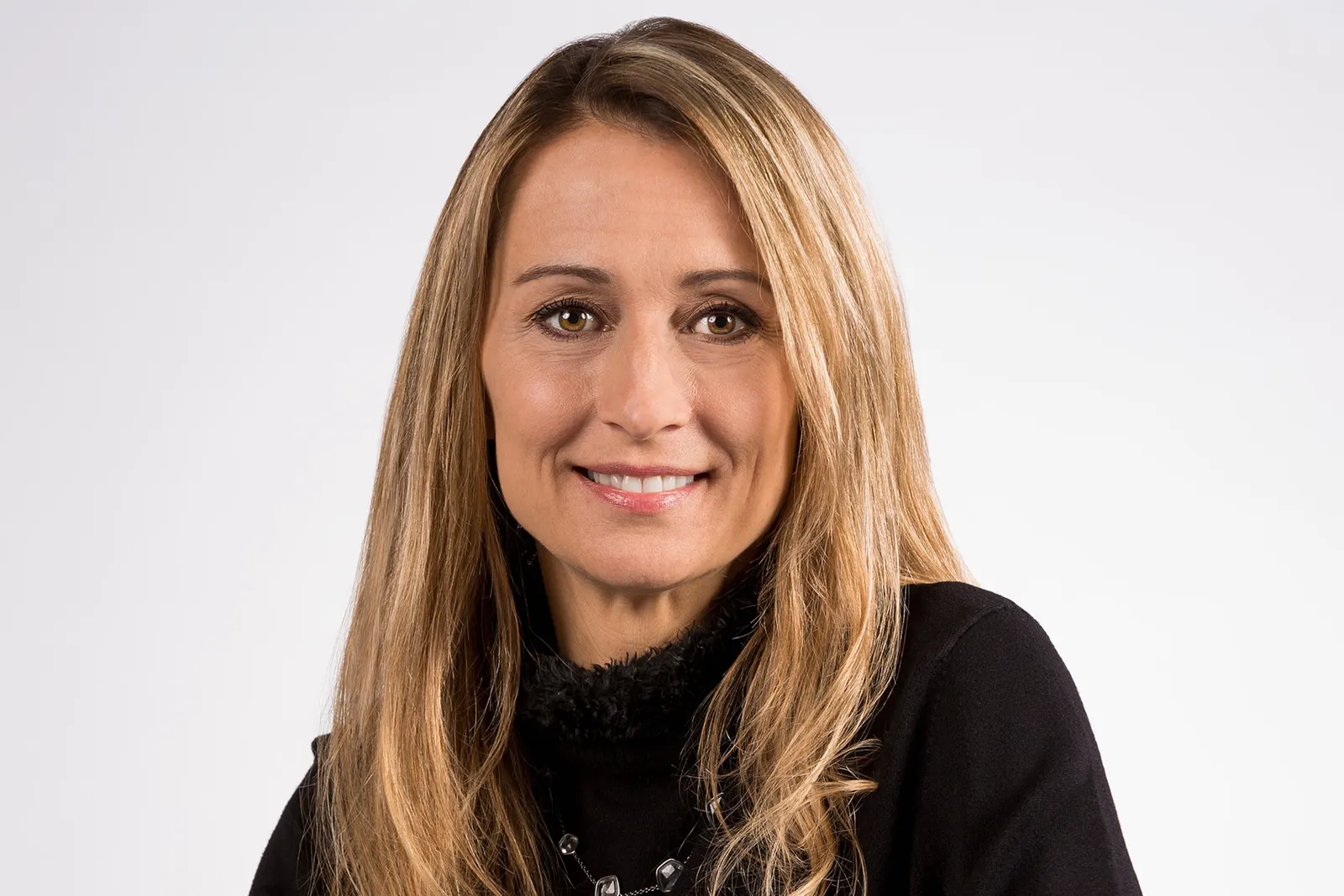
Nvidia on Thursday said Jensen Huang had resigned as president, chief executive and a member of the board, effective immediately. The Form 8-K puts the board’s acceptance on 11 November, a Wednesday, and the signature on 12 November. The signatory is Colette M. Kress, with the title interim chief executive, executive vice president and chief financial officer. The item uses the name Jen-Hsun Huang. It says Kress is 59, has been executive vice president and chief financial officer since 2013, and will keep that job while she is interim chief executive and the board looks for a permanent one. The same item appoints Harvey C. Jones, 73, as chair. He has been a director since 1993 and managing partner of Square Wave Ventures, a private family office, since 2004. The exhibit list calls the attached announcement a press release dated 12 November 2026.
The release, issued from Santa Clara, says Jensen Huang, not Jen-Hsun, and it does not print either age. It says Kress has agreed to serve as interim chief executive until a permanent successor is named, and that the board will consider internal and external candidates. It says she joined in September 2013 and spent nearly 25 years in finance at other technology companies, including Cisco and Microsoft, before that. Jones, it says, has been chief executive and executive chairman of Synopsys. The release does not name a favourite for the permanent job. It does say the third-quarter results for fiscal 2027 stay where they were: Tuesday 17 November, at about 1:20 p.m. Pacific, with the earnings call at 2 p.m. Pacific.
The Board has full confidence in Colette and the leadership team, and we expect the company’s operations, customer commitments and product roadmap to continue without interruption.
— Harvey Jones, chair of Nvidia’s board, in the company’s 12 November press release
Kress’s line in the same release is that she will build on “the extraordinary foundation Jensen created over the last 33 years.” Ram Iyer and Julie Bort at TechCrunch, in a story timestamped 6:10 a.m. Pacific, write that he founded the company in 1993 and had led it as chief executive ever since. Thirty-three years before 2026 is 1993. The release is the document that uses 33. TechCrunch is the one that uses the founding year. Neither prints the subtraction.
A drop of 8.2 percent, and a different drop counted from Friday
The two market accounts do not share a figure, because they do not share a clock. Iyer and Bort write that the shares were down nearly 12 percent in early morning trading, and that since Friday the stock had fallen by as much as 19 percent, a loss of market value of more than $855 billion. A Reuters story by Shashwat Chauhan, carried on Kitco with a 15:15 timestamp and an update at 15:18 and no time zone on that page, says the shares fell 8.2 percent in early trading, to a low not seen in more than 16 months, and that the market value was on track to close below $4 trillion for the first time since July 2025. Reuters also says the company has lost more than $550 billion of market value since the board announced an investigation on Sunday. The $855 billion starts at Friday. The $550 billion starts at Sunday. Neither story prints the other number.
The stocks around Nvidia are closer, and still not identical. Reuters has CoreWeave down 9.1 percent after a rise of more than 27 percent the previous session, when its earnings had lifted AI shares, and Nebius down 16.2 percent after the company said 2026 revenue would come in at the low end of its previous forecast. Iyer and Bort have CoreWeave down about 9 percent and Nebius about 16 percent, and they add IREN, down 6.6 percent. Reuters has Advanced Micro Devices up 3.7 percent and Broadcom up 5.6 percent, and the Philadelphia semiconductor index down 1.3 percent. Alphabet, Amazon and Microsoft were up between 0.8 and 2.7 percent in that account. Japan’s Nikkei and South Korea’s Kospi closed nearly 0.7 percent lower. A European technology index was down about 1 percent.
Nvidia has been called the ‘Bank of AI’. If they have to take a step back because of what’s going on, will that cut off funding to smaller companies that need it? That’s an open question.
— Joe Saluzzi, partner at Themis Trading, to Reuters
Steve Sosnick, chief market analyst at Interactive Brokers, told Reuters that Nvidia’s interlocking deals raise the question of whether they created more stability or more fragility, and that the next few weeks will answer it. ORTEX, in the same story, puts short sellers’ paper profits so far this week at $9.6 billion. LSEG data cited there puts the stock at about 12 times the next 12 months of earnings estimates, the lowest since November 2012. Iyer and Bort’s account of the book behind those deals is not in the 8-K. They write that at the end of the second quarter Nvidia reported $99 billion of investments and another $25 billion of commitments, plus $36 billion of cloud-service commitments. They write that the company put $30 billion into OpenAI and $10 billion into Anthropic, $2 billion into CoreWeave in January and $2 billion into Nebius in March, and agreed to provide up to $105 billion of credit guarantees for an OpenAI data-centre campus in Ohio. Chinese customers, they write, accounted for about $7.9 billion of second-quarter revenue, roughly 8 percent. The filing that removes Huang from the board does not itemize any of those.
A hearing Mast says is now agreed, and a filing that does not mention it
The 8-K and the press release do not mention an investigation, an affair, or export controls. Iyer and Bort’s lead does. They write that the resignation comes days after he admitted a romantic affair with an alleged Chinese spy. That sentence is their frame for a story the company’s Thursday documents do not tell. What those documents do say is the office he left, the person now holding it on an interim basis, and the chair the board has named for the first time.
Aisha Malik at TechCrunch, timestamped 8:36 a.m. Pacific, writes that House Foreign Affairs Chairman Brian Mast said on Thursday that Huang has agreed to testify, citing Bloomberg and NBC News. She writes that he agreed on Wednesday after senior lawmakers threatened a subpoena, and that the testimony is by Thanksgiving, behind closed doors. Mast said he expects it to be recorded on video and transcribed. The request she recites is the 4 November letter from Mast, John Moolenaar and Rick Crawford, which had asked him to appear on 18 November. The agreement is the new fact. Malik’s story calls him the ex-chief executive. The letter, as she describes it, was sent while he still had the job.
Jensen and I have been very at odds as some of you already know on export controls, but Nvidia is a very important company to the United States of America. I don’t want to see anything hurt in Nvidia, but he has some very serious questions to answer.
— Brian Mast, chairman of the House Foreign Affairs Committee, to reporters, as quoted by TechCrunch
Iyer and Bort add a structure the release does not print. Huang owns about 3.5 percent of the shares, they write, and he does not hold supervoting shares, so the board could have voted him out. They write that he ran a flat organisation with around 60 direct reports, that there was no heir apparent, and that two of his children worked in executive roles at the company. The release’s answer to the succession question is the sentence about internal and external candidates, and the person who signed the 8-K is the interim chief executive who is also still the chief financial officer.