Reuters has Nvidia closing down 4.3 percent, and an Ohio plan it puts at $120 billion after $250 billion
The wire’s copy, datelined Thursday and updated on Investing.com at 11:24 a.m. Friday with no time zone on the stamp, is the one with a closing figure. TechCrunch on Thursday had written up to $105 billion of credit guarantees. Fortune at 9:02 a.m. Eastern quotes a recruiter naming Ian Buck, with a title Reuters does not use.
Feature5 minIn-depth
James Okonkwo5 min read
- Nvidia
- Colette Kress
- OpenAI
- Chips
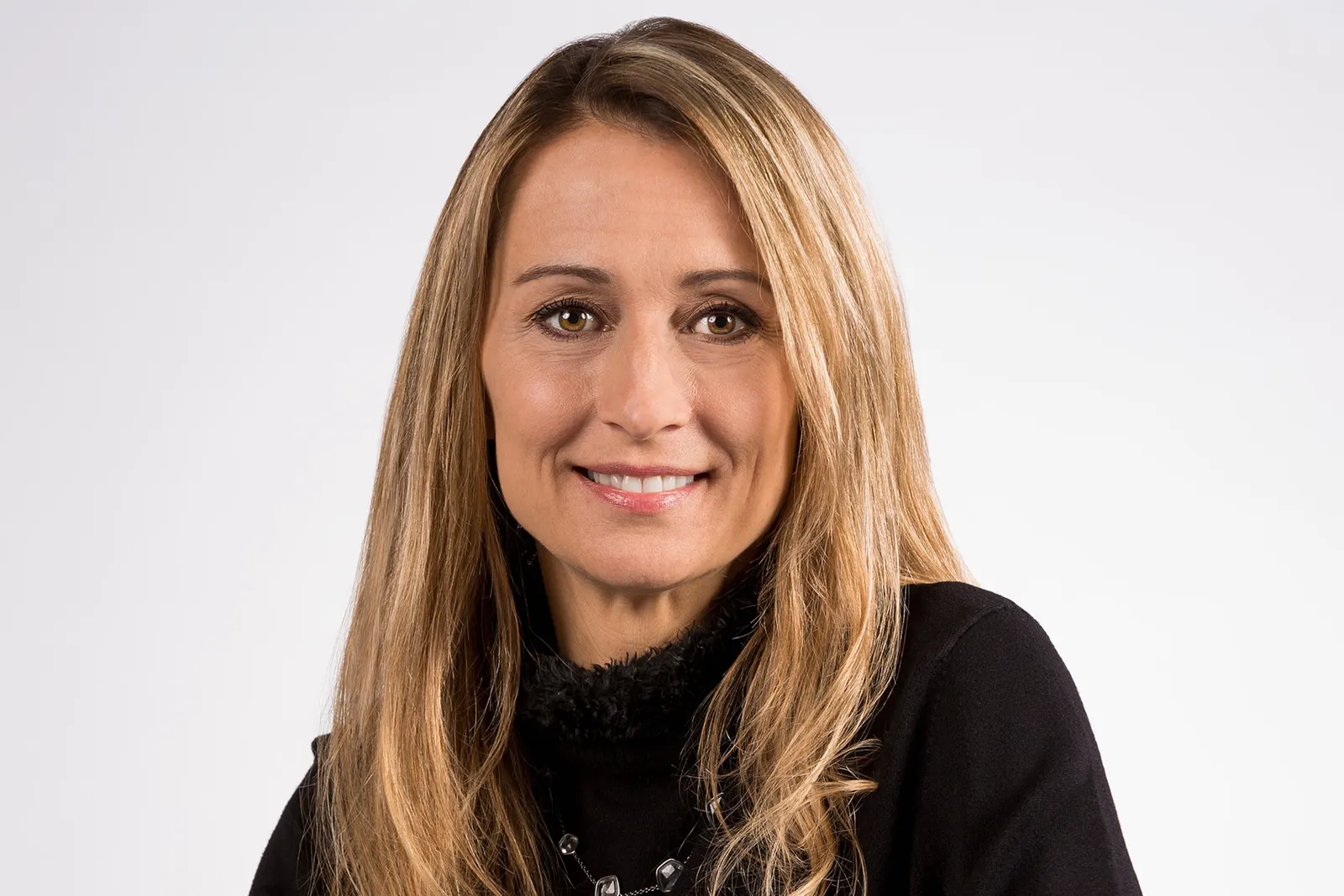
Photo: Courtesy of Nvidia, via FortuneSource page
A Reuters account of Colette Kress’s first hours as Nvidia’s interim chief executive, carried on Investing.com, is datelined Washington and San Francisco on 12 November and marked updated on 13 November at 11:24 a.m. The page does not print a time zone on that stamp. The market sentence in it is a close, which the Thursday morning copies did not have. Nvidia shares slumped 14 percent on Thursday to their lowest in nearly 16 months after the company said Jensen Huang would step down, Reuters writes, and pared the loss to close down 4.3 percent. Shashwat Chauhan’s Reuters story, on Kitco with a Thursday timestamp, had said the shares fell 8.2 percent in early trading, to a low not seen in more than 16 months. Ram Iyer and Julie Bort at TechCrunch, at 6:10 a.m. Pacific on Thursday, had the shares down nearly 12 percent in early morning trading. The 14 percent and the 4.3 percent close are in the later Reuters story. The 8.2 percent and the nearly 12 percent are not.
The Ohio number is also not the one TechCrunch printed on Thursday. Reuters reports that a proposed $250 billion plan to support an OpenAI data center project in Ohio was ultimately pared to $120 billion. The paragraph sits after an account of clashes over financing and does not name a filing. Iyer and Bort wrote that Nvidia agreed to provide up to $105 billion of credit guarantees for an OpenAI data-centre campus in Ohio. Their story does not use $250 billion or $120 billion. The Friday Reuters story does not use $105 billion. A reader cannot tell from either piece whether the pared plan and the credit guarantees are the same instrument.
A pushback two people describe, and a title the two profiles do not share
The pushback is sourced to people inside the account, not to a memo. Two people familiar with the matter told Reuters on Thursday that Kress was the Nvidia executive willing to check Huang’s ambitions, and that she pushed back as he drove the company into multibillion-dollar AI investments. One of them said Kress and her staff clashed with Huang and the sales team over financing deals, including investments in OpenAI and in infrastructure companies such as Lambda. A third source, described as a venture capital investor, said, “I think it’s unlikely anyone but Jensen is going to invest in his own customers as aggressively.” A fourth source called her a pragmatist and said that under her the company is likely to “approach DC more like other tech companies do, by trying to build capital and make friends,” instead of picking “a fight over export controls.” Reuters adds Texas Instruments to the employers it lists before Nvidia, alongside Microsoft and Cisco. The company’s Thursday release named Cisco and Microsoft.
The names around a permanent successor are not a board list. Reuters says other names have surfaced, including Nvidia executive Ian Buck, “who helped launch AI on Nvidia chips and led development of the CUDA software system.” It says AMD chief executive Lisa Su and Arm boss Rene Haas have also been speculated as potential candidates. It does not say who is speculating, or that the board has approached them. Sheryl Estrada at Fortune, in a column timestamped 9:02 a.m. Eastern on Friday, quotes Scott W. Simmons of the search firm Crist Kolder Associates calling Kress “very much the right interim CEO,” and writes that Simmons expects the board to look for a technologist. He names Buck as one potential internal contender. Fortune’s description is that Buck joined in 2004 and is now vice president of hyperscale and high-performance computing and a key architect of the AI business. That is not the CUDA sentence Reuters uses. Estrada also writes that the company had no publicly disclosed succession plan. Anshel Sag, principal analyst at Moor Insights and Strategy, told Reuters that putting Kress in the interim role makes sense to keep the markets calm, and that he does not think she is “the long-term visionary that Nvidia needs to continue its current trajectory.”
Putting (Kress) in the interim role makes sense to keep the markets calm, but I don’t think she is the long-term visionary that Nvidia needs to continue its current trajectory.
— Anshel Sag, principal analyst at Moor Insights and Strategy, to Reuters
Fortune’s figures for the years she has been chief financial officer are the company’s results as Estrada states them. Revenue went from $4.13 billion in fiscal 2014 to $130.5 billion in fiscal 2025, she writes, and the market value from about $9 billion to nearly $4 trillion, which she calls an increase of roughly 44,000 percent. She writes that Kress ranks No. 49 on Fortune’s 2026 Most Powerful Women list. Reuters, citing Forbes, says a net worth of $1.2 billion in mid-2026 put her 32nd on that magazine’s list of America’s richest self-made women, and that media reports put her crossing into billionaire status in 2025 on the value of her Nvidia equity. The Friday Reuters story does not print the fiscal-2014 revenue or the $9 billion starting market value. Fortune does not print the 4.3 percent close.
Powell in one sentence, Alice Huang in the sentence before it
The two names in the middle of the Reuters story are not the same person. Reuters says questions are circulating about how much Kress knew of the company’s chip sales and of Huang’s affairs, that China has denied the spying allegations, and that Reuters was not able to contact Alice Huang for comment. The next paragraph is a different claim, from a fifth source: that Kress knew about Huang’s relationship with Kimberly Powell, Nvidia’s vice president of healthcare, who reported to him. Nvidia and Powell did not immediately respond, Reuters writes. The story does not say Powell is the person at the center of the spying allegation, and it does not say what, if anything, Kress knew about chip sales. Sunny Cheung, an analyst at the Jamestown Foundation, told Reuters that Kress could face congressional questions about oversight of chip sales involving Chinese military-linked institutions and Southeast Asian intermediaries. That is his expectation. It is not a hearing date.