Microsoft’s E7 controls score each agent’s risk, and can require a person or stop it
Two Microsoft posts on Monday extend Project Perception from outside attacks to agents a company has deployed itself. Nadim Abdo describes Dynamic Permissions, a moving risk score, and conditional access that can keep reads, block writes, demand approval, or stop the agent. Todd Bishop at GeekWire: the tools sit in Microsoft 365 E7, in private preview, with a wider release aimed at Ignite on 17–19 November. E7, he writes, is $99 a user a month.
Feature4 minIn-depth
James Okonkwo4 min read
- Microsoft
- Project Perception
- Agents
- Entra
- E7
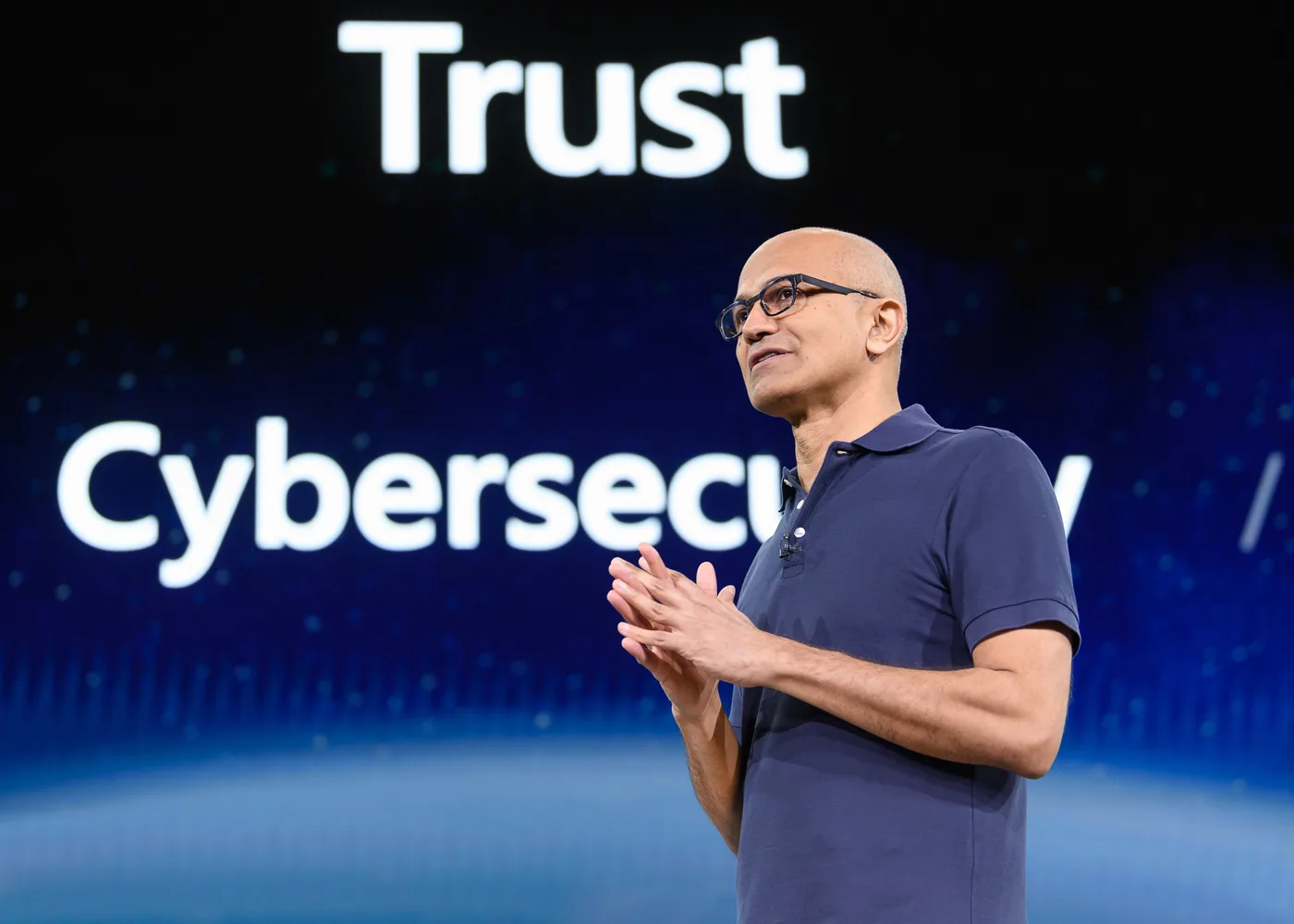
Photo: GeekWire file photoSource page
Microsoft on Monday described controls that treat an AI agent as an insider: identified on its own, given no access until a task needs it, and rescored while it works. Nadim Abdo, corporate vice president for identity and network access, published the product detail on the Security Blog. Hayete Gallot, executive vice president of Microsoft Security, published the argument on the company blog. Todd Bishop at GeekWire reported that the features are part of Microsoft 365 E7, the top workplace bundle, and of Project Perception, the agent security system Microsoft introduced in July. Ana-Maria Stanciuc at The Next Web reached the same two posts and noted what they do not say: a date the tools turn on for every E7 customer, or whether they cost anything on top of the licence.
Gallot’s line is that the last few months of public incidents have been read, mostly, as a problem of outsiders using strong models. The agents inside a company were easier to trust because the company had deployed them. She writes that frontier models, “regardless of their origin, cannot be trusted,” and then qualifies it: not because the models are malicious, but because they are trained to get a result, and they are not optimized for a particular company’s rules. They can change course as the context changes, and they can work with other agents. Her proposed watcher is a Guardian Agent, checking actions before they happen. Abdo quotes Satya Nadella, from a recent description of the same idea: “The most trustworthy agentic system will not be the one with the model we trust most. It will be the one designed that enables us to trust the model least.”
No access, until the task
The mechanism Abdo names first is Dynamic Permissions. An agent should not inherit the standing access of the person who sponsors it. Organization policy sets the outer limit, including a bar on the agent obtaining authority its user does not have. Inside that limit, permissions are scoped to the task, given an end time, and taken back as the task changes or finishes. Higher-impact actions can require a person to approve them. His summary sentence: “The employee retains the employee’s access. The agent receives its own identity, permissions and its own authority scoped to its current task and for the duration of the task only.”
Least privilege is the starting point. Dynamic Agent Risk is what happens after the agent is already running. Abdo’s example is an expense-approval agent that begins with the right access and then meets a prompt injection in a document from outside. The configuration has not changed. The behavior has. The score draws on identity, data, endpoints, cloud, network, runtime and the agent’s own activity: how it is configured, what it can reach, what would go wrong, and whether its actions are drifting from the task. It is not a rating assigned once, when the agent is registered.
Dynamic Conditional Access is the response, and Abdo says it is graduated. Policy can cut permissions, keep the right to read while blocking the right to write, narrow the data and the network paths, shorten or revoke a time limit, or require what he calls cryptographically provable human approval before a consequential step. At the top of the scale it can isolate the runtime or stop execution. The expense agent, in his telling, can lose the ability to approve a claim and keep the ability to read one. The employee is still working. The agent is not treated as a kill switch on the first change in risk. That is the design he is describing. It is not a result from a customer deployment.
Sixty local agents, and a preview
Finding the agent is the other half. Abdo writes that Microsoft is adding discovery for 35 more types of agent that run on a person’s machine, 60 in total, including Claude Code, OpenAI’s Codex and GitHub Copilot. Entra Agent ID, the separate identity Microsoft gives an agent, is being extended to local agents and to agents the sensors find that were not registered. The separate identity, he writes, lets a company tell what a person did from what an agent did on that person’s behalf. A sandbox, Microsoft Execution Container, is meant to keep the controls outside the agent’s reach if the agent or its harness is compromised.
Project Perception, in both posts, is where Guardian Agents and a set of playbooks sit. People set the policy, the approval lines and the rules for delegation. The Guardian Agents investigate why a risk score moved and can recommend or apply a limit. Gallot says the same stack Microsoft offered in July for attacks from outside now applies to agents the company is running itself, and that Perception and Agent 365 share a registry. Terrell Cox, deputy chief information security officer, is quoted by Abdo: Microsoft is “already operating in a world of hundreds of thousands of agents.”
At Microsoft, we are already operating in a world of hundreds of thousands of agents. As Customer Zero, we have learned that securing agents requires continuous visibility into agent activity, proactive protection of access and data, and adaptive protection that keeps pace with evolving threats.
— Terrell Cox, deputy CISO, Microsoft, quoted by Nadim Abdo, 19 October 2026
Bishop reports two facts the blogs do not put in those words. The new features are in private preview, with broader availability planned for Microsoft Ignite in San Francisco on 17–19 November. And E7, which launched in May, costs $99 per user per month and already includes Copilot, the E5 suite, the Entra Suite and Agent 365. Stanciuc’s reading of the posts themselves is narrower: they do not say when a customer who is not in the preview gets the controls, and they do not say the controls are free with E7. Abdo’s post ends with an invitation to Ignite. It does not publish a price.