Medium ships TK, a notebook that calls a model with @TK and hands notes to an agent
Tony Stubblebine’s post says a Medium account is enough, that no AI company trains on the writing without permission, and that an MCP server and a Claude skill can read the notebook. TechCrunch reports the notes are not encrypted. The Verge and TechCrunch disagree on whether the phone apps are in the launch.
Feature3 minEasy
James Okonkwo3 min read
- Medium
- Agents
- MCP
- Writing
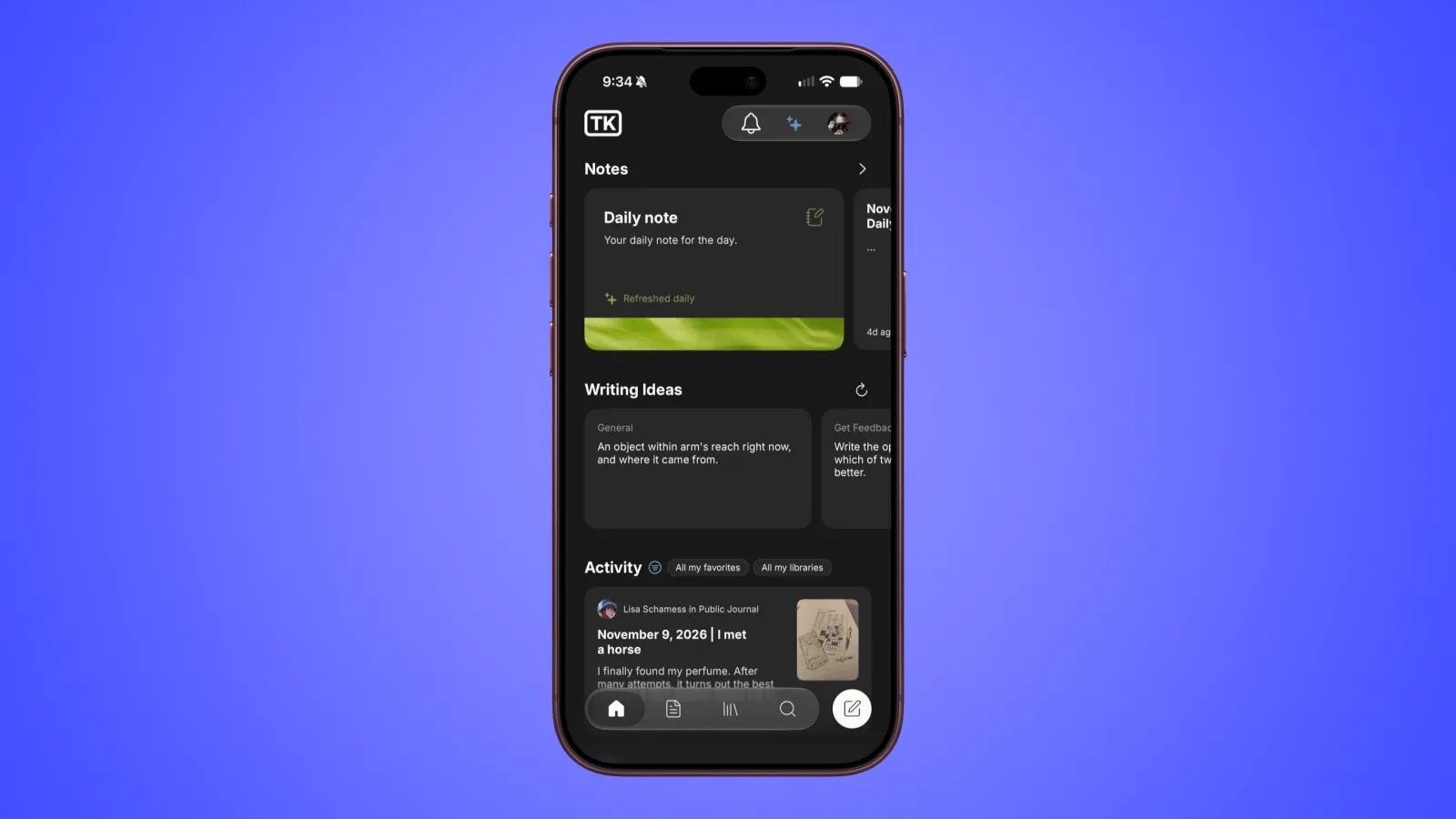
Photo: David Pierce / The VergeSource page
Medium on Monday launched TK, a private notebook that puts a model inside the editor and lets an outside agent read what the user has stored. Tony Stubblebine, the chief executive, published the product post on the company’s blog. Sarah Perez at TechCrunch, timestamped 8:12 a.m. PST, and David Pierce at The Verge, timestamped 3:04 p.m. UTC, both filed on the launch the same day. Stubblebine writes that anyone with a Medium account can join. Perez and Pierce both say the app is free for those accounts.
The name is the publishing mark TK, “to come,” which writers leave where a fact is missing. Stubblebine’s post says the assistant is called with @TK in the middle of a sentence, and he gives two examples: asking whether September has 30 days or 31, and asking the app to pull in a paragraph written the day before. Perez describes the same gesture, “@TK” followed by a request. Pierce, writing from a Zoom conversation a few days before launch, says typing the letters TK summons the model, and that Stubblebine referred to Unix pipes as the way he thinks about handing grunt work to a model. The company’s post and TechCrunch both print the @. Pierce’s paraphrase of the shortcut does not.
What the first version says it can do
Stubblebine lists a mobile app, widgets for voice and text, an import of a user’s existing Medium writing, and imports from Bear and Obsidian. He says Claude and other agents can leave research in the notebook. The AI skills he names are editorial feedback, headline feedback, a check against the style guides of Medium publications, and a notice if the writing could be organized into a book. He also ships three open libraries: Public Journal, Get Feedback on Your Writing, and Write a Book. Pierce calls libraries the core social idea, private blogs with no public page, and quotes Stubblebine as saying a contribution does not have to be a blog post. Collaborators, Pierce writes, can comment and leave emoji reactions.
The agent hook is in both the post and Perez’s story. TK ships with an MCP server and a Claude skill, so a user can point an agent at the notebook. Stubblebine’s line is that the agent then knows “your positions, your projects, your half-finished thoughts.” Searches, topics, tags and libraries, he writes, can be summarized into a wiki-style page with themes, an index of ideas, and links back to the notes. He also says the app imports and exports Markdown, including a full archive, and that it is not built around Markdown, because he wants cloud collaboration with people and with what he calls robots.
A training promise, and a note that is not encrypted
Under a values heading, Stubblebine writes: “No AI company ever trains on your writing or uses it without your permission.” He says notes can be published with a record of what a person wrote and what a model wrote, including the prompting and the source material. He also writes that the writing is private and that the user sets the access controls. Perez reports a limit on that privacy: the writing in TK is not encrypted, because the app is built for collaboration, and users set permissions on the work. The post does not mention encryption. The TechCrunch sentence is the one that does.
The launch surfaces do not line up. Pierce writes that TK is available on the web, Android and iOS, and that Stubblebine says a native desktop app is coming soon. Perez writes that at launch TK is available on the web, with a desktop app on the roadmap, and she does not mention phone apps. Stubblebine’s post says a mobile app ships in this version, and that this version does not include a native desktop app. He also writes that Medium has been profitable since August 2024. Pierce quotes him, from the Zoom call, on why the company is treating this as a launch at all.
I don’t think we’ve actually had a launch of anything important since 2017.
— Tony Stubblebine to David Pierce, The Verge, Nov 9, 2026
His shorthand in the post for how the two products divide is that TK is the gym and Medium is the stage. The post does not say which model answers an @TK, what a call costs, or how a reader of a published note inspects the provenance record he describes.