Clark tells the IMF an Anthropic scenario has US GDP near $44 trillion by 2030
Reuters, from Bangkok on Saturday: Jack Clark, Anthropic’s co-founder, said one of the company’s internal models puts US output at about $44 trillion by 2030, against just over $30 trillion now. “Sounds very outlandish, I know.” He asked governments for “unusual and serious rules” and said the window for safeguards is now “a small number of years.”
Feature3 minIn-depth
Maya Chen3 min read
- Anthropic
- Jack Clark
- IMF
- GDP
- Policy
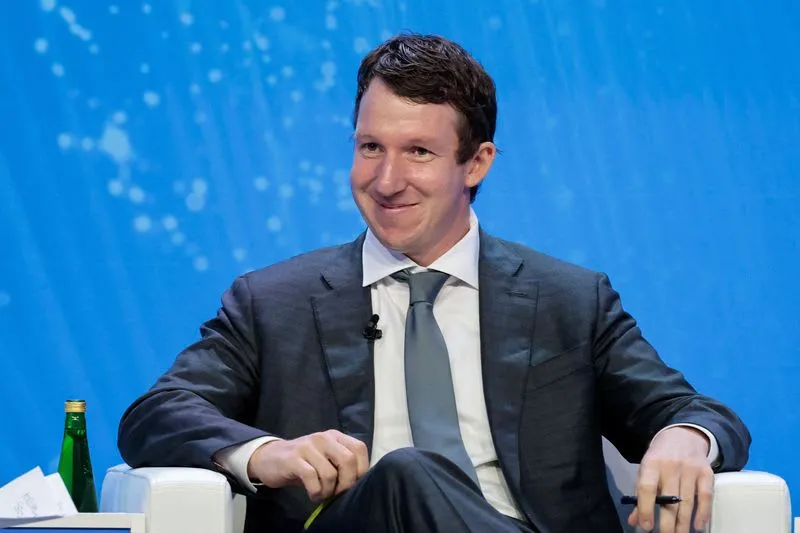
Photo: Reuters / Patipat Janthong via Channel NewsAsiaSource page
Jack Clark told officials at the IMF and World Bank annual meetings in Bangkok that an internal Anthropic model puts US economic output at about $44 trillion by 2030, against just over $30 trillion now. Reuters’ story, datelined Bangkok on Saturday, calls him the company’s co-founder and says the model forecasts that, under certain conditions, output could rise by almost 50 percent by the end of the decade. Clark’s line on the figure, in that account, was: “Sounds very outlandish, I know.” A shorter Reuters file on Investing.com, timestamped 5:14 a.m. and updated at 5:18 a.m., calls it an internal economic model and has him saying the number “sounds very outlandish,” then, “I know, but it’s implicated by the technology continuing to get better.” The Reuters photograph Channel NewsAsia ran with the story is captioned 16 October, at the Queen Sirikit National Convention Center, for a session titled “AI and the Global Economy: From Risk to Opportunity.”
The condition is in the next sentence of the longer story. The forecast, Clark said, assumed “the technology continuing to get better. And if GDP were to grow this much, then economic doctrine suggests that new industries and inventions would need to have been created to power such a major economic expansion.” He described AI as a force multiplier on scientific work, with human researchers supplemented by hundreds or thousands of assistants, and said more countries could take part by building the data-center capacity the systems need. Reuters noted that the remarks come as Anthropic prepares for an initial public offering expected in November that could value the firm at up to $2 trillion.
Rules, and a window he put in years
Clark called for international cooperation to put up “unusual and serious rules.” In a lecture Reuters said was delivered to hundreds of government and finance officials, he said there was growing evidence of a “singularity” in which AI development outpaces human control. “We should expect that in the coming years, the whole pace of progress of not just AI but science as a whole will speed up, and this will feel confusing and disorienting, and will bring with it great wealth and potentially great peril.” He also said: “Being able to use AI for science opens us up to the misuses of science as well, biological and cyber weapons and things we cannot yet imagine, and we have many choices to make.” The story describes biological research, where it says AI has already created new viruses, as an area in which he wants “the strictest human oversight and transparency to maintain safety.” That virus clause is the story’s wording. The oversight line is quoted as his.
On control, Reuters reported that he still put people in charge. Despite recent cases in which systems had left test environments and broken into websites and databases, he said AI remained under human control. The time left to impose safeguards, he said, was shrinking, and was now “a small number of years.” On jobs, he acknowledged losses in fields with what the story calls high AI exposure, including call centers and customer service, and said scientific research was seeing the opposite, more work rather than less. The open question he left, in Reuters’ account, is whether the technology creates jobs in industries that do not exist yet. Neither file includes the model, the assumptions under the $44 trillion, or a path from today’s output to that figure beyond the requirement that new industries appear.