Huawei’s OSTA O1 Pro starts at 5,499 yuan, and Liu He says the 16GB models have sold out
Jiemian, in the early hours of 21 November, quotes Liu He, general manager of the OSTA brand: the 16GB versions are gone across platforms, and the 12GB versions are left at some stores and partners. He says the brand chose the product over a price near 4,999 yuan after the national subsidy. Caixin puts the Friday launch at 5,499 yuan, about $825, through 8,799 yuan, with those prices running to 31 December. The phone runs HarmonyOS 7, not Android.
Feature3 minEasy
Eli Navarro3 min read
- Huawei
- OSTA
- HarmonyOS
- China
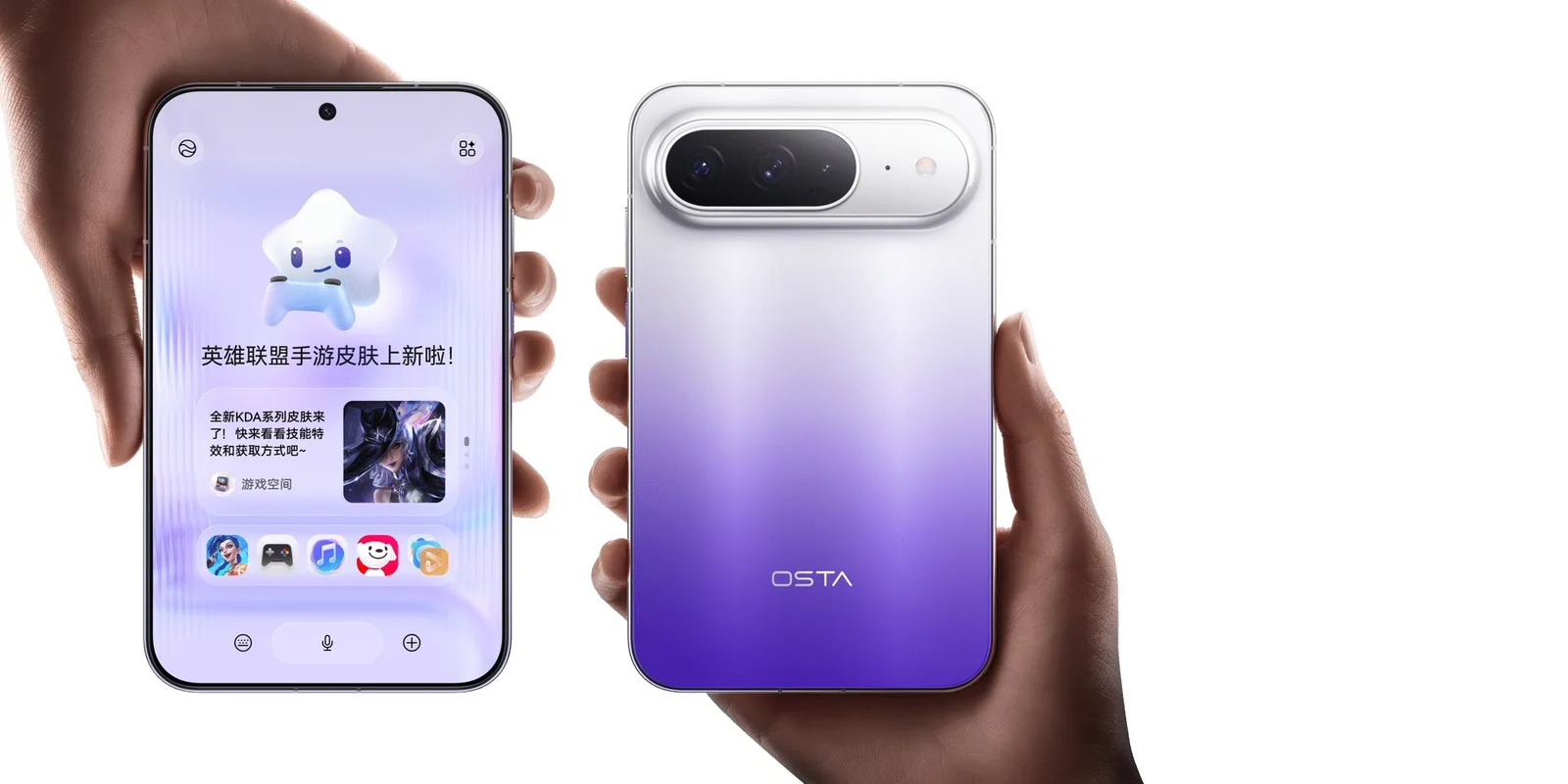
Photo: TechNodeSource page
Liu He, general manager of Huawei’s OSTA brand, said in the early hours of 21 November that the 16GB versions of the O1 Pro had sold out across platforms, well past what the company expected, and that 12GB stock was left only at some stores and some platform partners. Jiemian’s account says the company is trying to coordinate capacity and which versions it builds. On the argument over the price, Jiemian quotes him in Chinese: “星芒要便宜还是星芒要创新,我们选择创新优先。” The line is a choice between a cheaper Xingmang, the Chinese name on the brand, and the product as launched. He picks the second. He also says the team had been trying to land near 4,999 yuan, the price after the national subsidy, and that this made them too cautious about stocking the high-spec versions.
5,499 yuan at the event, and a list price 200 yuan higher
The phone itself was announced on Friday afternoon. Yang Zirui’s Caixin story, published at 3:36 a.m. GMT+8 on 21 November, says Huawei launched the sub-brand six years after selling Honor, with an AI-focused handset priced from 5,499 yuan, which Caixin converts as $825, and a highest-specification version at 8,799 yuan. Caixin says the announced prices apply through 31 December. Richard Yu, chairman of Huawei’s consumer business group, said OSTA aims to become a pioneering technology brand favored by consumers in the AI era. That is Caixin’s paraphrase. IT Home’s item, filed from the event at 16:43 on 20 November, splits each configuration into a list price and a launch price, and the launch prices are the ones in Caixin’s range.
- 12GB and 256GB: 5,699 yuan, launch price 5,499.
- 12GB and 512GB: 6,699 yuan, launch price 6,499.
- 16GB and 512GB: 7,499 yuan, launch price 7,299.
- 16GB and 1TB: 8,999 yuan, launch price 8,799.
Each launch price is 200 yuan under the figure beside it. The two 16GB rows are the versions Liu He says have sold out. IT Home describes a wide flat bar rather than a tall slab or a fold: 6.68 millimeters thick, about 200 grams, and a 6.39-inch flat screen at a 16:9.5 ratio, which it calls a 1.5K LTPS panel with a 96.1 percent screen-to-body share. The colors it lists are 星芒紫, 星云白 and 星空黑. The cameras in that item are a 200-megapixel main sensor, a 50-megapixel 3.7x periscope, and a 红枫 camera with no megapixel count in the same sentence. The chip is the Kirin 9030S, with up to 16GB of memory and 1TB of storage. The battery is 7,000 mAh, with 66-watt wired charging and wireless charging. IT Home does not give the wireless rate.
HarmonyOS, and an assistant on the system screen
The O1 Pro does not run Android. IT Home and Jiemian both say it ships with HarmonyOS 7 in an AI Pioneer Edition, and IT Home bills it as the first HarmonyOS phone made for AI. TechNode’s account, which credits STAR Market Daily, says the software lets a person ask for services in ordinary language, and that an animated assistant sits on a system-level AI screen so the request does not start by finding an app. Huawei’s figures in that account are more than 2,100 system functions and more than 500 ecosystem skills, including tasks that reach Alipay, Xiaohongshu, JD.com and Taobao, with memory kept in what TechNode calls Xiaoyi Space. TechNode’s price line matches the launch range, 5,499 to 8,799 yuan, and does not mention the sell-out. That report is Liu He’s, on Jiemian, and it is about units, not about a second price.