Elvis Presley’s rights holders sue Anthropic over 274 songs
NBC and The Guardian on Sunday: Authentic Brands Group and other owners of Presley’s music filed Friday in a case Billboard reported first. They want up to $150,000 a work, $41.1 million on NBC’s arithmetic, and say Claude still reproduced hooks after guardrails. Anthropic says it disagrees and will defend the case.
Feature3 minIn-depth
Priya Shah3 min read
- Anthropic
- Claude
- Copyright
- Music
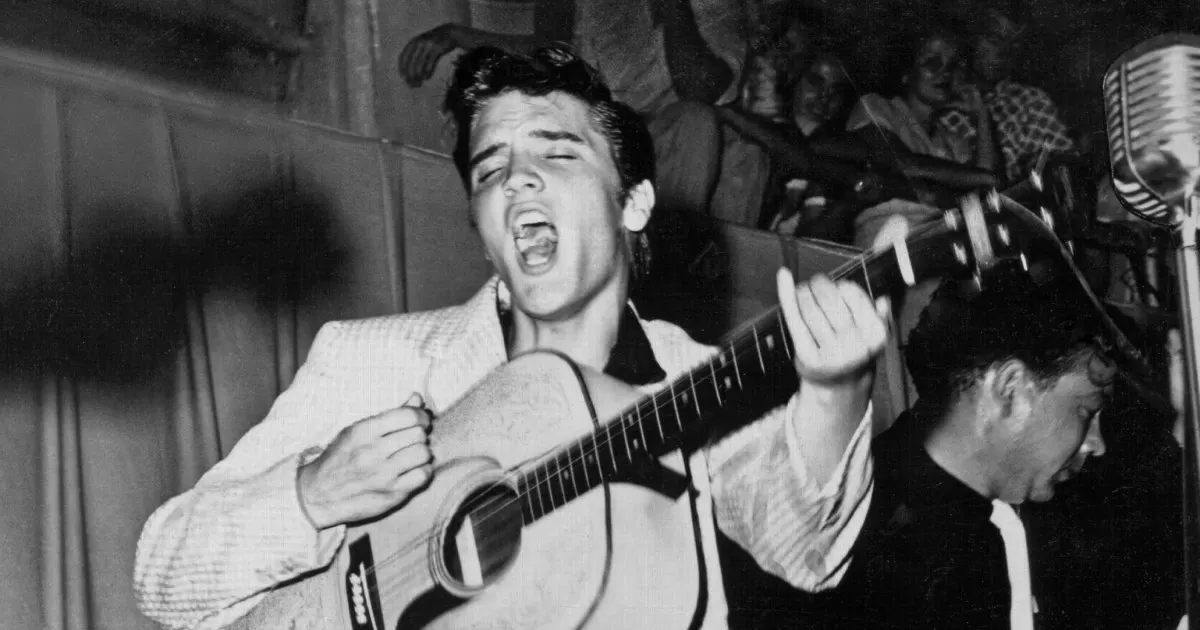
Photo: Michael Ochs Archives / Getty, via NBC NewsSource page
The owners of Elvis Presley’s music sued Anthropic on Friday, alleging the company used 274 of his songs to train Claude without a license or payment, and that the model still produces infringing lyrics and adaptations. NBC News published the account at 3:11 p.m. Eastern on Sunday. The Guardian’s Marina Dunbar filed at 14:25 Eastern the same day and wrote that Billboard reported the suit first. The plaintiffs are Authentic Brands Group, which licenses Presley’s intellectual property, together with other companies, trusts, and individuals who own rights in the music. The songs NBC names include “All Shook Up,” “Can’t Help Falling in Love,” “Don’t Be Cruel,” “A Little Less Conversation,” and “Return to Sender.”
An Anthropic spokesperson told NBC: “We disagree with the claims and intend to defend this case fully.” The complaint, as NBC quotes it, says the infringement runs through “the entire development” of Claude and continues when users generate outputs that reproduce copyrighted lyrics or make unauthorized adaptations. Richard Busch, the lead attorney, said in a statement to NBC: “As we say in the lawsuit, the Elvis Plaintiffs are guardians of, and highly protective of, Elvis’s song which are some of the most iconic of all time.” The Guardian quotes Busch in the complaint itself: “The Elvis plaintiffs bring this action to enforce these exclusive rights against the defendant that has built its entire business model based on copyright infringement at a scale never seen before.” NBC quotes a neighboring line, that Anthropic “built its entire business model on infringing copyrights at an unfathomable scale,” aimed at alleged scraping of internet content and pirating of books.
Guardrails, and a request to rewrite the songs
The damages figure NBC reports is statutory and conditional. The plaintiffs seek up to $150,000 for each of the 274 works they say were willfully infringed, which NBC calculates as $41.1 million. The Guardian rounds the same request to about $41 million, or about £31 million. They also want a permanent injunction against further infringement and an order that Anthropic destroy unauthorized copies of the works. A statutory maximum is what the statute allows a court to award if the plaintiffs win on willfulness. It is not an award.
The complaint’s example of current output is a prompt, not a download of a master tape. NBC reports that the filing says Claude, asked recently to re-create specific songs “for a modern audience,” did so. The complaint says: “These renders keep landing very close to the originals: same structure, same hooks reused with light rewording, and full sets of verses/choruses/bridges.” It adds: “That’s edging past ‘inspired by’ into reproducing the copyrighted song, even when the words are swapped out.” A separate line, also from the complaint via NBC: “Even after the Defendant supposedly put up ‘guardrails’ after being sued, in one of its latest iterations, Claude continues to infringe.” The Guardian quotes the complaint on those guardrails as evidence, in the plaintiffs’ telling, that Anthropic knew the limits did not stop infringing musical output and kept going anyway.
The music docket around this filing
NBC places Friday’s case in a line of lyric suits, not as the first. In January, Universal Music, Concord Music Group, and ABKCO Music expanded a lawsuit against Anthropic over copyrighted song lyrics. BMG Rights Management, Sony Music Publishing, and Warner Chappell Music filed similar suits against Anthropic this year. Anthropic and the music-generation company Suno were also sued recently by the independent publisher Round Hill, which Busch represents, and by Reservoir Media. The Guardian describes Friday’s filing as one of the first major challenges brought directly by an artist’s estate, as distinct from those label and publisher cases, and writes that the result could set a broader precedent for how AI companies use existing catalogues. That is the paper’s reading of the docket, not a ruling.
NBC also notes the book settlement: last year Anthropic agreed to pay $1.5 billion in a copyright case brought by authors who alleged the company had used pirated copies of their books to train models, which NBC calls the largest settlement in the history of American copyright cases. Friday’s complaint points at that history of books and at songs in the same breath. Anthropic’s public response, so far, is the one sentence to NBC. The complaint’s $41.1 million is a ceiling the plaintiffs are asking a court to consider. What Claude returned on those “modern audience” prompts is, for now, an allegation in a filing, quoted by NBC, not a transcript Anthropic has published.