Google says Duplex now calls businesses from Tasks in the Gemini app, and that every call identifies itself
A Google Research post dated 20 November, by Yossi Matias, Yaniv Leviathan and Janet Zhou, says the calling stack launched in Tasks this week. Each call opens as an automated system calling from Google. A merchant can opt out in a Business Profile, or say so on the line. On Gemini 4 Hydrogen and Gemini 4 Neon, the post says, Tasks can also read a utility bill, pay through the Agent Payments Protocol, and write over email and RCS. It does not name a country.
Feature2 minEasy
Priya Shah2 min read
- Gemini
- Duplex
- Agents
- Pixel
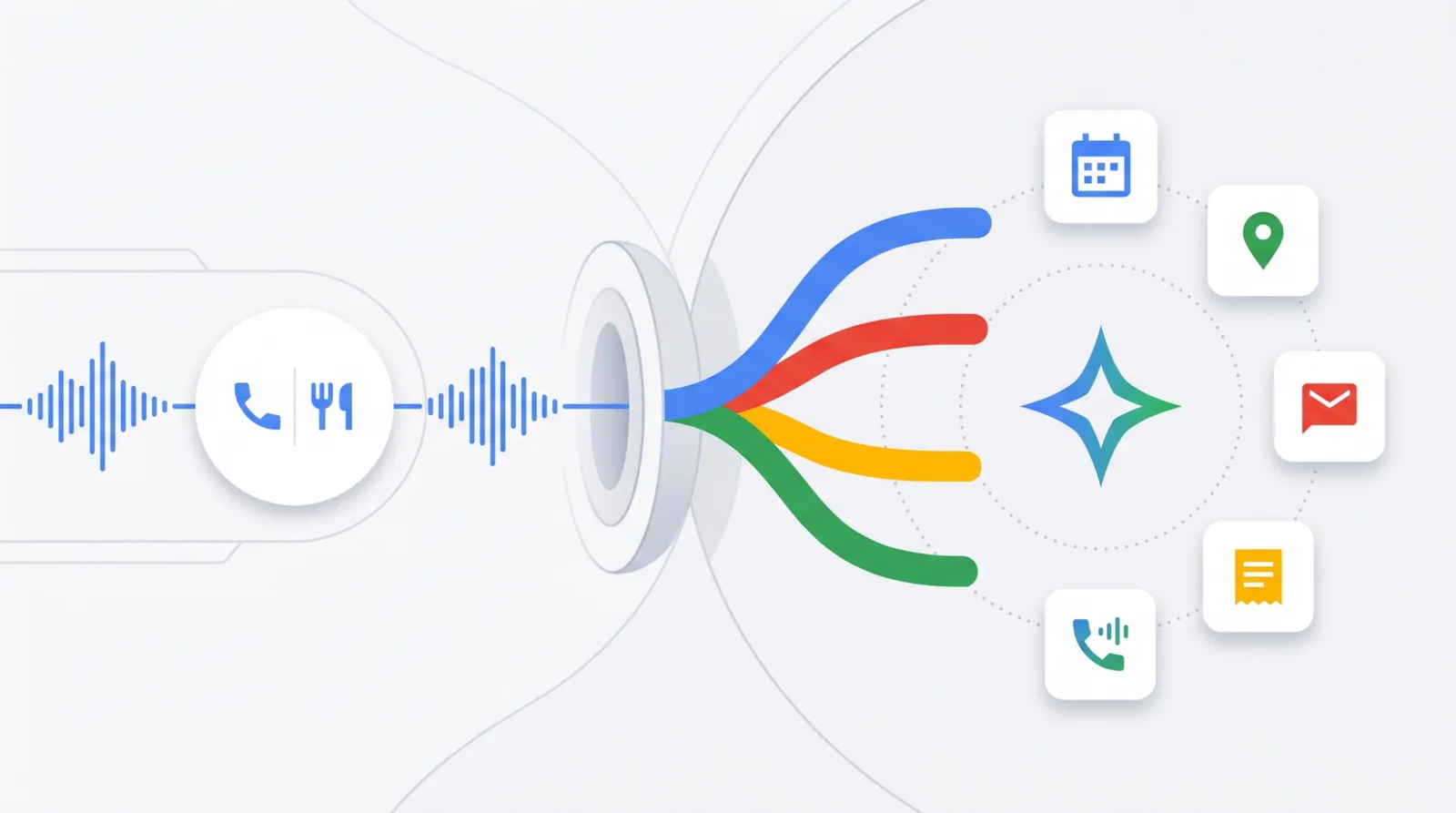
Photo: Google ResearchSource page
Google said this week that Duplex, the system it has used to telephone businesses since 2018, now places those calls from Tasks in the Gemini app. The account is a Google Research post dated 20 November, by Yossi Matias, Yaniv Leviathan and Janet Zhou. A person can hand the app a chore in ordinary language, the post says, and the system calls. Every call opens by saying it is an automated system calling from Google. A business can turn the calls off in its Google Business Profile settings, or say “Please stop calling my business” during the call. The person who answers, the post says, does not install software and does not join a booking system.
The same post ties newer Tasks workflows to Gemini 4 Hydrogen and Gemini 4 Neon. It says Tasks can analyze utility bills, process transactions through the Agent Payments Protocol, and coordinate with the user over email and Rich Communication Services. It does not say which countries have the calling feature, which Gemini plans include it, or how many calls Tasks has placed. “This week” is the only clock it puts on the launch.
Three calling stacks, and Call Screen on Pixel
The post splits the decade into three stacks. The first, from before modern language models, used recurrent networks trained on anonymized calls and was limited to one kind of task at a time, such as booking a restaurant or checking holiday hours. The second, which the post says used LaMDA on live calls in 2022, paired a generative model with a deterministic record of the conversation and with policy rules. The third takes a free-text description instead of a fixed list. That, the post says, is what lets a call ask for a window seat, or schedule a car repair around a conflict on a calendar. The calling product inside Tasks is that third stack.
Some of the older machinery is already on Android phones. Starting in 2019, the post says, Google put conversational models on Pixel phones for Call Screen and Hold for Me, across five generations. In 2025 and 2026, it says, foundation models widened the calls that Search and Ask Maps will make, for a quote, a product in stock, or whether a shop is open. The Tasks launch is the piece that sits in the Gemini app rather than on those screens. The post also repeats a figure it says was shared in 2023: business information taken from Duplex calls had been shown in Search and Maps more than one trillion times. That count is about listings. It is not a count of Tasks.