CrowdStrike agrees to buy Fiddler and Dreadnode to watch agents and test them
Two releases dated Tuesday, from Austin and Fal.Con Europe in Barcelona, put Fiddler on the Falcon platform as Falcon Observe and Dreadnode’s tests into Falcon Guardian. TechCrunch, citing The Wall Street Journal, puts the prices at about $400 million and about $95 million. Neither deal has closed.
Feature3 minEasy
Maya Chen3 min read
- CrowdStrike
- Agents
- Security
- Fiddler
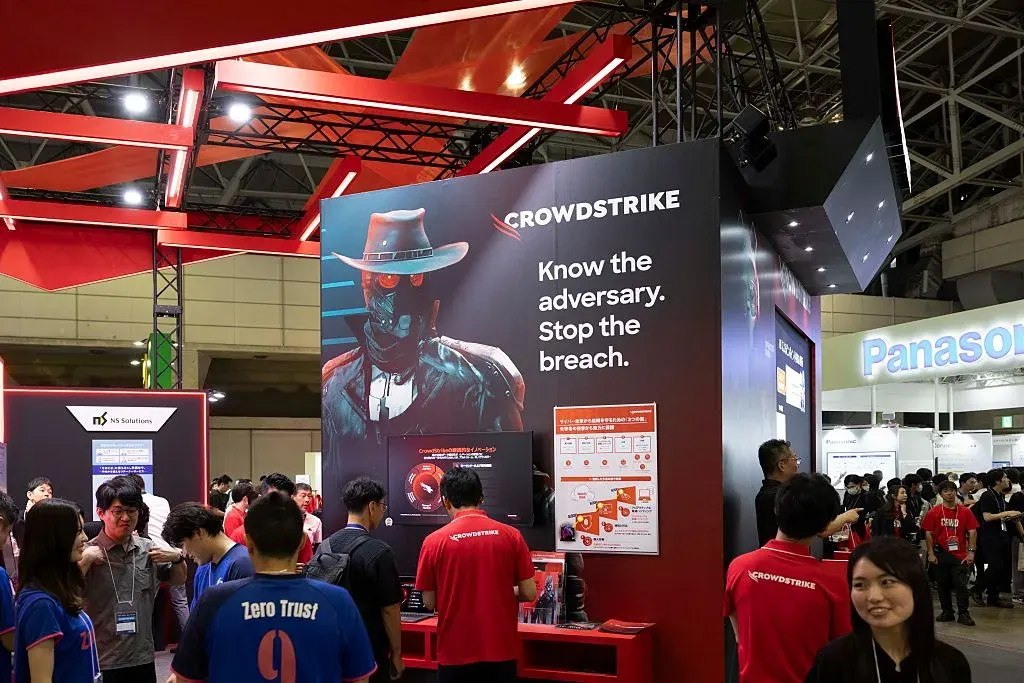
CrowdStrike said on Tuesday it has signed agreements to buy Fiddler AI and Dreadnode, and to fold both into the Falcon platform as tools for watching and testing AI agents. The two press releases are dated 3 November and datelined Austin and Fal.Con Europe in Barcelona. Fiddler, which CrowdStrike describes as software for agent observability and explainability, is to be sold as Falcon Observe. Dreadnode, which automates security tests of models, applications, and agents, is to feed Falcon Guardian. Both products are slated for general availability in the fourth quarter of CrowdStrike’s fiscal 2027. Both deals are expected to close in that quarter, subject to customary conditions, paid mostly in cash, with a portion in stock that vests. Neither release states a price.
Ram Iyer at TechCrunch, in a story timestamped 9:56 a.m. Pacific on Tuesday, reports the prices from The Wall Street Journal: around $400 million for Fiddler and about $95 million for Dreadnode. He writes, citing PitchBook, that Fiddler has raised about $99 million since it was founded in 2018, and that Dreadnode, founded in 2023, has raised $14 million. Those figures are not in CrowdStrike’s releases.
When a regulator or your board asks what an agent did, saying ‘the model did it’ is not an answer. Fiddler is the flight recorder for every agent: the observability to explain exactly what an agent did and why.
— George Kurtz, chief executive of CrowdStrike, in the Fiddler announcement
The Fiddler release argues that an agent can hold valid credentials and approved tools and still make a decision the company did not intend, ignore an instruction, or claim work it did not do. Falcon Observe, as described there, would evaluate accuracy and policy compliance before deployment, trace decisions and tool calls, and flag drift once an agent is in production. One line puts a number on the cost of that evaluation: CrowdStrike says customers can cut evaluation costs by up to 98 percent by using purpose-built models and not calling an outside model. The instrumentation it names is OpenTelemetry, with support listed for LangGraph, Amazon Bedrock, AWS Strands, and Google’s ADK. Krishna Gade, Fiddler’s chief executive and co-founder, says the company started so an enterprise could answer whether it can trust what its agents are doing, and that joining CrowdStrike is how that answer gets onto “the world’s leading security platform.”
The Dreadnode release is about finding the failure before the agent is deployed. It says a tester can describe the test in plain language, and that Dreadnode then runs more than 100 known attack strategies, including jailbreaks, prompt injection, and attacks that take multiple turns or target an agent, against the models, the reasoning loops, the applications, and the MCP servers in use. Findings are ranked, mapped to the OWASP Top 10 for large language models, the OWASP list for agentic security, MITRE ATLAS, and the NIST AI risk framework, and exported as a report a team can use to decide whether to ship. Operators can reclassify a finding. The results are supposed to come back into Falcon Guardian as policy recommendations, and into CrowdStrike’s SafeMind models as training data. The Dreadnode team is to join what the release calls the Cyber Superintelligence Lab. Brad Palm, Dreadnode’s chief executive, says: “AI fails in ways traditional testing was never designed to catch, and the people best equipped to find those failures think like attackers.” Both announcements are agreements. The releases say the acquisitions are expected to close in the quarter, not that they have.