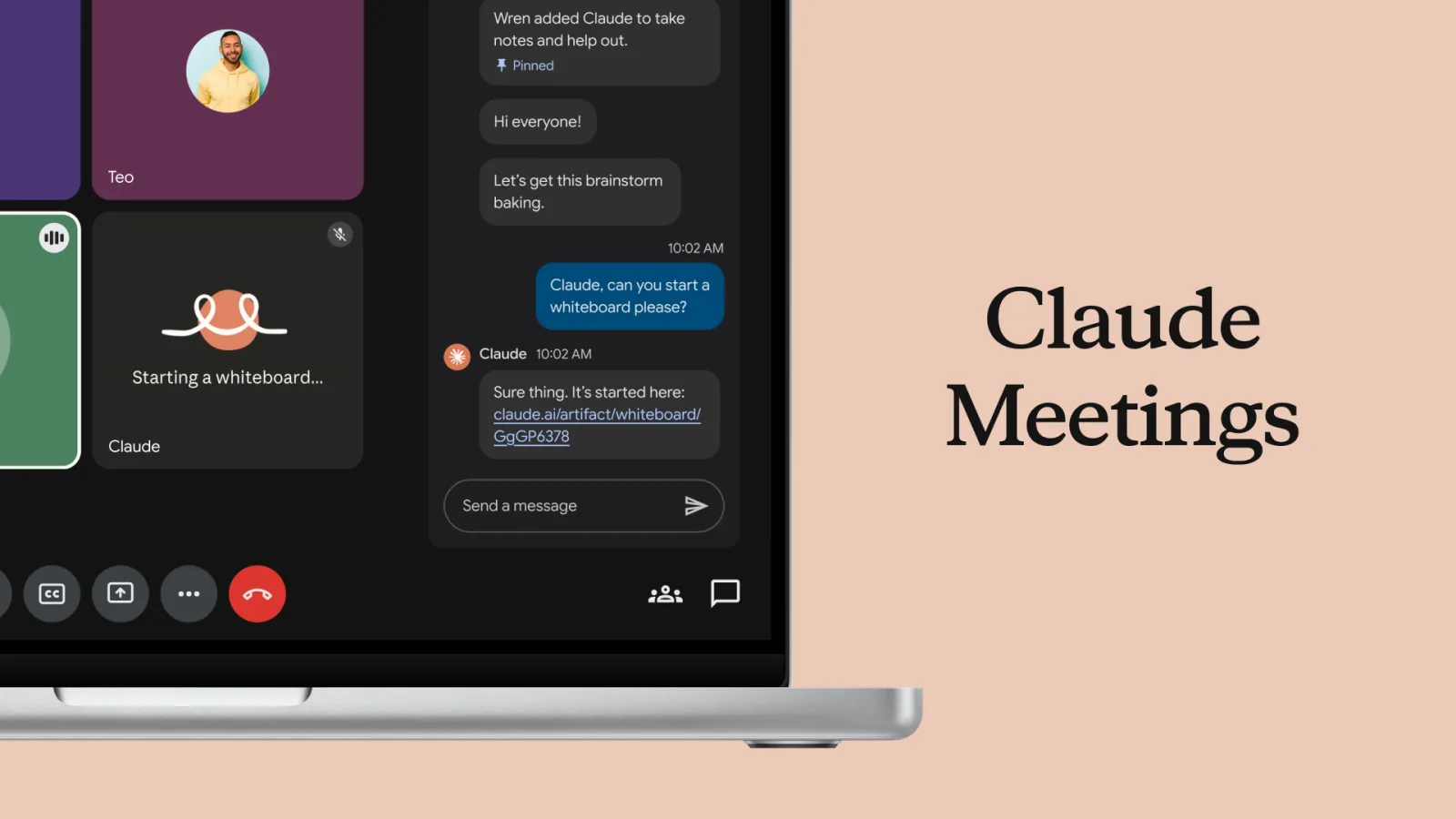
Anthropic’s 12 November notes say the Managed Agents service can run on your own machines, and the office skills do not come with it
The release note says the server sends model calls to the provider you choose, Anthropic by default. The differences page rejects prebuilt Word, PDF, PowerPoint and Excel skills, webhooks, scheduled runs and dreams. A Compose stack for development publishes port 8400 on loopback, with a warning about Docker Engine before 28.3.3.
Feature3 minIn-depth
Maya Chen3 min read
- Anthropic
- Claude
- Agents
- Enterprise

Photo: AnthropicSource page
Anthropic on Thursday said companies can run Claude Managed Agents on their own infrastructure, not only the sandbox where an agent’s commands execute. The Claude Platform release notes for 12 November say you run the whole service, store agents, sessions and session history there, and the server sends model requests to the provider you choose, which is Anthropic by default. Access is a request to an account team. The product article calls it a private beta. It says model requests can go to Anthropic directly, to Amazon Bedrock, to Google’s Agent Platform, to Microsoft Foundry, or to a gateway the customer runs. If the organization has zero data retention with Anthropic, the article says that arrangement applies to the requests sent to Claude in the same way as any other Messages API call.
The split the article describes is between a harness and a sandbox. The harness calls Claude. The sandbox is where the agent’s code runs. Session history and vault secrets stay outside the sandbox, and a sandbox is started when a tool needs one rather than for the whole run. For MCP tools and supported API calls, a proxy outside the sandbox adds the credential. On the self-hosted option, credentials can also sit in the customer’s own secrets manager. Each environment can be limited to a list of allowed hosts. Every step, including tool calls and what came back, can be exported over OpenTelemetry. The data-and-access page says Anthropic has no remote access to the server or its log, and that the server connects to Anthropic only when the Claude API is the inference provider. If no database is configured, which that page says is the default, agents, sessions and history are held in memory, and a restart erases them.
What the differences page says does not move
The differences page says a self-hosted server has the same API as the hosted service apart from the gaps it lists, and that nothing is copied across, session history included. Agents, skills, vault credentials and memory stores have to be created again. The features it says only the self-hosted server has are a choice of inference provider, single sign-on through an OpenID Connect token, a customer secret manager for new vault credentials, and an agent-identity token the server can sign for calls to an MCP server. The features it says are absent are more specific. A request for a cloud environment returns a 400 error. Calls the SDK makes to the Messages API or the Models API on that server return a 404, because the server does not serve the rest of the Claude API. File resources are rejected, and there is no Files API. An image or a PDF has to be sent as base64 in a message. Credentials of the mcp_oauth type are rejected, because the server has no OAuth flow to refresh a token. The page says to store the token as a static bearer and to replace it before it expires.
The office formats are rejected outright. The server rejects an agent that declares the prebuilt docx, pdf, pptx or xlsx skills. Only skills a customer uploads exist. The page says the sources can be downloaded from the skills repository and uploaded as custom skills. Scheduled deployments are not on the server. Dreams have no replacement. There are no webhooks, so a worker that starts on a webhook never starts. The suggested substitute is to follow a session through its event stream, or to list its events, and to keep workers running so they can poll. The quickstart says the Docker Compose stack — server, PostgreSQL, and workers that run each session in its own sandbox container — is for development, not production. It serves plain HTTP. By default it publishes port 8400 only on 127.0.0.1. The same page says that under some Docker Engine releases before 28.3.3, machines on the host’s local network can reach that port too, and that agent tools run in containers on that host, so the machine should not hold anything that needs protecting. For production it points to two Helm charts. It does not print a price.