The Philadelphia semiconductor index rises 2.8% after eight straight down sessions
Reuters on Monday afternoon: the SOX was up 2.8 percent, which would end its longest losing streak since October 2008, after the index fell more than 11 percent last week and shed about $2 trillion over those eight sessions. CoreWeave was up 3.4 percent after Goldman moved it to buy. Intel was up 5.6 percent after J.P. Morgan lifted it to neutral. Nvidia was up 0.6 percent, AMD 4.3 percent, Broadcom 2.2 percent, Micron 3.8 percent. Meta, Tesla and SpaceX report later this week.
Short2 minEasy
Eli Navarro2 min read
- Markets
- Nvidia
- Semiconductors
- CoreWeave
- Intel
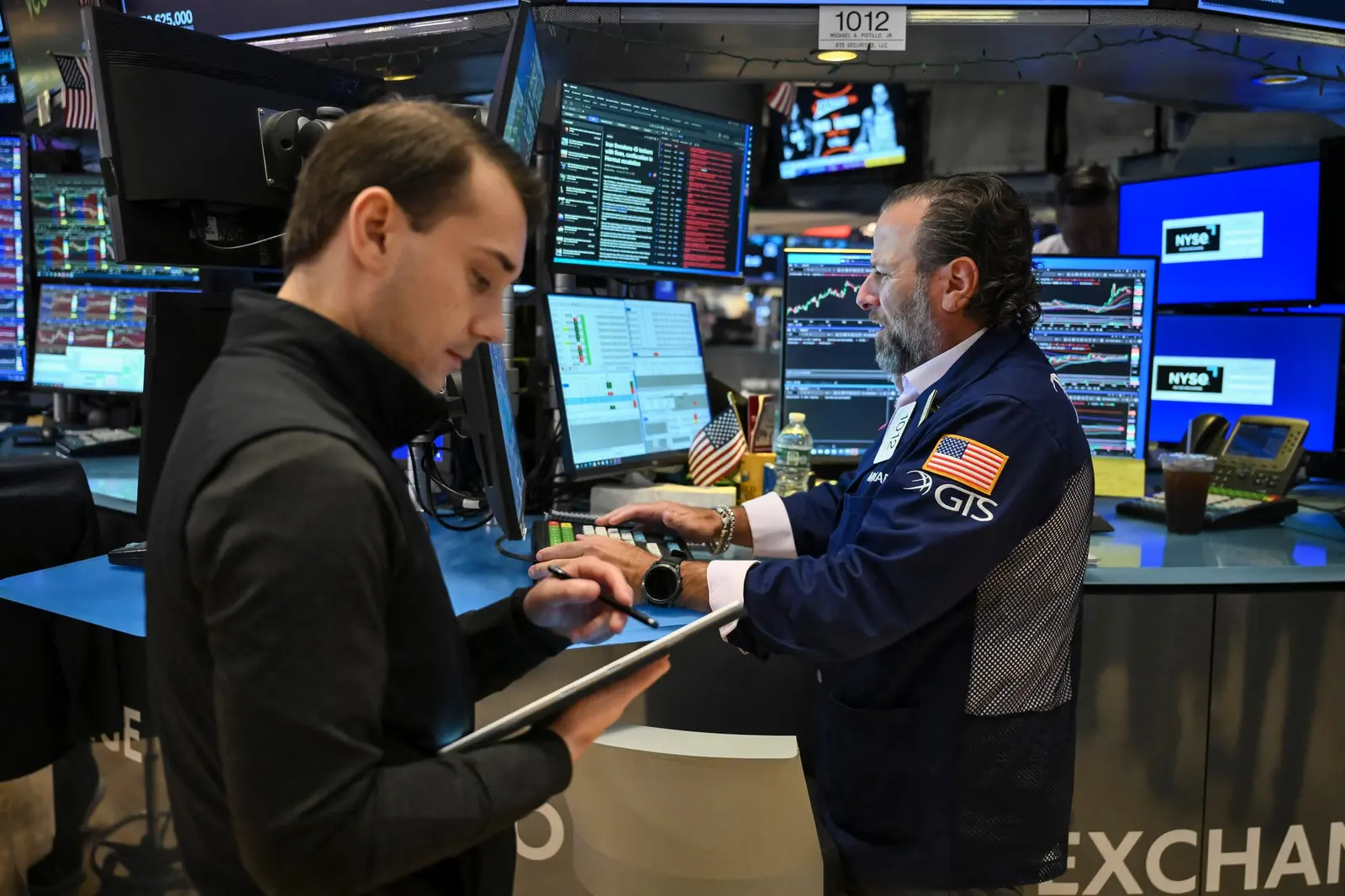
Photo: Angela Weiss / AFP via Getty Images, via The Globe and MailSource page
AI-linked shares rose on Monday after last week’s selloff, with lower Treasury yields and easier oil prices the reasons Shashwat Chauhan gave in a Reuters story carried by The Globe and Mail. The Philadelphia semiconductor index was last up 2.8 percent. It had fallen more than 11 percent last week. Over the eight losing sessions through Friday it had given up about $2 trillion of market value, and Reuters said the index was on course to snap its longest losing streak since October 2008. The figures are the prints in that copy, not a closing bell.
CoreWeave was up 3.4 percent. It had lost more than a quarter of its value last week, after concern about the company’s $50 billion debt load spread through the sector. Goldman Sachs upgraded the stock to buy from neutral. The brokerage’s case, as Reuters reported it, is that computing capacity is tight and that CoreWeave’s performance against other neocloud firms should lift annual recurring revenue per megawatt over the next two years. Goldman called the pullback a buying opportunity. The yield on CoreWeave’s bond maturing in 2031 fell 25 basis points to around 15 percent, from more than 16 percent last week, according to Tradeweb. Nebius rose 4.5 percent after losing more than 31 percent over two weeks. Applied Digital rose 9 percent and IREN 5.7 percent.
Among chip names, Intel climbed 5.6 percent after J.P. Morgan moved it to neutral from underweight. The bank’s reason, in the Reuters account, is that agentic AI workloads and tight supply of advanced chips could support higher earnings estimates through 2027. Nvidia added 0.6 percent, AMD 4.3 percent and Broadcom 2.2 percent, after all three had sold off last week. Micron rose 3.8 percent after falling nearly 15 percent last week. Sandisk, Western Digital and Seagate also rose after steep declines. Morgan Stanley’s figure in the story for AI investment is $1.6 trillion in 2027 and $1.8 trillion in 2028.
The week’s test, Chauhan wrote, is earnings. Meta, Tesla and SpaceX report later this week, and so do Lam Research, Texas Instruments and Western Digital. Ohsung Kwon, chief equity strategist at Wells Fargo, said it was too early to see a meaningful effect from higher rates, and that he expects AI capital spending to keep strengthening into 2027. Jay Woods, chief market strategist at Freedom Capital Markets, put the question on the multiple rather than on the spending: “The question this quarter isn’t whether AI will continue to grow, it’s whether investors are still willing to pay a premium for that growth.” Last week’s trigger, in the same story, was a hot inflation reading that raised expectations of further Federal Reserve rate increases, and with them the cost of the debt behind the buildout. Monday’s session did not retire that. It interrupted an eight-day slide.