Chip stocks sold off on pacing talk. Hock Tan says Broadcom’s AI targets have not moved
Nvidia about −3%, Broadcom −4.8%, AMD −6%, Intel about −7%, SOXX about −5.6%. Alphabet, Microsoft and Meta rose. Tan: demand is “very strong and durable.”
Feature2 minEasy
Eli Navarro2 min read
- Broadcom
- Nvidia
- Semiconductors
- Markets
- Anthropic
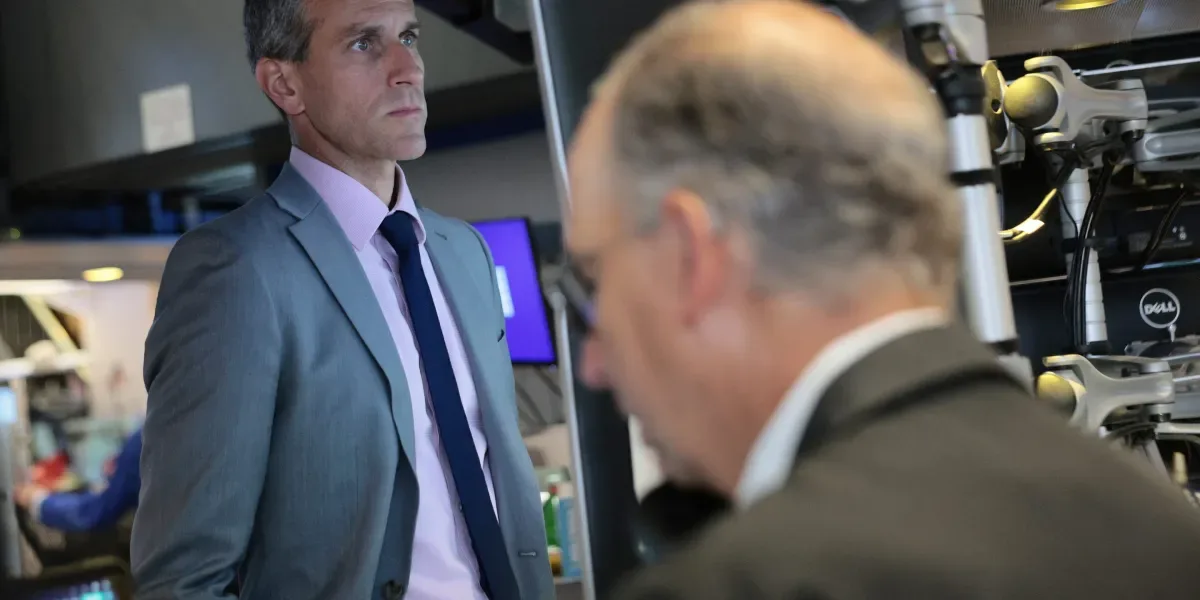
Photo: Fortune / Getty ImagesSource page
U.S. chip stocks sold off on Monday after the weekend’s pacing comments. Fortune had Nvidia down more than 3% in the morning; 24/7 Wall St. had it about 3% to $212.50. Broadcom fell 4.8%, CNBC said. AMD dropped about 6%. Intel fell about 7%, the hardest of the three logic names 24/7 tracked. The iShares Semiconductor ETF dropped 5.6% on CNBC’s tape and about 6% in Fortune’s and 24/7’s. The Nasdaq-100, by 24/7’s QQQ print, was off about 2%. Hyperscalers went the other way: Fortune had Alphabet up almost 2%, Microsoft 1.6%, Meta about 1.4%. Amazon was down about 1.6% and still held up better than the chipmakers.
Broadcom’s Hock Tan told Jim Cramer on Mad Money that none of that debate had moved his fiscal 2027 and 2028 AI semiconductor forecasts. Asked whether he was reconsidering, he said: “No, not in the least.” “We see the demand for compute infrastructure, for AI development or AI frontier models, and inference for the products that they feed to the world, as continuing to be very strong and, I believe, very durable.” On the September 2 earnings call he had put AI semiconductor revenue at $115 billion in fiscal 2027 and $230 billion in fiscal 2028. Anthropic is one of Broadcom’s most important custom-chip customers, CNBC noted, and Tan said it is on track to become the largest in 2027 and stay there in 2028. Nobody reported a cancelled order.
I don’t know about training, but when you want to productize inference, I see it continuing to be very, very strong.
— Hock Tan, CNBC Mad Money, Sep 14, 2026
Tan said he agrees AI needs “governances, safeguards,” then added it is “not a live animal that will run wild by itself.” Gil Luria at D.A. Davidson told Fortune the split is the point: if the frontier race slows, Microsoft, Amazon and Google can stop adding halls and harvest what they already built; Nvidia still has to sell the next GPU. Dan Ives wrote that if OpenAI and Anthropic slow, others catch up, and that China is not slowing — Reuters, he noted, had Z.AI raising another $5 billion over the weekend. Luria’s test is simpler: the labs have not announced a training moratorium. “Until they say that, they’re not actually slowing down.”