Three people tell Reuters that Chinese firms are trying to lock in Nvidia capacity abroad, and the copy still calls Huang chief executive
The Beijing dispatch, carried by Investing.com with a 12:35 a.m. timestamp and no time zone, is about rented chips outside China and a House bill that passed 369 to 22. Anniek Bao’s CNBC story, at 2:16 a.m. Eastern, was filed the same morning, before Nvidia said he had resigned.
Feature4 minIn-depth
James Okonkwo4 min read
- Nvidia
- China
- Export controls
- Chips
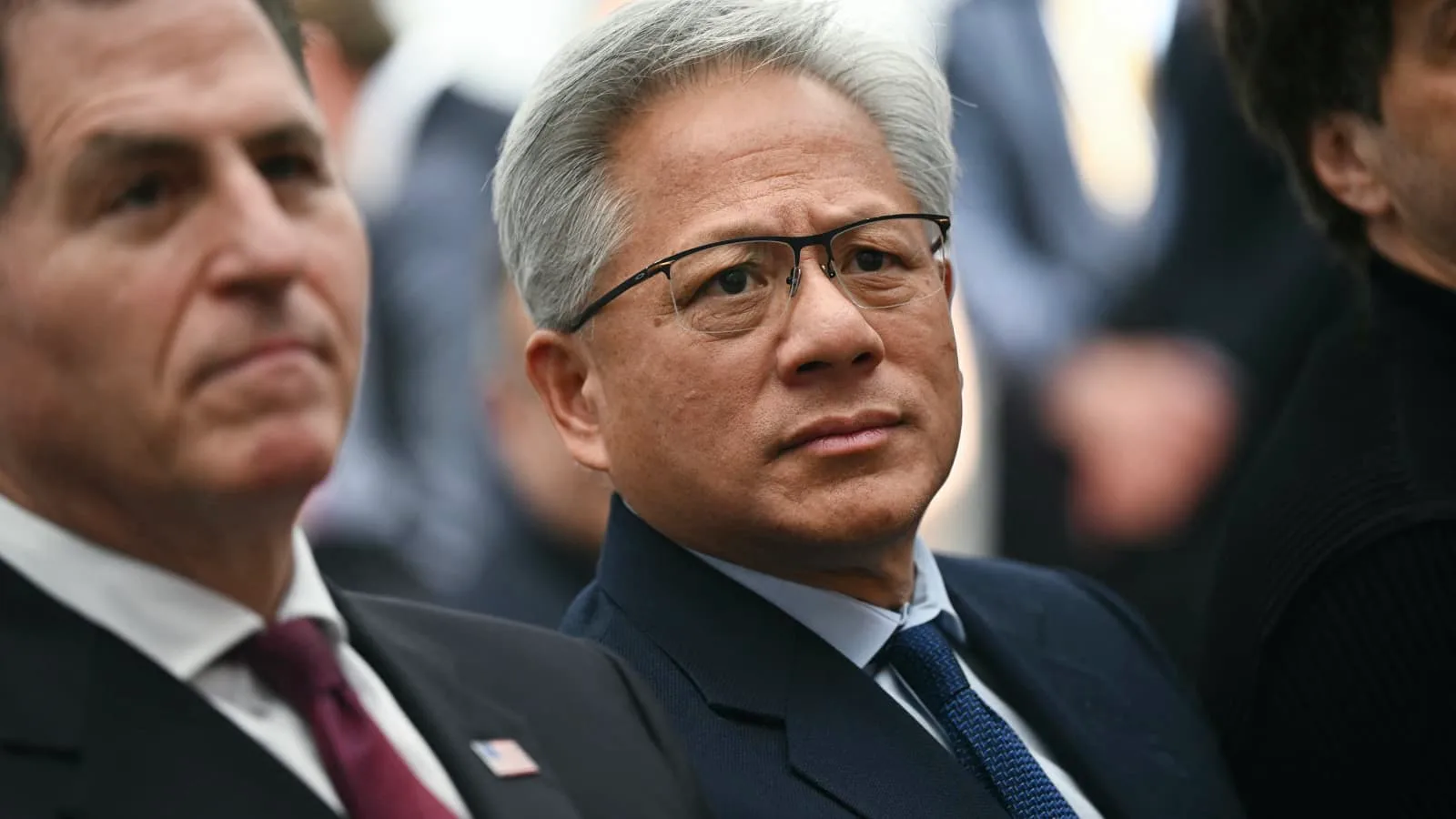
Photo: Kent Nishimura / AFP / Getty Images, via CNBCSource page
Chinese artificial-intelligence companies are trying to rent Nvidia-powered computers at data centres outside China, three people familiar with the matter told Reuters, because they fear the scandal around Jensen Huang will push Washington to restrict that remote use. The dispatch is datelined Beijing on 12 November. Investing.com’s copy of it is timestamped 12:35 a.m., updated a minute later, and the page does not print a time zone. In that copy Huang is still the chief executive. Nvidia’s statement that the board had accepted his resignation was issued later on Thursday.
The commercial detail is specific about the behaviour and silent about the names. A major Chinese cloud provider has discussed internally whether to lock in overseas Nvidia capacity, the people said, and some companies have contacted data-centre operators about reserving it. They declined to identify the provider. Smaller labs are considering the same step, including approaches to large rental providers in Southeast Asia, two of the people said. The gap they are trying to use is the one Reuters states: Washington restricts exports to China of Nvidia’s most advanced chips, and a Chinese company can still reach those processors by renting them in another country.
A bill the House passed 369 to 22, and a rule cited to The Information
The statute the people named is the Remote Access Security Act. Reuters says it would give the Commerce Department authority to regulate remote, cloud-based access to restricted technology. The House passed it in January by 369 to 22. It is waiting on the Senate. Anniek Bao’s story at CNBC, published at 2:16 a.m. Eastern and updated at 2:50 a.m., was also written while the copy still treated Huang as chief executive. She writes that the Commerce Department is finalising a rule to stop Chinese AI firms from using advanced chips through data centres in other countries, according to The Information, and that technology companies including Nvidia had long opposed it. She names three further bills that lawmakers want inside this year’s National Defense Authorization Act: the AI Overwatch Act, the Chip Security Act and the MATCH Act.
Meale told CNBC that Huang had been “the industry’s most effective lobbyist against tighter rules,” and that the scandal has weakened what he called Nvidia’s “singular ability to slow the progress of those bills,” which had been stalled by companies and by the White House. It has also, he said, made it “politically harder for negotiators to strip chip provisions out of this year’s NDAA.” Bao writes that Senate Democratic leader Chuck Schumer on Tuesday called for the bills to pass, and that John Moolenaar, the Republican chairman of the House select committee on China, also called for chip-export controls in the annual defense bill. Those calls predate Thursday’s resignation. Neither story says the bills have been written into the defense act.
What Reuters checked, and a dollar figure it does not print
The two accounts do not carry the same purchase. Reuters says the prospect of tougher enforcement has traders and intermediaries stockpiling restricted Nvidia chips in China’s grey market, according to two of the people, who said buyers fear a broader crackdown on smuggling of chips and of AI servers. Procurement records, Reuters writes, show that a Chinese university with deep ties to the People’s Liberation Army bought H200 chips last month even though it is on a US export blacklist. Bao, citing The Information, writes that Alice Huang helped facilitate at least $7.5 billion in Nvidia chip shipments to China. Reuters does not print $7.5 billion. Reuters says it could not independently verify the allegation that she was a Chinese intelligence asset, an allegation China has denied. Nvidia, Megaspeed and the Commerce Department did not immediately respond to Reuters.
What Reuters says it did check is a filing and a criminal case that has not reached a verdict. Two people told the wire that Alice Huang had business dealings and investment ties with Tencent and Alibaba. Neither company immediately responded. Singapore business filings, records Reuters says it reviewed, show that an Alibaba subsidiary, Apex Enterprise Solutions, provided financing to Speedmatrix, a Malaysian company linked to Megaspeed. Megaspeed has denied illegally diverting chips to China. In March, Reuters writes, US prosecutors charged Super Micro co-founder Yih-Shyan “Wally” Liaw and two others with conspiring to divert servers containing Nvidia chips to China through a company based in Southeast Asia. Prosecutors said that company bought about $2.5 billion of servers from Super Micro between 2024 and 2025, and that a substantial portion was diverted. The defendants have not been convicted.
Bao places the same argument on next week’s calendar, and on a question put while Huang was still chief executive. Trump is expected to meet Xi Jinping on the sidelines of the APEC leaders’ meeting in Shenzhen on 18 and 19 November. Paul Triolo, a partner at DGA-Albright Stonebridge Group, told CNBC that Chinese officials have been clear they will respond if the legislation passes, and could tighten controls on rare earths and magnets. Asked on Sunday whether he would take Huang to the meeting, Trump said, in Bao’s account, “I don’t know, but I’d certainly take him.” Gabriel Wildau of Teneo, also quoted by CNBC, said Trump appeared unconcerned for now. Both accounts were published before Nvidia said, later on Thursday, that Huang had resigned.