Brazil’s electoral court gave X 24 hours to explain Grok, before Sunday’s runoff
The second round is today. In an order the court’s news desk dated to Thursday, Minister Ricardo Villas Bôas Cueva told X to report how Grok answered equivalent questions about the presidential candidates, and whether it can produce campaign material without being asked. Meta has a parallel list, on translations, GIF search and a video it removed as synthetic. The daily fine is R$500,000 for each company. The order does not switch the tools off.
Feature3 minIn-depth
James Okonkwo3 min read
- Grok
- Meta
- Brazil
- Elections
- TSE
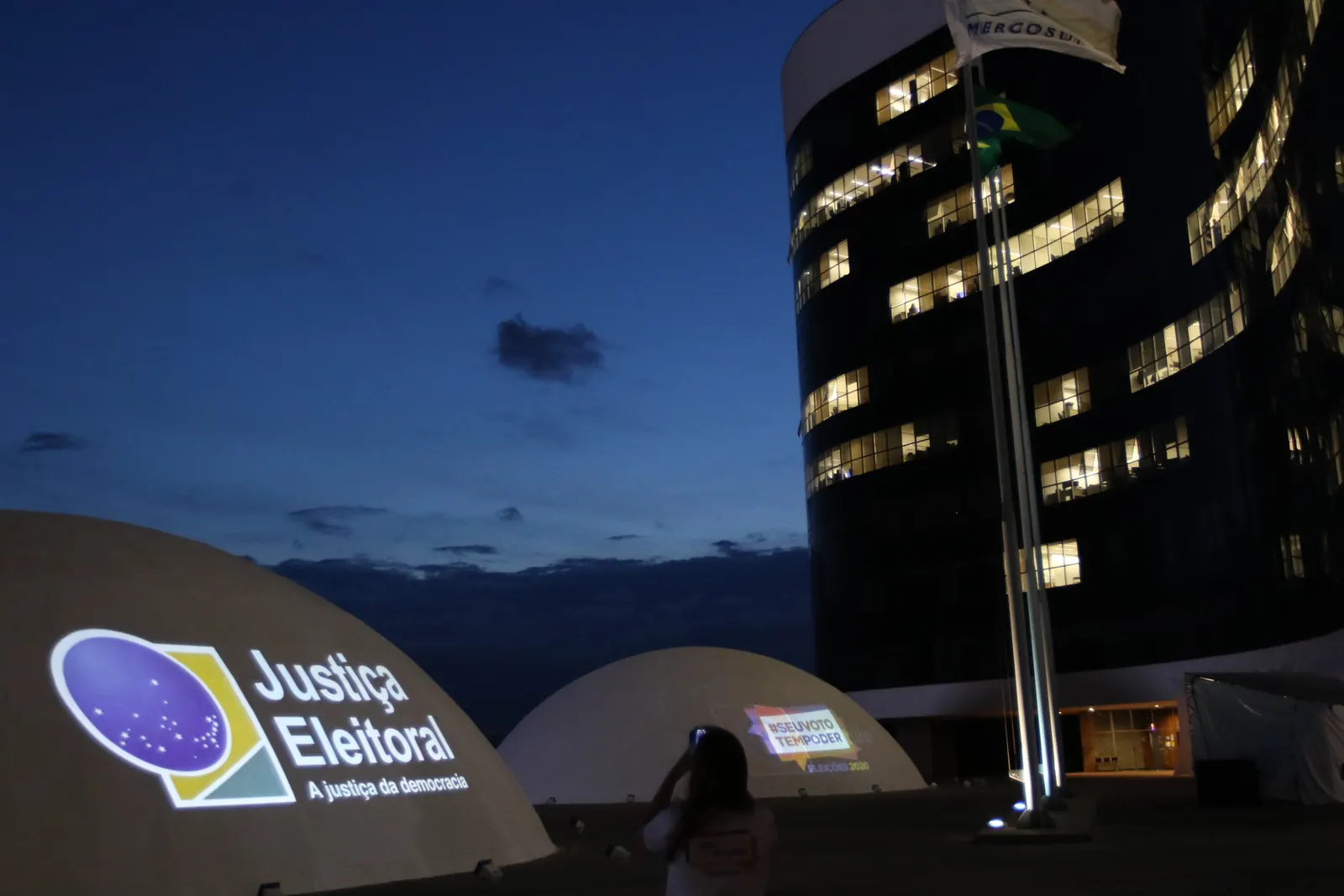
Photo: Fabio Rodrigues Pozzebom / Agência Brasil, via G1Source page
Brazilians vote on Sunday in the presidential runoff, and the last published order from the electoral court on the platforms asked X for a technical report on Grok rather than an order to turn it off. The case is AIJE 0603276-73.2026.6.00.0000, filed on 21 October by the coalition Brasil Pronto pra Mais against Flávio Nantes Bolsonaro and his running mate, Alfredo Gaspar de Mendonça Neto. The coalition alleges unequal treatment by Meta and X in how political content is distributed, recommended, moderated and promoted, including through artificial-intelligence tools, in favour of the ticket under investigation and against Luiz Inácio Lula da Silva. Minister Ricardo Villas Bôas Cueva, the electoral corregedor, received the complaint. The decision says reception is not a finding that the allegations are true. The court’s news note, timestamped 10:57 on 23 October, dates the order to Thursday.
On Grok, the coalition told the court that the tool gave different answers to materially equivalent requests about the candidates, and that it may generate campaign material without a specific request from a user. Cueva wrote that those elements justify questions about the filters and about any difference in treatment. He also wrote that they do not yet identify the parameters precisely enough to impose the immediate bans the coalition asked for. The order to X Brasil Internet Ltda. is a detailed report within 24 hours: the criteria, filters and parameters applied to equivalent requests about the presidential candidacies, and the technical reasons for any difference in the answers; and whether Grok can generate political-electoral content without a specific user request and, if so, in what circumstances and by what mechanism.
Translations, GIFs, and a video taken down as synthetic
Meta’s list is longer, and it is also a demand for explanation rather than a shutdown. The coalition wanted automatic translation of posts and comments that mention the presidential candidates suspended. Cueva called a general suspension too broad on the material in front of him. Facebook Serviços Online do Brasil Ltda. has 24 hours to explain episodes on 19 October in which, the complaint says, Meta’s translation changed the meaning of remarks about the race, including whether the translated versions feed the company’s own systems for classifying, integrity-checking or recommending content. The same deadline covers how GIF search results are ordered on WhatsApp and Instagram, and how hashtag suggestions are ordered on Instagram, in the episodes named in the complaint, and whether outside content suppliers take part. Separately, Meta must say whether the ad accounts of the two presidential candidacies sit under the same review, delivery and auction rules.
A later filing, dated 22 October, says Meta removed an Instagram video that day, less than an hour after it was posted: a trailer for the episode Flavinho de Papai in the series Revelando, taken down on the ground that it broke the rules for electoral content made with artificial intelligence. Cueva ordered a human review of that removal if one had not already been done, and a report on the system that classified the clip as synthetic, whether a person looked at it before or after the takedown, how widely the restriction applies, and the status of the producers’ appeal. The decision sets a daily fine of R$500,000 for Meta and the same sum for X, each, for an unjustified failure to comply, including a missed deadline. After the deadline the file returns to him for the requests he postponed, whether or not the companies have answered. The decision text does not record a reply.
A docket G1 counted at 804 before the weekend
Hadass Leventhal’s account in G1, published 22 October, puts a number on the wider docket. At the close of that story, on Wednesday night, the Superior Electoral Court had received at least 804 actions in the presidential race, more than double the 325 in the same stretch of 2022 and above the 388 of 2018. One of the fights she describes is the limit on deepfakes. A video of former president Jair Bolsonaro, generated by AI, was shown in July at the convention that confirmed Flávio Bolsonaro as the candidate. After a closed meeting and a plenary vote, she writes, the ministers kept the ban on deepfakes in campaigns and required a degree of realism before a clip counts as a violation. In the same session, a majority decided not to fine anyone and not to take that video down. G1 does not date the session. Admitting an investigation, the story also notes, is a technical step. It is not a finding that a campaign will be punished.