Anthropic says Claude found ART, a reverse-transcriptase system with CRISPR-like DNA repeats
Sep 23: first result from the Bay Area biology lab. Function unknown; not peer-reviewed. About 950 agents, 21 hours, 210 million tokens. Humans do the wet work, BSL-1/2, no human pathogens. Feng Zhang: intriguing. Amodei: a Stanford find is somewhat similar.
Deep dive3 minIn-depth
James Okonkwo3 min read
- Claude
- Anthropic
- Biology
- CRISPR
- ART
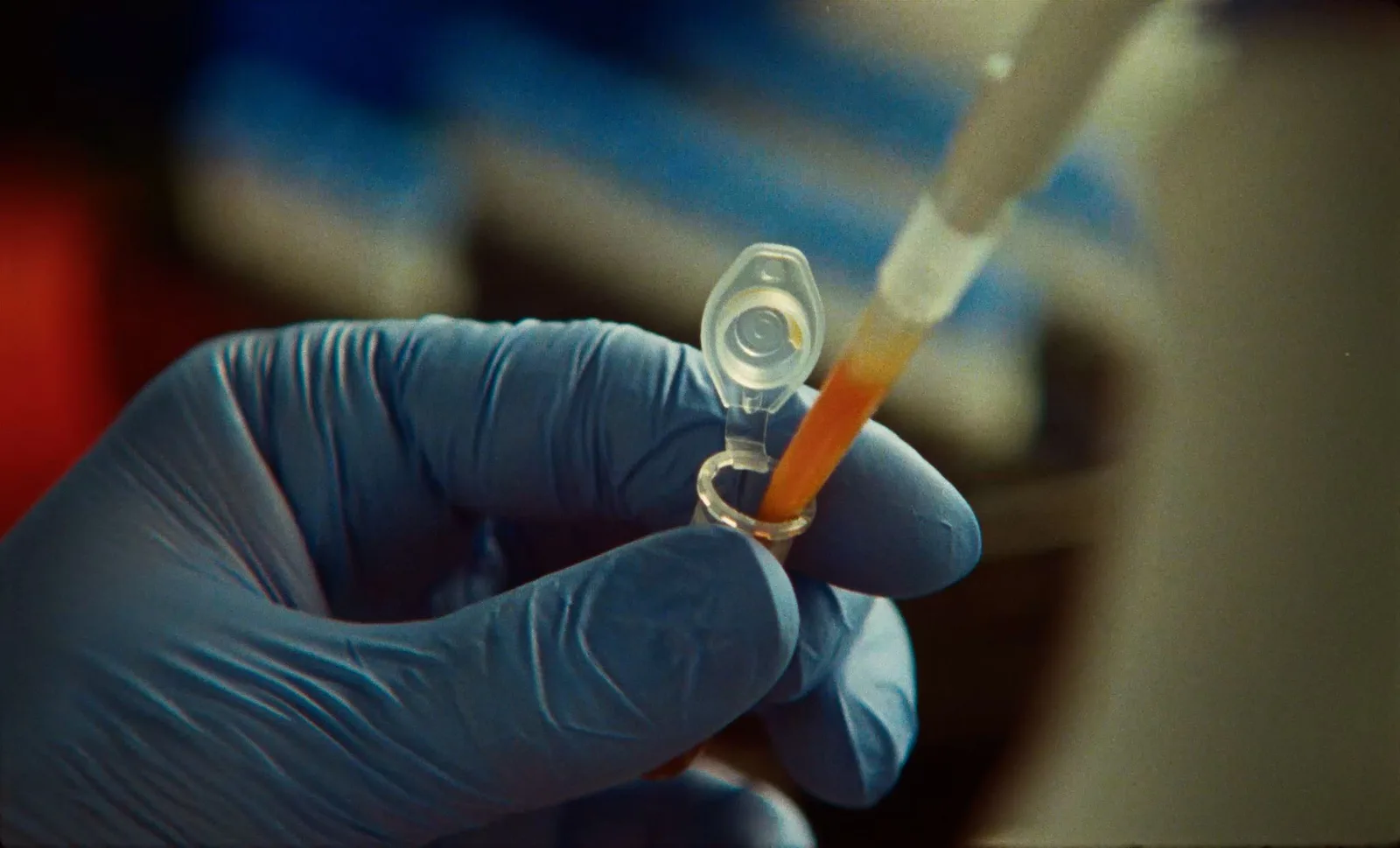
Photo: AnthropicSource page
Anthropic says Claude found a previously undescribed enzyme system in bacteriophage DNA and is calling it ART: array-associated reverse transcriptases. The company posted the result on Wednesday with a preprint that has not been peer-reviewed. The system has three parts — a reverse transcriptase, a partner gene of unknown function, and a long array of evenly spaced DNA repeats that looks like a CRISPR cassette. Anthropic does not know what it does. The underlying reverse transcriptase, in a jumbo phage, had been seen before. Claude, the company says, appears to be the first to notice the array and the accessory protein. It is the first public result from a molecular biology group and lab Anthropic formed in the Bay Area in spring 2026.
The search, on Anthropic’s account, used roughly 950 agents, 21 hours and 210 million tokens. The Next Web, reading the preprint, prints 21.5 hours, 949 sessions and 215.6 million tokens. Agents gathered more than 200,000 reverse transcriptases, scored thousands of candidate partner families and filed a short list of reports for people. One agent, reading raw DNA beside an odd-looking enzyme, wrote that it could see a tandem repeat array “by eye.” Human scientists then did the wet work. The lab runs at BSL-1 and BSL-2 and does not handle pathogens that infect humans. “All of the lab work is performed by human scientists,” Anthropic wrote. Julie Bort at TechCrunch quoted Dario Amodei saying that eventually Claude might run equipment “with appropriate safeguards,” and that the company is not doing that now.
This is an exciting example of how AI agents can contribute to biological discovery. The identification of RNA-repeat arrays associated with reverse transcriptases is genuinely intriguing and merits further investigation.
— Feng Zhang, MIT and the Broad Institute, comment published by Anthropic, Sep 23, 2026
A CRISPR rhyme, not a CRISPR tool
A reverse transcriptase copies RNA into DNA. Bacteria use many of them as immune parts. ART’s repeat layout recalls CRISPR, where an array stores RNA guides that make the system programmable. Anthropic’s first experiments, the company says, show the ART array is expressed as distinct short RNAs. The Next Web, from the preprint, adds that ART arrays hold 3 to 21 copies of a short repeat, that none has the cas genes CRISPR systems carry nearby, and that in published Staphylococcus-phage data those RNAs were as much as 8 percent of the phage’s RNA 15 minutes after infection. The preprint has not shown that the enzyme is active or that it works on those RNAs. Anthropic says only a handful of known systems share this set of features, and that those systems cut, copy or paste DNA. That is a resemblance, not a demonstrated editor.
Amodei, Bort wrote, said on X that a Stanford team previously found a system “that is in some ways similar to the one Claude found,” and that the discovery was “mostly, though not entirely, by Claude.” The Next Web notes the campaign was hard to repeat: ten reruns never read the DNA upstream of the enzyme and all missed the array. When the DNA was handed over directly, Anthropic’s four most capable models described the array in at least 90 percent of attempts; with files and tools the rate fell as low as 32 percent. Feng Zhang reviewed the preprint. Anthropic published his comment with the post. The function is still open. The lab result is a candidate and a method, sitting in a preprint.