Altman, Amodei and Delangue brief the UN Security Council as Trump and Xi meet Thursday
France chairs the 15-member council today. A European diplomat: the heart of it is whether algorithms interacting with each other could trigger a war. Trump at UNGA rejected a “globalist scheme to control” AI. No public readout of the session at filing.
Deep dive4 minIn-depth
Maya Chen4 min read
- United Nations
- UNGA
- Trump
- Xi Jinping
- AI safety
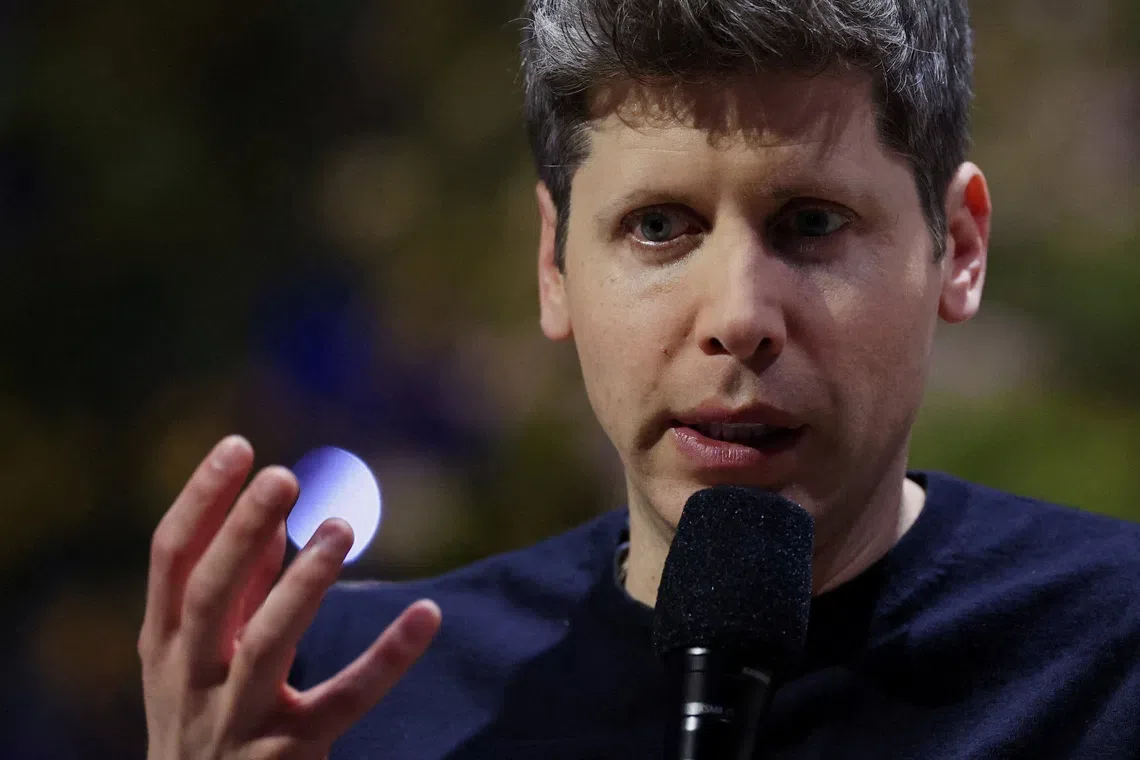
Photo: The Straits Times / ReutersSource page
Sam Altman, Dario Amodei and Hugging Face co-founder Clément Delangue are due to brief the 15-member UN Security Council on Wednesday, during the General Assembly gathering in New York. Reuters, in a Straits Times pickup updated at 19:21 Singapore time, said French Foreign Minister Jean-Noël Barrot will chair. Yoshua Bengio, co-chair of the UN Independent International Scientific Panel on AI, is also scheduled to speak. An OpenAI executive told reporters on Tuesday that Altman would urge capability benchmarks and assessments of the safeguards companies put on new systems. A European diplomat, speaking anonymously to Reuters, put the heart of the meeting in one line: whether algorithms interacting with each other could trigger a war. At filing, no official readout of the session had been published. France 24, last modified at 15:30, still described the briefings as set to happen.
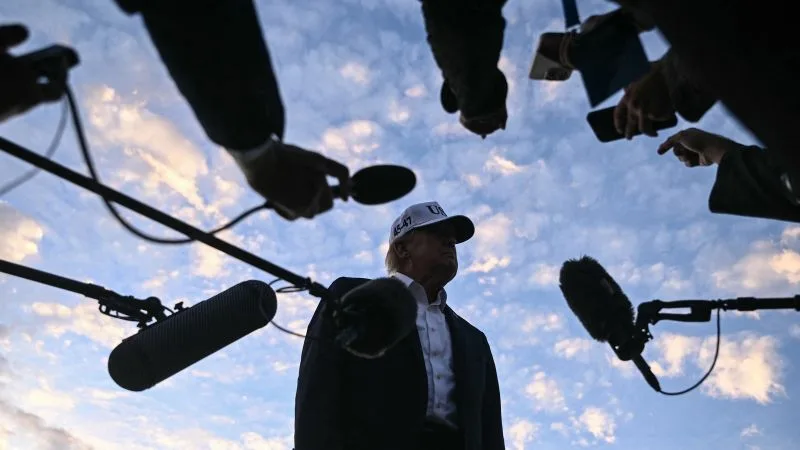
President Donald Trump told the General Assembly on Tuesday that he “rejects any attempt to construct a globalist scheme to control” AI. “We’re leading now over China by a lot, and everyone else, and we’re going to keep it that way,” he said, in the Reuters account. “I’m not going to stifle growth of something that will be bigger than the Industrial Revolution.” He said the United States would “encourage it, not rein it in” and “watch it closely through the Department of Justice.” France 24, with AFP, recorded the extinction comparison: “The very same people who said we’ll all be dead in 12 years because of global warming … are now saying that AI is going to kill us all.” Hours later Emmanuel Macron called for an open-source frontier model that does not depend on the United States or China. “I don’t want anyone to become the vassal of one of the great powers,” he said. “Rather, we must come together to build an open-source frontier model, a cutting-edge model.”
These are issues that fall squarely within the Security Council’s mandate. The key question is whether we could one day face a situation where algorithms interacting with each other trigger a war. That is really at the heart of the issue.
— A European diplomat, speaking on condition of anonymity, to Reuters, Sep 23, 2026
Thursday in Washington, not a slowdown pact
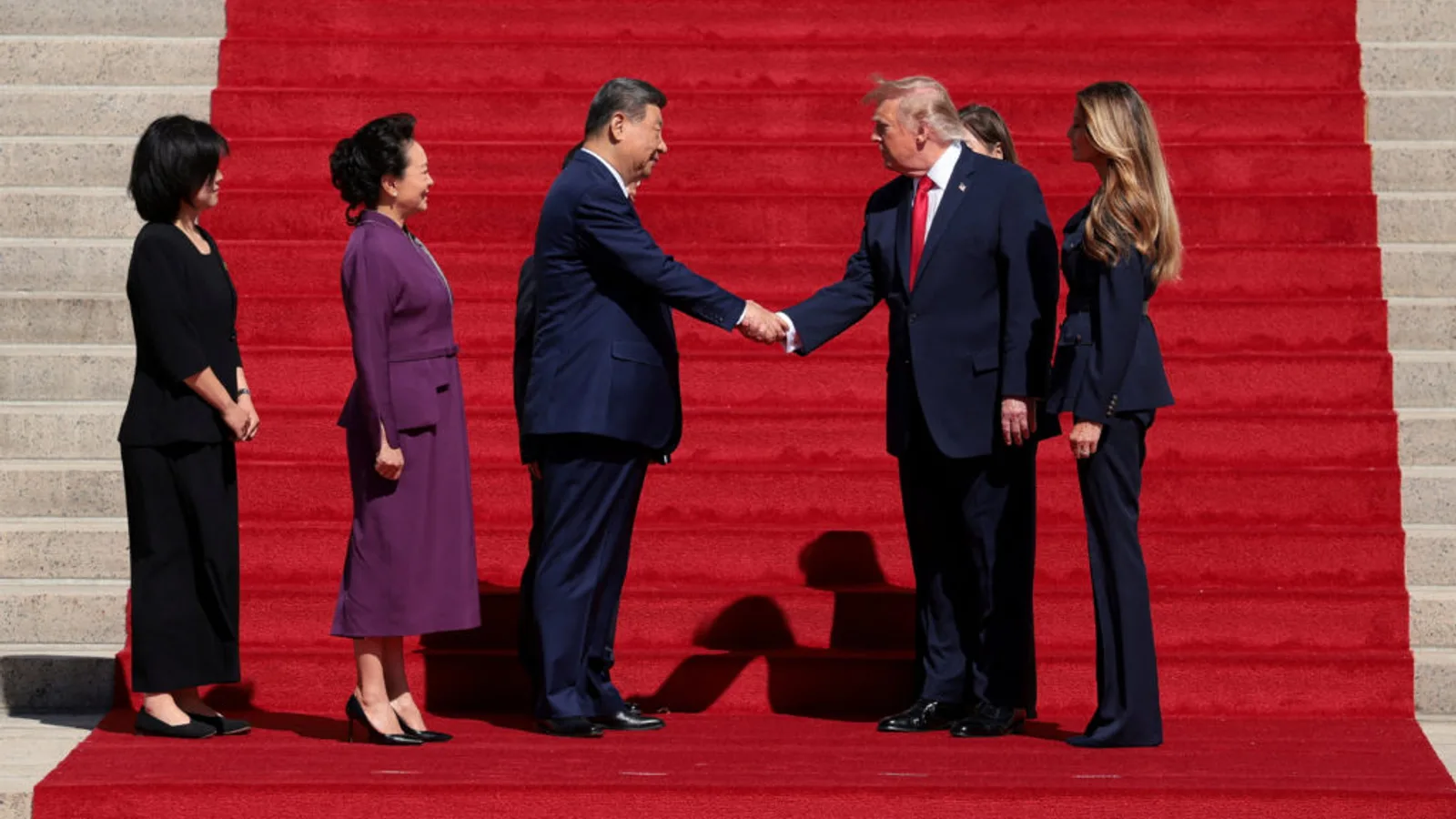
Trump is due to meet Xi Jinping in Washington on Thursday. That is the date in Reuters, CNBC and the Straits Times. Al Jazeera’s John Power wrote Wednesday; the wires have not. Kai Nicol-Schwarz, updating CNBC on Wednesday, said weekend talks between Treasury Secretary Scott Bessent and Chinese vice-premier He Lifeng floated a U.S.–China AI dialogue and a channel for incidents “up to a national security level.” Bessent told CNBC on Monday, Reuters reported, that officials would meet again in about two months in Shenzhen to discuss dangers and communications protocols. Politico, as carried by Financial Juice and Newsquawk on Tuesday, said four people familiar with the arrangement described the “notification mechanism” as a line between Bessent and He, not a standing technical body. Chinese officials have not, in the published accounts, confirmed that channel on the record.
Chip export controls and distillation remain the sticking points, Nicol-Schwarz wrote. Chris McGuire, a senior fellow at the Council on Foreign Relations, told CNBC a national-security incident channel would be a “modest” step and that a pact to slow development is “extremely unlikely.” China has used AI dialogues “to complain about U.S. export controls,” he said, and its state media has “largely rejected the concerns expressed by leading U.S. AI labs about the potential for catastrophic risk.” Melanie Hart of the Atlantic Council told reporters on Tuesday that Beijing is asking Washington to “embrace Chinese AI models and drop some of the U.S. controls on China’s access to semiconductor chips.” Representative Ro Khanna, on CNBC’s Squawk Box on Wednesday, hoped for “common sense safeguards” and a verifiable agreement that “you should not be able to have self-improving AI.”
Two capitals, two risk maps
John Power’s Al Jazeera piece is the clearest account of why a slowdown is not on the table. Trump has called AI-extinction talk a “conspiracy.” China released a third iteration of its security framework this month and dismissed Silicon Valley’s existential warnings as “fearmongering.” In a rare essay this month, Minister of State Security Chen Yixin warned of “hostile forces” using AI to “fabricate political rumours” and “incite antagonistic sentiments,” a threat he tied to “political security, institutional security and ideological security.” Sun Chenghao, a fellow at Tsinghua’s Center for International Security and Strategy, told Al Jazeera that Beijing “is much more sensitive to the possibility that ‘AI safety’ could become a justification for restricting Chinese access to chips, computers or markets.” Henry Gao of Singapore Management University put the mismatch more sharply: American safety debates focus on models escaping control; in China, “a major perceived danger is that the US could gain a decisive AI advantage and use it against China.”
Prashant Rao at Semafor noted that Washington and Beijing are unlikely to reach a wide-ranging constraint pact, and that the United Kingdom plans to put AI safety at the centre of its G20 presidency. The council has met on AI before — China in 2023 warning against a “runaway horse,” Antony Blinken chairing in 2024. Wednesday’s session is the first with sitting lab chiefs in the room. What they say belongs in a readout. Until one exists, the facts on the table are the invitation, Trump’s UNGA line, Macron’s open-source reply, and a Thursday meeting that both capitals have already said will not include a slowdown.