Economy Tribune says most of Samsung’s 2027–2029 memory output is already under contract
Kim Yong-hyun’s story, updated at 13:08 on 21 November, attributes the 2027–2029 claim to a person familiar with the matter. Some customers, the story says, want agreements through 2031. Samsung’s own figures in the piece are from the 29 October call: long-term agreements with 10 large customers, talks with 10 more, and a target of 60 to 70 percent of capacity under those agreements by 2030. Commodity DRAM wafers for 2027 are described as essentially sold.
Short2 minEasy
Maya Chen2 min read
- Samsung
- Memory
- DRAM
- HBM
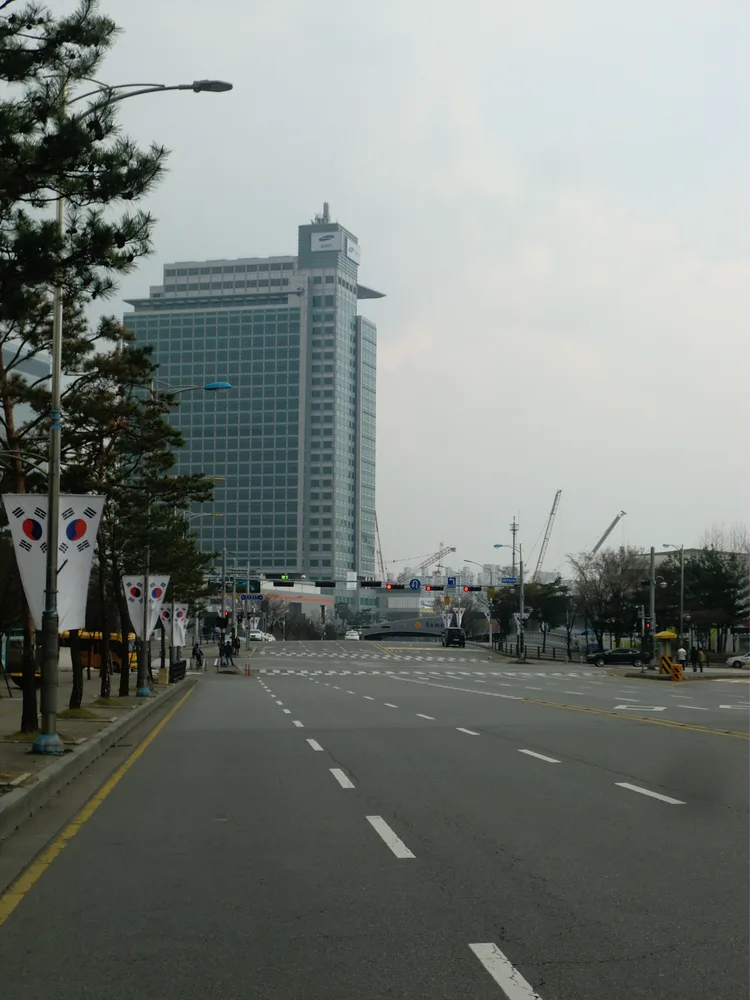
Photo: hyolee2 / Wikimedia CommonsCC BY-SA 4.0
Most of Samsung Electronics’ memory production capacity for 2027 through 2029 is already tied up in contracts, according to a person familiar with the matter cited by Kim Yong-hyun in Economy Tribune. The story was filed at 12:54 on 21 November and updated at 13:08, the timestamps on the page. Customers are asking for more than those contracts already cover, it says, and some are pushing to extend agreements through 2031. The shortage the story describes is no longer only high-bandwidth memory. It includes commodity DRAM and NAND flash sold to companies. Samsung is not quoted in the story confirming the 2027–2029 line. That sentence is the unnamed person’s.
What the story attributes to Samsung itself is older, from the third-quarter earnings presentation on 29 October. The company had signed long-term supply agreements with 10 large customers and was negotiating with 10 more. Its target is to have 60 to 70 percent of memory capacity under such agreements by 2030. On price, the story separates two claims. Samsung said at that presentation that the agreements already signed include a price floor. People in the industry, the story says, have also left open contracts that would add prepayment and a price ceiling as well as a floor. Those are not described as terms Samsung has announced.
The supply figures are also from unnamed industry sources, not from a Samsung table. Major memory makers are currently meeting 60 to 70 percent of demand, the story says, and the shortage is expected to get worse in 2027. Commodity DRAM wafer capacity for 2027 is described as essentially all sold. Growth in DRAM bits supplied is put at 20 to 25 percent a year at most. The reason given for the squeeze on ordinary DRAM is mechanical: high-bandwidth memory uses more wafer capacity than standard DRAM, so a higher share of HBM leaves less room to add the ordinary kind. An industry official is quoted on NAND. Inquiries are heavy. Demand in the contract market is rising even where the spot market is not. Consumer NAND is now being filled at 70 percent, a rate the official says has risen a lot recently. Enterprise solid-state drives are just over 50 percent. The same official says Kioxia has raised its outlook for NAND demand in 2027. The story does not give a handset price. Dominic Preston’s Verge review of the Xiaomi 18 Pro, published the same day, names the RAM shortage as the reason those phone prices are higher than ever. The Tribune piece is about factory contracts, and it does not mention Xiaomi.