OpenAI will ask Washington for AI “speed limits,” and for a new name for data centers
Business Insider, timestamped 22:28 UTC on Sunday, says a spokesperson confirmed the phrase “compute campuses.” Axios reported the same day that Chris Lehane’s package, including mandatory safeguards he calls speed limits, is meant for the lame-duck session that opens on 9 November. No bill text is public.
Feature3 minIn-depth
James Okonkwo3 min read
- OpenAI
- Policy
- Data centers
- Congress
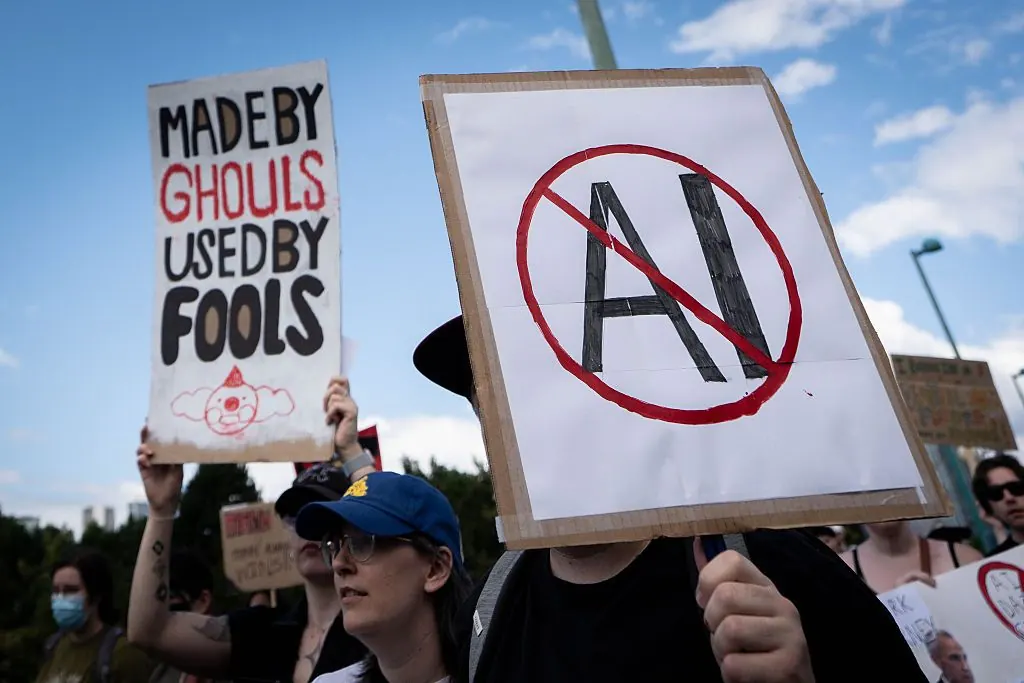
Photo: Ethan Cairns / Bloomberg / Getty Images, via TechCrunchSource page
OpenAI has confirmed, to Business Insider, that it plans to propose a new name for the buildings that run its models: “compute campuses.” Truman Dickerson’s story is timestamped 22:28 UTC on Sunday, 23:28 in Amsterdam. The spokesperson’s line, as the story prints it, is that the phrase “better describes the scale and role of the infrastructure we’re building for AI,” and that the sites are “long-term investments in computing, energy infrastructure and skilled work.” A second sentence asks that “the communities hosting that infrastructure” help shape it and “share in the opportunities it creates.”
The wider package is the one Jim VandeHei and Mike Allen reported at Axios on Sunday. They write that OpenAI will start a policy and public-relations push right after Tuesday’s midterm elections, in the lame-duck session of Congress that opens on 9 November and runs until new members are sworn in on 3 January. Chris Lehane, the company’s chief global affairs officer, told them the team has been assembling proposals since August, some new and some repackaged. Axios describes a House that Democrats will likely win. Anthony Ha at TechCrunch, in a story timestamped 1:55 p.m. Pacific on Sunday, 21:55 UTC, adds that the Senate is possibly in play as well. Neither piece is an election forecast from OpenAI. Both are the outlets’ frame for why the company is moving now.
A name, and a set of rules that is not yet a bill
You’re going to see us talk more and more about the concept of speed limits. Our belief is people should always remain in control of this technology.
— Chris Lehane, OpenAI’s chief global affairs officer, to Axios
The first item on Axios’s list is those speed limits: mandatory safeguards for the most powerful systems, which Lehane describes as a way for people to keep control, with a more aggressive push in Congress. He told Axios the company believes AI “should be built by and for people,” and that people should have more control over how it shapes their lives and communities. The story says the ideas build on earlier proposals. It does not quote a draft, name a committee, or attach the phrase to a particular model.
The second item is the buildings. Axios says OpenAI hopes to blunt a backlash that runs through both parties with new “community compacts,” and with state legislation that would give residents a say in how projects are built and what benefits they receive. The renaming, Axios writes, is intentional. The company will argue that what it is building, as against older data centers, should be called AI compute campuses that can change the economy of the places that host them. The example Axios prints is a project in Pike County, in Ohio’s Appalachian region, which the story says promises thousands of jobs. It does not give a headcount, a power figure, or a date the site would open. Lehane called the local argument “good and healthy,” and “democracy in action,” and said communities should hold companies accountable so they “really and truly get a transformative benefit.” Ha’s TechCrunch piece puts that argument next to a separate development he reports in the same parenthesis: Amazon and Microsoft have said they will no longer use non-disclosure agreements in negotiations with local governments.
The other two items are shorter in the Axios account. One is economic: help more people see AI as useful at work and in daily life, including support for workers through disruption, wider training, and an easier path to starting a business. The other is international: the United States should shape global standards for AI “built on democratic values.” Lehane told Axios that Tuesday is “a bit of a movie trailer for what you’re going to see in 2028,” and that “AI is going to be the issue in 2028.” He also said it will not be enough for a candidate to say “AI bad,” because the public already treats the subject as more complicated than that.
Business Insider cites a Pew Research poll in which 54 percent of Americans say AI data centers are bad for the environment, and writes that the facilities are now a midterm issue. It does not link the poll. What a reader can check today is the spokesperson’s confirmation of the name, and Lehane’s description of a legislative push that has not been filed. Axios discloses at the bottom of its story that it has a content-licensing and technology agreement with OpenAI, “emphasizing expansion of local news coverage.”