OpenAI says GPT-6 Astra designed a Codex device in a week, and an unnamed model scores higher
A post dated Tuesday says two people used Astra, as a side project, to lay out the case, the circuit board, and the firmware. A factory still needed several rounds of review. On BenchCAD 2.0 an internal model averages 0.875, against 0.594 for Astra. Mazda and Chip Ganassi Racing are the named partners.
Feature4 minIn-depth
James Okonkwo4 min read
- OpenAI
- GPT-6
- Codex
- Astra
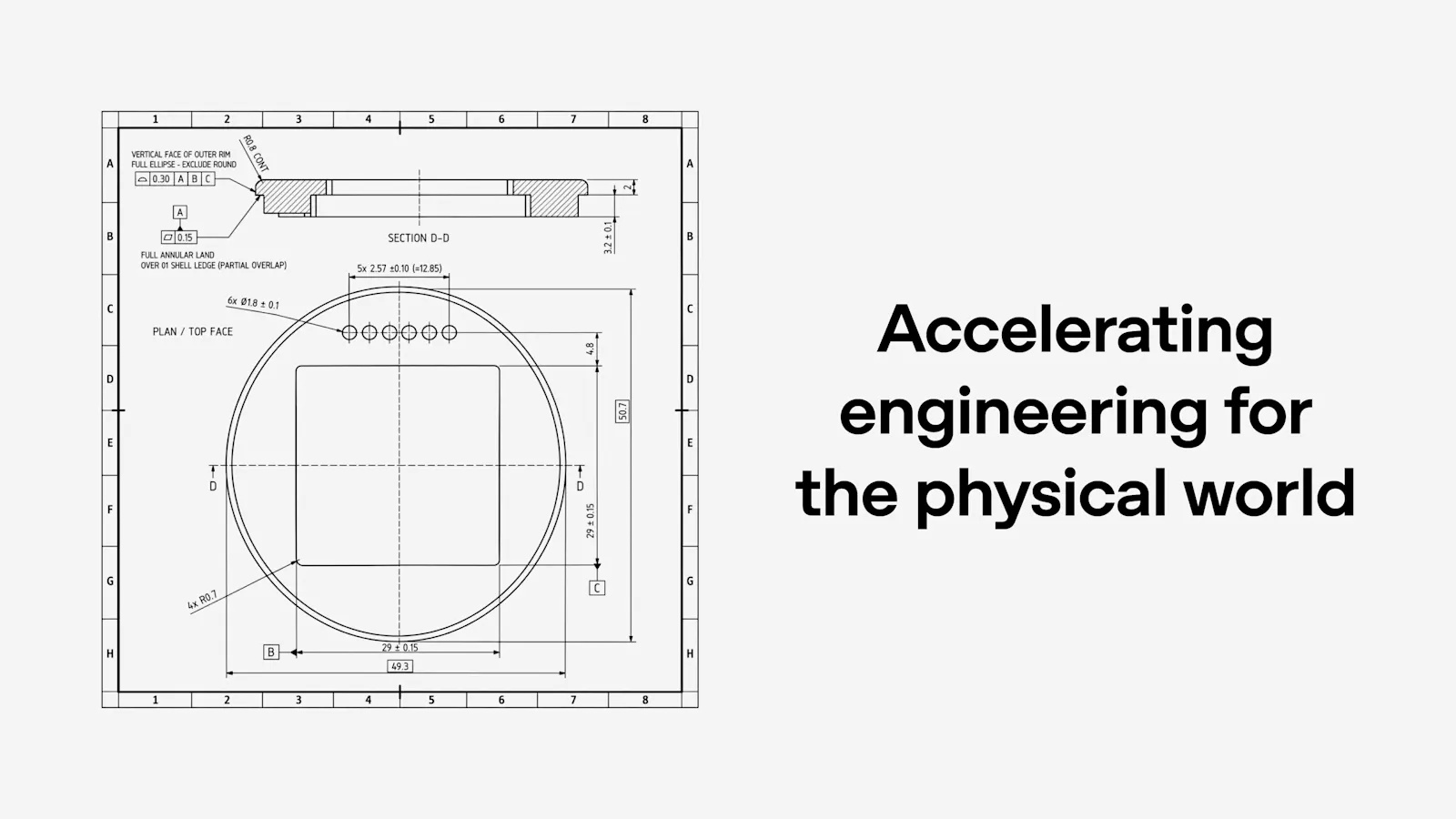
Photo: OpenAISource page
OpenAI said on Tuesday that two people on its staff used GPT-6 Astra to design a device for talking to Codex, as a side project, in under a week. The post is dated 3 November. It says the test was whether Astra could create the device without any direct human edits. GPT-6 defined the functional requirements. Astra developed the look, drawing on a recent Work Louder collaboration and on references from games and toys, designed the enclosure and the structures that hold the parts, selected the electrical components, and laid out the printed circuit board so it would fit in the case. It also designed the interface and generated the firmware and the software that connects the device to Codex. A contract manufacturer built a small batch of prototypes in under a month.
The same section says the device was not ready to manufacture on that first pass. Getting it there “still required several rounds of review and iteration.” Astra, the post says, “did not consistently account for the manufacturer’s production limits, tolerances, or details required for assembly.” OpenAI presents those misses as a list of what later models have to do better. It does not say the prototypes shipped, and it does not give a cost.
A score for a model that has no name
Further down, the post gives a number for a model it does not name. BenchCAD 2.0, which it describes as a test of whether models can reconstruct 3D parts and assemblies and identify connections on circuit boards, gave “a newer internal model” an average score of 0.875. GPT-6 Astra, at its highest reasoning setting, scored 0.594. OpenAI calls the gap early evidence that models can speed iteration in professional workflows, and it says the engineering lifecycle includes a great deal besides design. It does not say when the internal model would be released, or whether it is a successor to Astra.
Inside the company, the post says, hardware and infrastructure teams already use Codex and ChatGPT to create and revise CAD models, prepare manufacturing drawings, set up simulations, and review designs, across robotics and compute infrastructure. Since February, model usage on those teams, measured in tokens, has grown 23-fold. Grace Lam, a forward deployed engineer, is quoted: “Codex has dramatically accelerated how we move from an idea to an engineered part. We’re iterating faster across CAD, converting 3D designs into production-ready 2D drawings, and setting up simulations and FEA with far less manual work.” Qiong Wang, a member of technical staff, says Codex and ChatGPT are used to organize constraints across disciplines, explore system architectures, work in electronic-design tools, and run design reviews, and that they have “the potential to grow into teams of hardware specialists that can take a board from concept to Gerber out.” The 23-fold figure is tokens consumed. The post does not convert it into hours saved.
A racing team, and Mazda’s nose
Two outside collaborations are named. OpenAI says it is expanding work with Chip Ganassi Racing, testing workflows that turn 3D scans of existing parts into editable CAD models and 2D manufacturing drawings, which it says is useful when the original design files are gone. The team’s engineers review the models for accuracy and whether a part can be made. Matthew Ortman, an R&D engineer there, says: “The model has been useful for going from raw scan data to a solid body. I have been working with Codex directly in CAD. The feedback I give the model is directly applied, the manual tweaks can be made directly, and this has become a faster, more hands-off process for me.”
The new name is Mazda. OpenAI’s research and forward-deployed engineers are working with the company’s aerodynamics and crash-safety engineers on simulations of airflow and structure, with styling and cost still in the problem. The post says GPT-6 Astra helps the aerodynamics group explore ways to cut drag by modeling new nose shapes, simulating the airflow, and refining the shapes that look promising. A caption says agreement for use of that material was obtained from Mazda Motor Corporation, and that republication elsewhere is prohibited. Akihiro Nakata, a principal engineer at Mazda, is quoted on the argument his designers have with the wind-tunnel result: “Does it have to look like that?” He says that by simulating dozens of variations, Astra in Codex helps them see which features matter for the airflow and where the designers still have room, and that the point is to hold Mazda’s design and the aerodynamic number together. OpenAI says it will share more of that work in the coming months. The post ends with a form for engineering firms and software vendors who want to shape the training. It does not announce a product, a price, or a date for the unnamed model.