Omdia’s table has Apple’s phone shipments flat, and Xiaomi, OPPO and vivo down by about a third
The firm’s 29 October release counts 254.7 million smartphones in the third quarter, down 20 percent, the lowest third-quarter total since 2013. Samsung shipped 57.8 million, down 5 percent. Apple shipped 56.5 million, the same as a year earlier, and its share rose from 18 percent to 22 percent. Xiaomi, OPPO and vivo were down 29, 39 and 33 percent.
Feature3 minEasy
Eli Navarro3 min read
- Omdia
- Apple
- Samsung
- Xiaomi
- Android
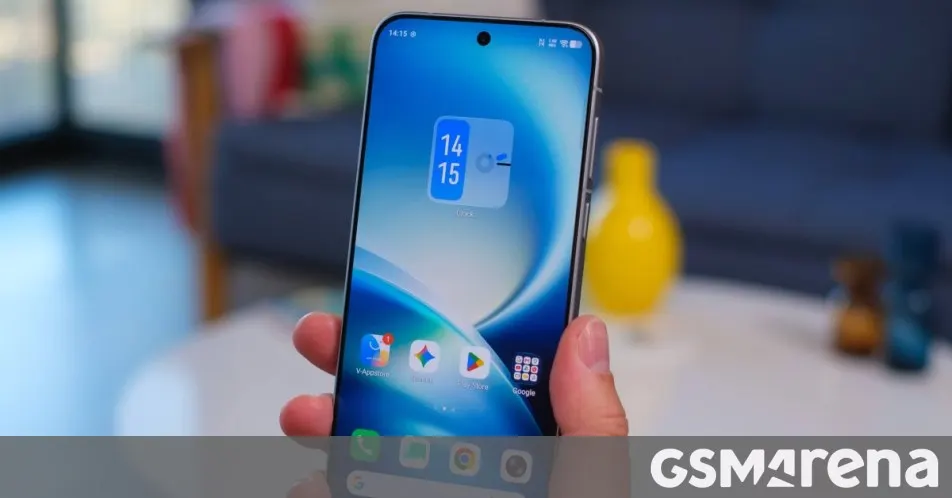
Photo: GSMArenaSource page
Omdia’s vendor table for the third quarter, in a Business Wire release Nasdaq published at 6:56 a.m. Eastern on Thursday, has Apple’s iPhone shipments unchanged from a year earlier and the large Android brands below it down by roughly a third or more. The firm counts 254.7 million smartphones shipped worldwide, 20 percent fewer than the 320.1 million of a year earlier, and calls that the lowest third-quarter total since 2013. Samsung stayed first, at 57.8 million units, down 5 percent, and a 23 percent share, up from 19 percent. Apple was second, at 56.5 million, the same unit count as a year earlier, and a 22 percent share, up from 18 percent. The gap between them is 1.3 million phones. GSMArena’s Siddharth wrote the totals up on Friday.
The rest of the table is where the volume went. Xiaomi, including Redmi and POCO, shipped 30.7 million, down 29 percent, and a 12 percent share. Omdia says shipments fell 20 percent in China and 28 percent in India, and that the Redmi A7 Pro and Redmi 17 were not enough to offset the decline. OPPO, a line that in this table includes OnePlus and realme, shipped 23.4 million, down 39 percent. vivo shipped 19.3 million, down 33 percent. Everyone else shipped 67.0 million, down 28 percent. A year earlier those rows were 43.4 million for Xiaomi, 38.4 million for OPPO, 28.5 million for vivo, and 92.5 million for the rest.
IDC’s preliminary count, which Marcus Mendes reported for 9to5Mac on 15 October, was close on Samsung and not on Apple. Mendes put the quarter down 22 percent, Samsung at 57.8 million units and down 5.8 percent, and Apple at 57.3 million, down 4 percent. Omdia’s Apple figure is 56.5 million and flat. The two write-ups are different firms’ counts of the same quarter. They agree that Samsung shipped 57.8 million and stayed ahead. They do not agree on whether Apple’s shipments fell.
Apple held the units. The Android brands cut them
Omdia’s account of Apple is that demand in China and North America offset weakness in emerging markets, helped by continued iPhone 17 sales and by channel stocking ahead of expected price increases. In September, the release says, Apple introduced the iPhone 18 Pro, the iPhone 18 Pro Max, and its first foldable, the iPhone Duo, and deferred the base iPhone 18 to 2027. Omdia reads that as a longer sales run for the iPhone 17 and a holiday season concentrated on the more expensive new phones. Samsung, it says, was held up by the Galaxy A series in the entry and mid range, while rival Android brands faced memory shortages and higher prices, and by the Galaxy Z8 series launched in August, with trade-in and upgrade programs.
Emerging markets, once the backbone of global smartphone volume growth, are now facing the greatest pressure from rising prices.
— Sanyam Chaurasia, principal analyst at Omdia
Chaurasia’s figures for the regions, in the same release, put Africa’s contraction at 39 percent. Asia-Pacific excluding Greater China, the Middle East, and Latin America also declined by more than 20 percent, he said. North America was relatively resilient. He said currency moves, inflation, and living costs led some buyers to delay an upgrade, to choose a refurbished phone, or, in some lower-income markets, to buy a feature phone. Amber Liu, Omdia’s practice leader, said further price increases and little room for holiday discounts are expected to weigh on demand. The release says the firm expects shipments to decline by 12 percent in 2026, and to fall again in 2027 at a slower pace, with shortages of high-bandwidth memory and constraints on conventional memory keeping costs up. The 12 percent figure was already public. Dan Robinson at The Register, on 15 October, reported Omdia’s expectation of a 12 percent drop in 2026 and a further 6 percent decline the next year. Thursday’s text does not restate the 6 percent.
The same Register story quoted Runar Bjorhovde, a principal analyst at Omdia, saying the firm did not anticipate relief from the memory shortage before 2028 at the earliest, and that the first sign he was looking for was memory prices stopping their rise. Thursday’s release does not mention 2028. It does say distributors and retailers were cautious about restocking before the holidays, because higher device prices raise the cash tied up in inventory. Liu said independent retailers, as distinct from carriers and large chains, face slower turnover and thinner margins, and that some may leave the market.