Anthropic’s public S-1 shows an $80.7 billion first-half loss and leaves the offering price blank
The filing, posted Monday, lists Class A shares on Nasdaq as ANT. First-half revenue was $16.286 billion and the net loss $80.748 billion, of which $72.388 billion is a fair-value charge. Adjusted operating income, which adds back stock pay and two other items, was $1.618 billion. The share count and the price range are not in the document. Reuters says some investors are marking the company near $1.5 trillion.
Deep dive6 minIn-depth
Maya Chen6 min read
- Anthropic
- IPO
- S-1
- Claude

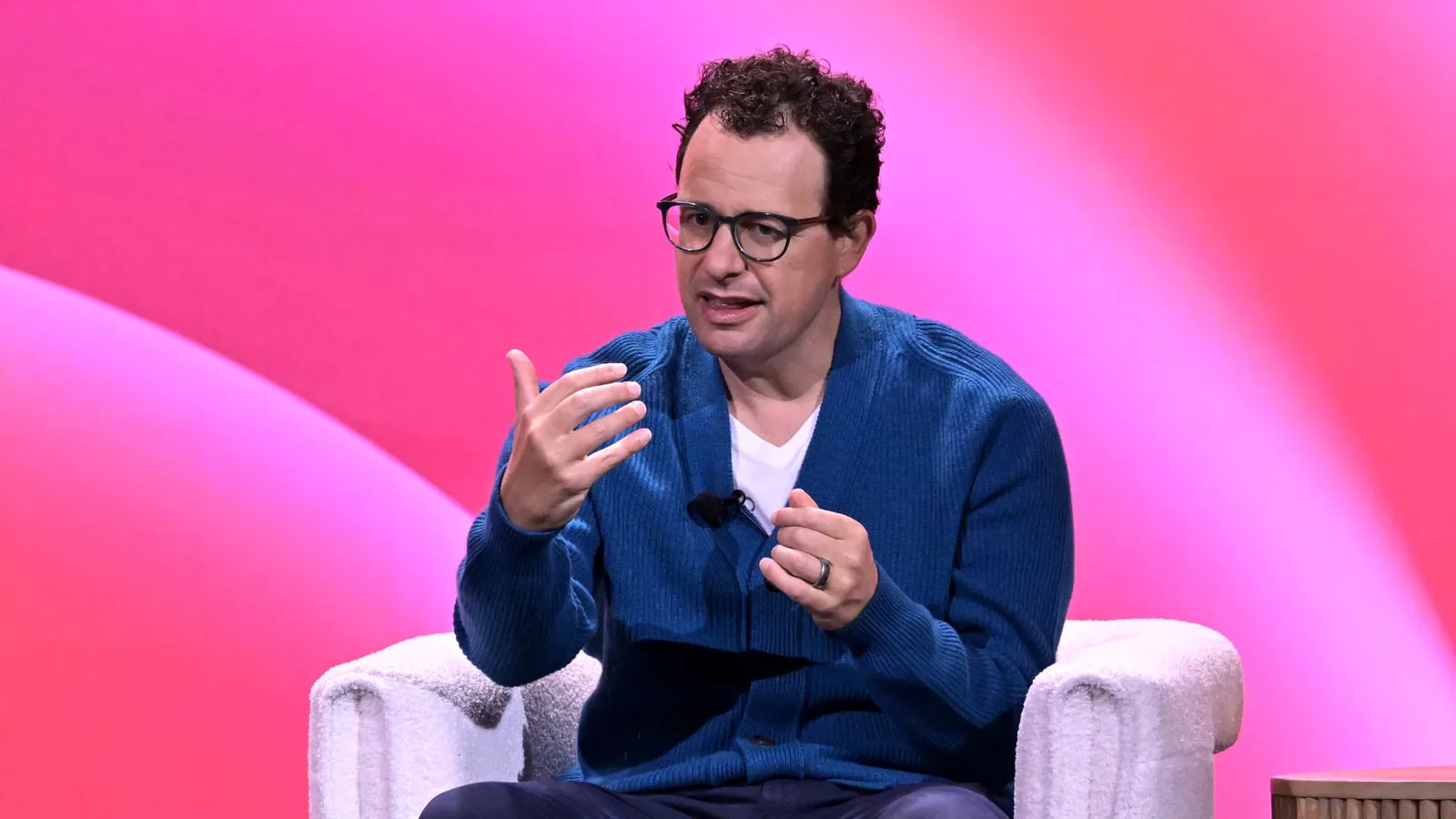
Photo: Finn Gomez / Getty Images, via FortuneSource page
Anthropic filed a registration statement on Form S-1 on Monday for a proposed initial public offering of Class A common stock. The company’s announcement says it intends to list those shares on the Nasdaq Global Select Market under the symbol ANT. The number of shares and the price range have not been determined. The announcement tells readers to request the preliminary prospectus, when it is available, from Goldman Sachs or Morgan Stanley. The filing itself says the company is selling shares and that selling stockholders are selling more, and that Anthropic will not receive proceeds from the stockholders’ sales. A registration statement has been filed and is not yet effective.
The income statement in the prospectus is no longer a draft described by other newspapers. For the six months ended 30 June 2026, revenue was $16.286 billion, against $1.163 billion in the year-earlier half. The filing’s own comparison of those two lines is an increase of $15.123 billion, or 1,300 percent. The net loss was $80.748 billion, against $12.969 billion. Of this year’s half-year loss, $72.388 billion is the line “change in fair value of convertible notes, derivative liabilities, and SAFEs.” A footnote says those changes were driven primarily by an increase in the fair value of outstanding convertible notes as the company’s enterprise valuation rose. Compute and infrastructure cost $8.945 billion in the half, more than the $7.326 billion spent on that line in all of 2025, and more than the $2.334 billion in the first half of 2025. The operating loss narrowed to $693 million, from $2.135 billion.
The adjusted profit adds three items back
Anthropic defines adjusted operating income as the operating loss excluding stock-based compensation, non-cash charitable contributions, and the Bartz settlement. For the half, those add-backs are $2.185 billion, $126 million, and zero. The result in the reconciliation is adjusted operating income of $1.618 billion, and an adjusted operating margin of 10 percent, against a GAAP operating margin of negative 4 percent. Adjusted net income, which also excludes the convertible-note fair-value change and a separate $8.720 billion change in fair value of certain mark-to-market instruments, is $2.671 billion. The GAAP “other income (expense), net” line was a cost of $8.757 billion. The discussion of results says that swing was driven primarily by the initial recognition and later change in fair value of assets and liabilities under note purchase agreements. Cash provided by operating activities was $3.9 billion in the half, against cash used of $1.5 billion a year earlier. Cash, cash equivalents, and short-term investments were $131.651 billion at 30 June.
Those adjusted figures are the company’s. The prospectus says other firms may calculate similar titles differently, and that the measures leave out expenses that still sit on the income statement. A reader who stops at $1.618 billion has not read the $80.748 billion. A reader who stops at the net loss has folded a mark on convertible paper into the cost of running the models. The two numbers answer different questions. The filing prints both.
Two rivals, and a retention rate that excludes the subscriptions
The prospectus names two primary competitors in frontier models sold to developers and enterprises: Alphabet, together with its affiliates, called Google in the filing, and OpenAI Group PBC. It says those competitors have greater financial, technical, and marketing resources, their own or greater access to compute, and established customer relationships. It does not, in that paragraph, name any other lab. On customers, net revenue retention was approximately 900 percent as of 30 September 2026. The metric divides a later quarter’s revenue from qualified customers by their revenue in the quarter a year earlier. Qualified customers are those with at least $1 of revenue in the base quarter, excluding subscribers to Claude Pro and Max, whose fixed prices the company says do not show the expansion and contraction the metric is meant to capture. A 900 percent figure on that definition is growth inside a set of accounts that already paid something a year earlier. It is not a statement about how many new customers arrived, and it leaves the consumer subscriptions out.
As of 30 September the company had more than 11,900 customers with $100,000 or more of revenue on a trailing-twelve-month basis, more than 1,900 at $1 million or more, and about 250 at $10 million or more. No single customer was more than 10 percent of revenue for the nine months ended that date. The top five were about 25 percent. Consumption-based revenue was $13.1 billion in the first half, 80 percent of the total. Subscription revenue was $3.2 billion, 20 percent. The company says Claude Opus 5.5 reduced customer costs per task by about 40 percent compared with Claude Opus 5, and that lower cost per task drove greater usage. It also estimates that customers it later found using the products in violation of its usage policy or commercial terms accounted for about 5 to 7 percent of revenue in those nine months. The estimate, it says, requires judgment and may change. Headcount was about 5,300 at 30 September, up from about 940 at the end of 2024. Trailing-twelve-month revenue per employee, on the company’s arithmetic, went from $1.4 million to over $6.6 million between 30 September 2025 and 30 September 2026.
Buyers of Class A do not elect the board
Anthropic is a Delaware public benefit corporation. The stated purpose in the filing is the responsible development and maintenance of advanced AI for the long-term benefit of humanity. A Long-Term Benefit Trust, through Class T shares that have no economic rights, generally elects and removes the Class T directors, who will be a majority of the authorized board. Immediately before the offering closes, the company will issue one share of Class F stock to a limited liability company whose initial members are the seven co-founders: Dario Amodei, Daniela Amodei, Tom Brown, Jack Clark, Jared Kaplan, Sam McCandlish, and Christopher Olah. That Class F share is entitled to 50.1 percent of the voting power on matters submitted to stockholders generally, including the election of directors other than the Class T directors. The filing says the trust and the founder company together are expected to be able to elect the whole board, and that the founder company is expected to decide ordinary stockholder votes for the foreseeable future. Class A holders generally will not be able to change those outcomes unless a majority of the continuing founders cannot agree, in which case the Class F share is voted in proportion to the Class A votes cast.
The co-founders have each pledged to dedicate 80 percent of their personal Anthropic equity to philanthropic causes. The filing says the pledges are voluntary, revocable expressions of intent, and are not legally binding obligations. Separately, the company contributed 846,840,960 shares of Class N common stock, 5 percent of fully diluted shares as of 30 June 2026 assuming conversion of the Amazon notes, to Anthropic Public Benefit Fund, LLC, a wholly owned subsidiary. The board has also approved a framework under which it may, at its discretion, issue further Class N shares to that fund, up to an additional 2 percent of the then-outstanding shares, each time the share price rises 50 percent above the prior milestone, starting from the IPO price.
Concerns have been raised both within our organization and by other researchers, regulators, policymakers, and industry participants that sufficiently advanced AI systems could, if not developed, deployed, and operated with appropriate safeguards, oversight, and security measures, pose catastrophic or existential risks to humanity, particularly if such systems were misused, replicated, weaponized, or allowed to operate with a high degree of autonomy.
— Anthropic, Form S-1, filed Oct 26, 2026
The same risk section says that in April 2026 the company first released Mythos as a gated research preview through Project Glasswing, for selected organizations and cybersecurity uses, rather than making it generally available, because of its capabilities in finding cyber vulnerabilities. The cover page of the prospectus still has blanks where a price range would go. Reuters’ Monday factbox says some current and prospective investors are valuing Anthropic at about $1.5 trillion, down from roughly $2 trillion that investors had expected after a recent investor event, and that Reuters has previously reported the company is seeking to raise as much as $100 billion. The factbox also says Anthropic raised $65 billion at a post-money valuation of $965 billion in late May, after a confidential filing in June. None of those figures is an offering price. The document that became public on Monday does not set one.