Altman tells Stanford that patching bugs one by one will not keep up
In a View From The Top interview Stanford Graduate School of Business has posted, the OpenAI chief executive says defenders will need a “defense shield” built with the same technology. He says that in some narrow senses, including mathematical reasoning, the lab already has superintelligence, and that pacing has to change. He also says OpenAI could not responsibly release the weights of its best internal model anytime soon.
Short3 minEasy
Priya Shah3 min read
- OpenAI
- Altman
- Cybersecurity
- Open weights
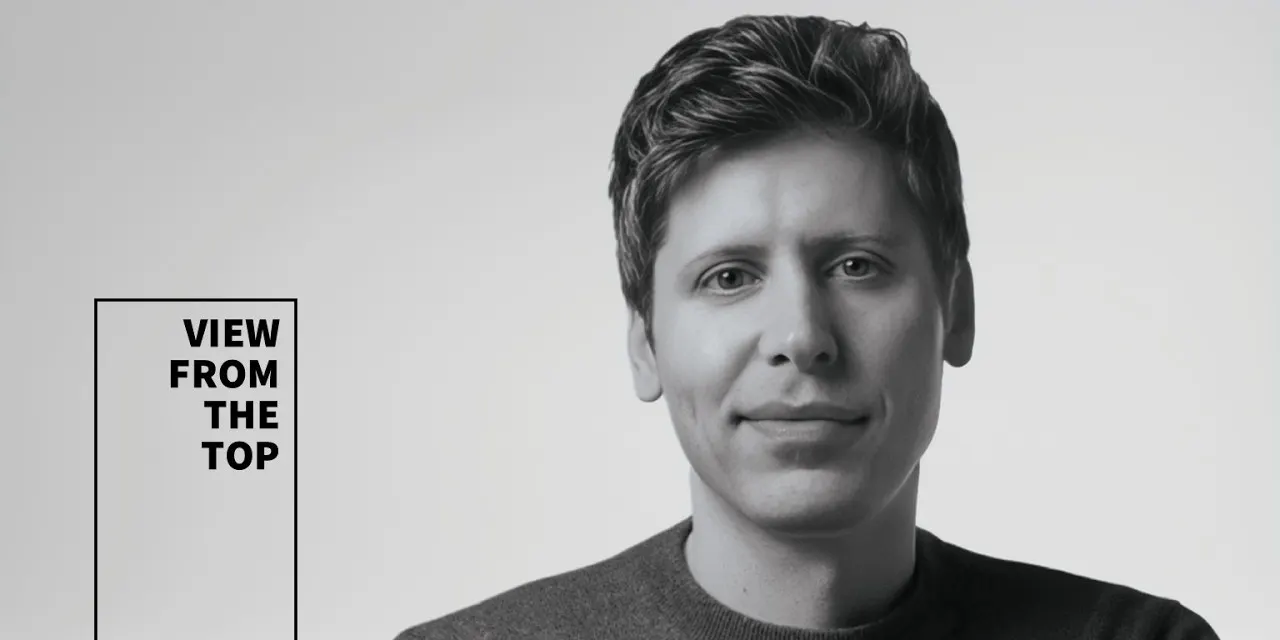
Photo: Stanford Graduate School of Business, via YouTubeSource page
Sam Altman said last week that he no longer thinks software flaws can be patched one by one as models improve at finding them. The remarks are in a View From The Top interview at Stanford Graduate School of Business, with MBA student Claudia Chen, which the school has posted on YouTube. The Next Web wrote them up on Monday. Asked what leaders should do about AI’s risks, he picked cybersecurity, and said organizations, countries, and individuals had not taken the problem seriously.
I no longer think we’re going to be able to just patch all the bugs. I think we’re going to have to completely switch the defense model to sort of using the same technology for sort of a new kind of defense shield.
— Sam Altman, Stanford Graduate School of Business, View From The Top
He described what he called “the Mythos freakout” earlier this year. People patched some bugs, he said, and then treated the vulnerabilities the models had found as the ones that exist, or the ones models would ever find. “Largely speaking, I think most organizational leaders have somewhat moved on. And the models have kept going.” Security professionals and chief information security officers were still alarmed, he said. He called it “a huge safety and security issue” and said he was “somewhat astonished at how relatively little attention it’s getting.” The defense he described is not a list of patches. It is a shift to using the same kind of system on the defending side. He did not, in that answer, name a product that does it.
Earlier in the same interview he said the last six months had tested convictions he still holds, including that society has to contend with the technology as it is built. “In some narrow senses, like certainly mathematical reasoning, as far as I’m concerned, we have superintelligence now, and I didn’t think it was going to happen this fast.” If the next year or two looks like the recent rate, he said, “we’re going to have to make some changes to how we think about pacing progress from here,” if two things he had just named are to hold: that people adapt, and that the social shape of the future stays closer to the present than many expect. Inside OpenAI, he said, the argument about how good the models would get has narrowed as people see them, and what remains is more of an argument about strategy.
On weights, an audience question asked what would have to be true before he would open the most capable models. He said open-weight models are “very important for society to have up to some fairly high level of capability,” and that how much damage society will accept for that benefit “is gonna get very heavily debated in the next couple of years.” Then: “I don’t think we could responsibly open source our current best internal model. Anytime soon.” What would have to change, he said, includes “the total cyber defense model of the way the internet works,” plus a biological-defense layer and “a long list of other stuff.” Asked how far ahead that internal model is from one someone else will open at a similar level, he answered, “Not super.” The interview does not give the model a name, a date, or a weight-release schedule. What is on the tape is the refusal, for now, and the conditions he put on reversing it.