Alpöge says he and Claude have a Riemann proof. He posted Lean parts, not a paper, and no outside compile is in the write-ups
Levent Alpöge’s note, posted on his site Friday, says he believes that working with Claude he has a proof of the Riemann hypothesis, and that the method resolves the generalized version. The footnote points to fourteen pieces of a Lean archive. He says a readable write-up would be “slop,” and that he hit 250,000-plus pages. Scientific American writes that the struggle appears over. Kevin Buzzard’s line in New Scientist is to see if it compiles. New Scientist’s paraphrase of the generalized claim is softer than the sentence in the note. Anthropic had not commented.
Feature4 minIn-depth
James Okonkwo4 min read
- Anthropic
- Claude
- Riemann hypothesis
- Lean
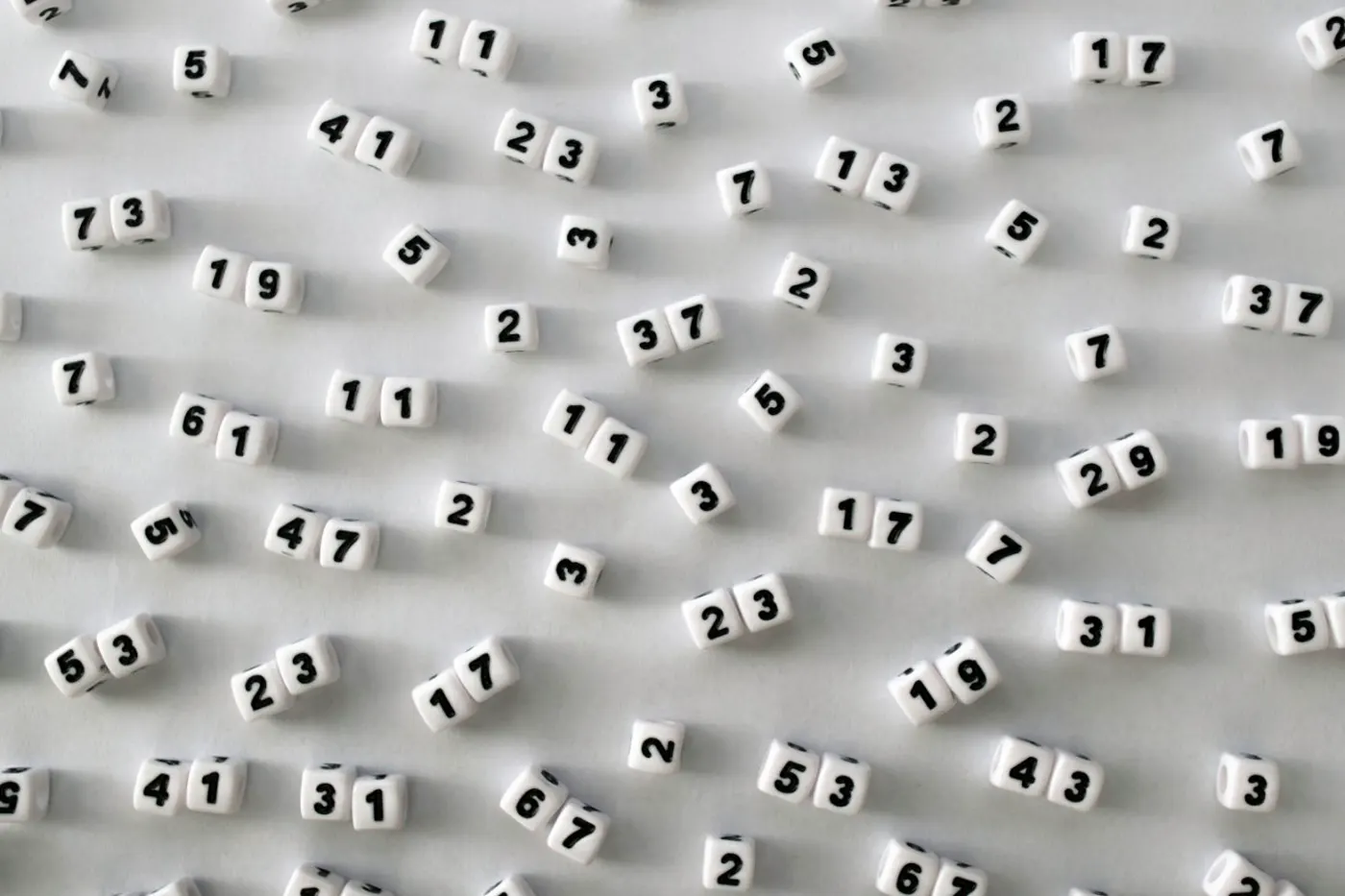
Photo: Robert Brook / Science Photo Library / Alamy, via New ScientistSource page
Levent Alpöge, a mathematician who works at Anthropic, posted a statement on his site on Friday saying he believes he has a proof of the Riemann hypothesis, and that he found it working with Claude. The sentence is his, not a company announcement. “I believe I have, working with Claude, discovered a proof of the Riemann Hypothesis,” he writes. “In fact, the method easily extends much further, resolving the so-called Generalized Riemann Hypothesis, and I expect, with more time, the Extended Riemann Hypothesis too. Claude and I have also formalized the arguments without assumptions.” He adds that near the end “Claude far outpaced me,” and then: “No, Claude flew, and danced, and sparkled near that finish line.” The hypothesis was proposed in 1859. Howlett describes it as a claim that the primes, which look unordered, follow an intricate order, and as one of the problems on which the Clay Mathematics Institute has placed a million-dollar bounty. Hart writes that it is one of seven Millennium Prize problems, and that it concerns the distribution of the primes and the zeros of a function. None of the Friday accounts says the claim has been accepted.
Lean parts, and a document he says he will not post
The statement does not include a paper. The first footnote points to fourteen files on his site, lean.tar.gz.part01 through lean.tar.gz.part14. He writes that the formalization is finished, that producing “a huge, unreadable document containing sufficient detail” would be routine, and that posting one would be “obviously inappropriate” because it would be “some massive unreadable travesty of ‘slop’.” He says he decided to present only the Lean. A footnote says he “hit 250,000+ pages,” and that Claude called the document the GRH “book.” Matthew Sparkes’s New Scientist story reports the same refusal and the same length, as an unpublished version of more than 250,000 pages. Alpöge also writes that he is “presenting the world with a complete argument before having mastered a massive neighbourhood around its mathematics.” The note includes what he calls a rough timeline Claude provided after a search. He writes that the parts where Claude, not he, is the expert are a paraphrase of a summary that “might make zero sense,” and that he may have to edit them. The last item on that list is dated 16 November and reads “GRH.”
Three write-ups, and a compile nobody in them has reported
The outlets do not describe that packet the same way. Sparkes’s lede says Alpöge claims to have discovered a proof and verified it with formalisation. Later in the same story, Kevin Buzzard of Imperial College London says: “Let’s see if it compiles first.” Buzzard adds that it might be a while before the relevant experts can say what the argument is, “assuming it’s all true, of course, which it probably will be because of course Alpöge will have [a] huge amount of egg on [his] face if the Lean code doesn’t compile or is deficient in some way.” New Scientist’s brackets are in the published quote. Joseph Howlett’s Scientific American story says Alpöge claimed to have proved the problem “using an LLM,” and then: “Now the long struggle appears over.” Howlett writes that Lean checks each step, that issues can arise, and that it should not take long for experts to verify whether the hypothesis is properly coded and whether the proof is correct. The story is labeled breaking and says it will be updated. Howlett’s “using an LLM” is not the phrasing in the note, which says the work was done with Claude and that Alpöge guided the argument to a setting before Claude pulled ahead.
The generalized claim is where a paraphrase comes apart from the sentence. Alpöge writes that the method resolves the generalized Riemann hypothesis. Howlett writes that Alpöge says the proof confirms it. Sparkes writes that Alpöge says the proof may also help solve it. Those are not the same verb. James McKee of Royal Holloway, quoted by New Scientist, treats the generalized statement as settled: “There are numerous results that are conditional on the generalised Riemann hypothesis, and now those are theorems!” Hector Pasten of the Pontifical Catholic University of Chile, quoted by Scientific American, keeps the condition in the sentence. “If the proof is correct and understood, this completes a dictionary between different branches of math where the connections were only partial,” Pasten said. “Something like a Rosetta Stone.”
A message to Amodei, and no company comment
Alpöge writes that the timing is “horrible,” that this happened for him late Sunday night, and that he messaged Dario Amodei, beginning “Hypothetically, if I were to have,” and then asked about announcing. “There was a constraint to respect,” he writes. He says an obvious cynical reading of the timing “is false.” Robert Hart’s story in The Verge says Anthropic has not commented and has not involved itself in the announcement, and that the magazine had not immediately heard back. Hart also writes that Anthropic, describing earlier work with Claude on the same problem in August, said: “We don’t expect that the techniques Claude used will lead to proving the Riemann hypothesis.” Sparkes’s account of that August work is shorter. It stopped short of a full proof. On the prize, Hart writes that the Clay institute offers $1 million, and that under its rules a proposed solution has to be published and withstand at least two years of scrutiny, and in that time receive general acceptance in the global mathematics community. He notes that the only problem the institute has recognized as solved is the Poincaré conjecture. None of the Friday stories reports that this Lean has been compiled by someone other than Alpöge, or that the institute has accepted it.